2.1 Covid cases and caseloads
According to Africa Centre for Disease Control and Prevention (Africa CDC) the number of confirmed COVID-19 cases in Africa reached 8.3m in October 2021,. The death toll from the pandemic across the continent stands at 212,000 while some 7,671,969 patients across the continent have recovered from the disease. South Africa, Morocco, Tunisia and Ethiopia are among the countries with the most cases in the continent. In terms of the caseload, southern Africa is the most affected region, followed by the northern and eastern parts of the continent, while central Africa is the least affected region in the continent. West Africa, with a population of 367 million people, had confirmed 412,178 cases of COVID-19 with over 5300 deaths as of March 2021. This is considered low, and it is thought that African countries have leveraged on experiences from past epidemics such as Ebola to build resilience and response strategies, which may be contributing to protecting the continent's health systems from being overwhelmed.
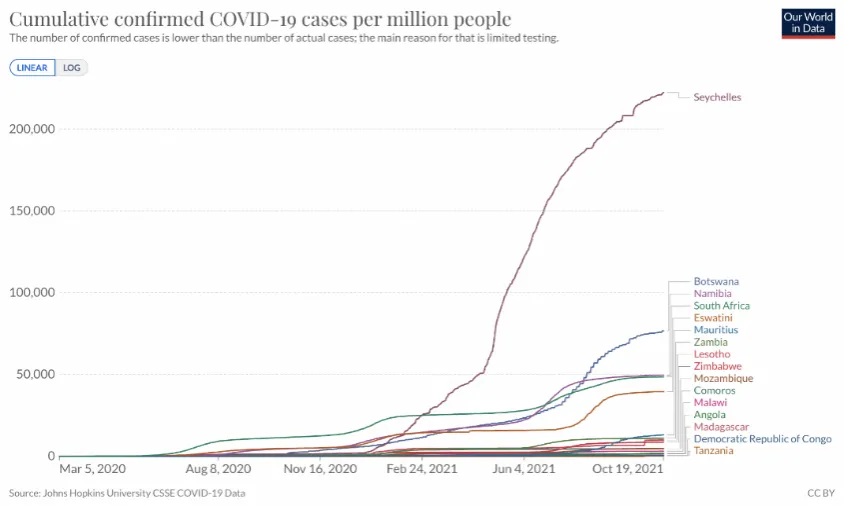
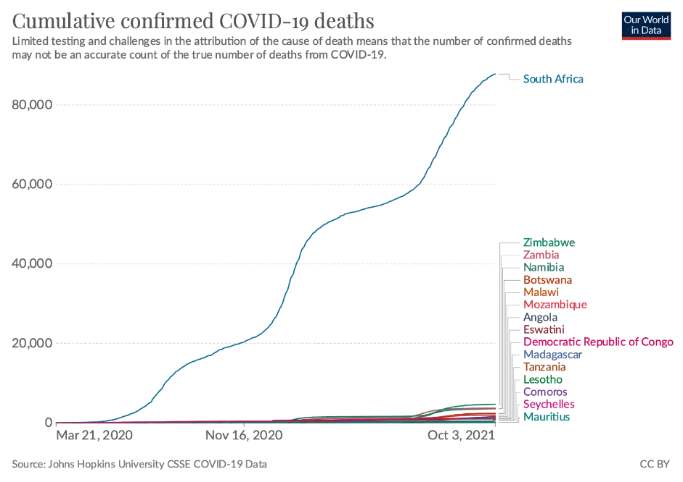
The Highest cases were reported in Seychelles-over 200,000-while the highest deaths occurred in South Africa-80,000
Key Observations
Cases, Democracy and Human Rights
1. In West Africa the covid situation led to serious human rights violations, leading to an open letter of protest by over 90 intellectuals from across Africa. In South Africa, the clash between refugees and asylum seekers led to major protests and violent confrontations between citizens and foreigners in South Africa, the country with the highest number of refugees and asylum seekers in the sub-region.
2. Some 19,610 expired AstraZeneca vaccines have had to be incinerated in Malawi because they were expired just 18 days after being shipped to the country. In total African countries have been forced to destroy over 450,000 vaccines because they were delivered late.
Cumulative Confirmed Cases and Deaths-Southern Africa
Be a mountain or lean on one.
— Somali proverb
Table 1: COVID 19 Cases & Deaths in North Africa (As of 2 October 2021)
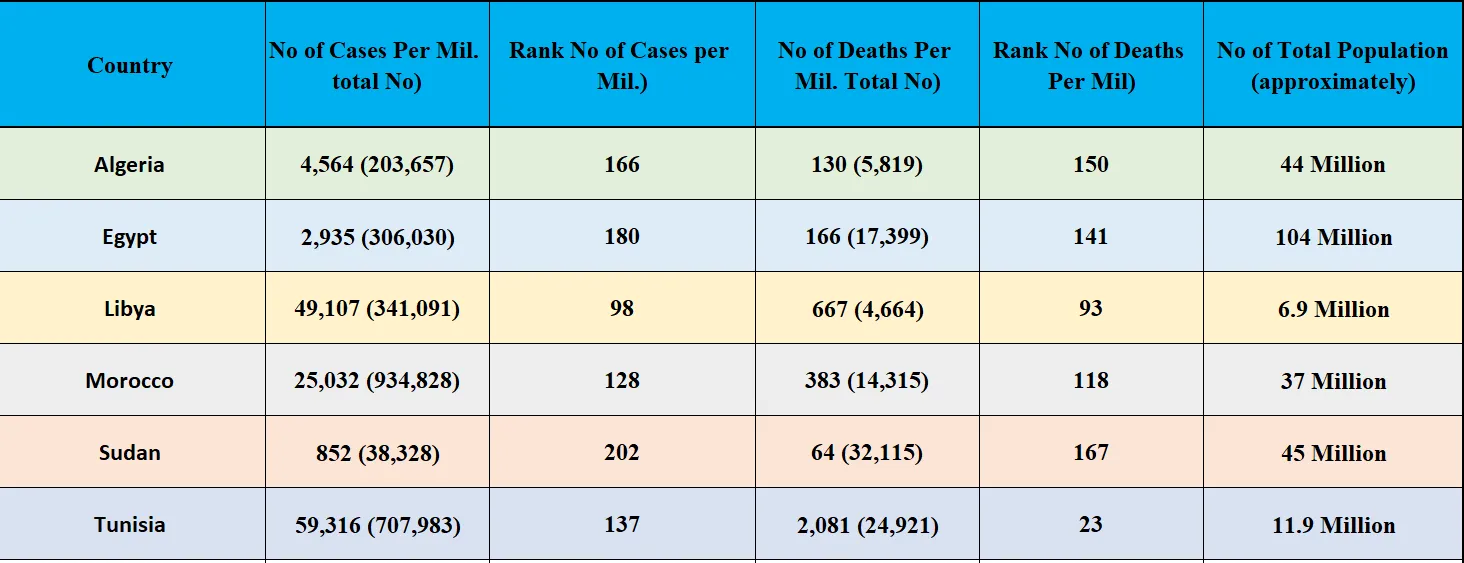
3. In North Africa, Morocco and Tunisia succeeded in controlling the spread of covid 19 during the first wave through a combination of measures such as public awareness and case management. Tunisia created the National Coronavirus Response Authority while Morocco created a committee for health to specifically respond to the pandemic. However in subsequent waves of the epidemic nearly all the countries in the region suffered from severe cases of illness and high cases of death.
5. Countries such as Egypt whose citizens rely heavily on daily paid labour, were most hit at household levels.
The Egyptian government had to intervene and provide a $33 cash hand-outs to cushion its citizens.
6. In Southern Africa women were affected and infected most-due to double expectations- work from home while still taking care of children
2.2 Covid 19 and Agenda 2030
Africa is primarily an informal economy with 80.8 % of its entire workforce working in informal sectors, sometimes known simply as SMES.
North Africa stands out as the region with the highest levels of “Day-wage” labour, followed by South Africa, West and East in that order. Central Africa has a mixed economy. Countries such as Ivory Coast have fairly established formal economies while CAR has hardly any formal economy.
Africa is a primary exporter of raw materials, with the exception of Egypt, Algeria and South Africa.
Economic impact
The OECD reports that beyond health risks, the COVID-19 shock to African economies is coming in three waves: (i) lower trade and investment (ii) a demand slump associated with the lockdowns (iii) a continental supply shock affecting domestic and intra-African trade. According to Africa Platform, The health protocols established by the World Health Organization (WHO) to try and contain the spread of the pandemic, and which soon became standard requirement around the world, dealt a particularly heavy blow on African countries, whose economies are primarily informal and rely on commodities export. Countries like Equatorial Guinea are estimated to have lost as much as $300 million in export revenue, equivalent to 2.7% of its entire GDP, in the first six months of the pandemic. It is estimated that 30 million jobs were lost in the first three months of the pandemic while countries that rely on Oil such as Nigeria, Angola, Algeria, and Egypt are estimated to have lost $65B in ninety days.
On the whole, Africa’s economies may lose up to $1.5T or 50% of its GDP as a result of the pandemic.
We desire to bequeath two things to our children. The first one is roots; the other one is wings.
— Sudanese proverb
While attention is focused on finding a vaccine for covid 19, what has become clear is that resources should be directed at achieving and realizing all of the Sustainable Development Goals. It is not enough to commit resources to a vaccine when the world may face another crisis arising from other development challenges. Covid 19 is only one of the many challenges facing global development. It is its intensity and scale that has given it so much attention. That attention should lead us to a higher goal beyond self-preservation-working to collectively ensure resources are available for the wide range of development agenda.
Africa’s debt, especially to IMF and the World Bank has increased by nearly tenfold due to covid. For example, Equatorial Guinea nearly went bankrupt due to covid 19 economic challenges in 2020 while South Africa, for the first time, borrowed money from the World Bank.
2.3 Covid 19 civic freedom, Democracy and Agenda 2030
Central African Republic and Congo are the countries of Central Africa that had elections amid the COVID-19 pandemic. Central Africa has thus been exposed to two kinds of shocks by the COVID-19 pandemic. The exogenous one came from direct trade and other links between affected partner continents such (Asia, Europe and America), with down turn of tourism, decline in remittances from African Diaspora, decline in Foreign Direct Investment (FDI). The endogenous one, resulted from the rapid spread of the virus within countries, with the corresponding morbidity and mortality as well as effects on the economic activities.
Covid restrictions and control measures have become sources of violations of human rights. In Kenya citizens were killed in what the government said was curfew enforcement. Activists were also arrested for protesting the IMF loans given under the guise of covid 19 response. In Egypt, Sudan and Uganda covid measures made it very difficult for journalists to gather information. In Libya citizen held demonstrations in what they saw as violations of their freedoms of movement under the pretext of covid containment. IN Cameroon and part so central Africa, the covid restrictions merely provided justifications to escalate an already oppressive regime, especially on journalists.
Elections were postponed or cancelled due to covid in Uganda,Tunisia, Mali, Cameroon, Guinea, Kenya, Zimbabwe, Sao Tome and Principe,Somalia, Niger, Tchad, Gabon, Ethiopia and Libya . Egypt, Tunisia, Mali, Kenya, Ethiopia, CAR,Togo, Liberia, Ghana, Niger, Zambia, Mali, Cameroon, Morrocco, South Africa and Gambia either proceeded or held previously cancelled elections.
2.4 Covid vaccination
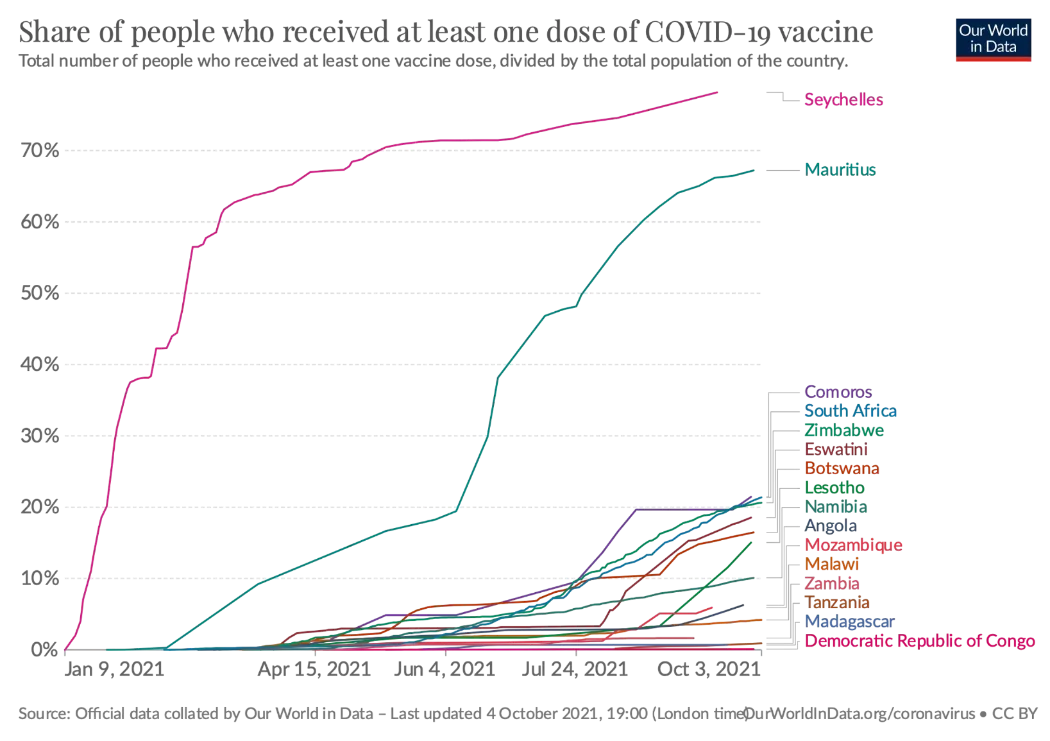
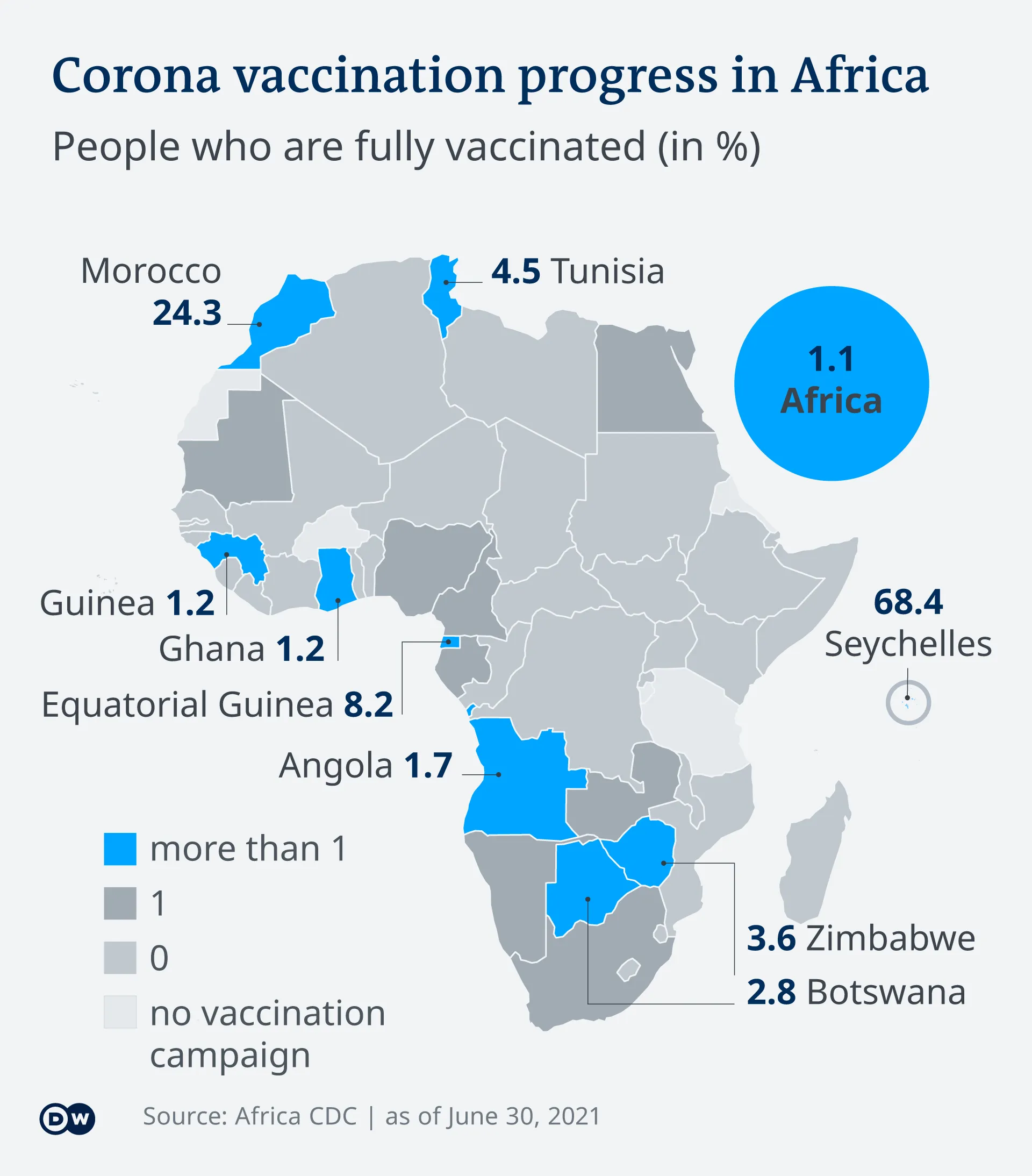
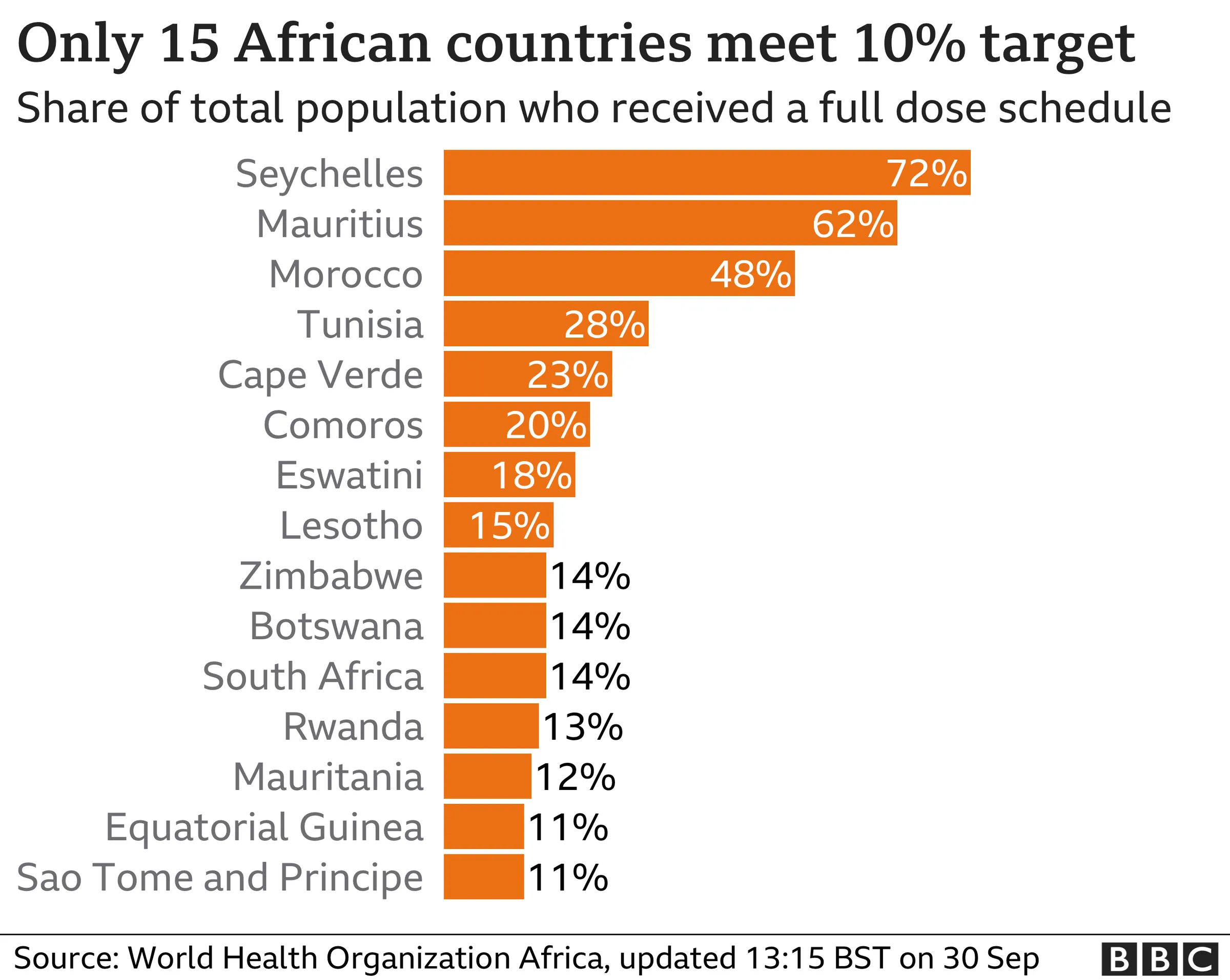
The Africa CDC has outlined a strategy to address covid at multiple levels. According to Africa CDC, the strategy, known as Africa Joint Continental Strategy for COVID-19 Outbreak pursues a threefold goal of preventing severe illness and deaths and minimizing social disruption and economic consequences of COVID-19. While behavioural preventative measures based non-pharmaceutical interventions like the wearing of masks in public, physical distancing and hand sanitization do assist in preventing transmission, other public health measures such as enforced lockdowns, although partially effective in slowing down the spread of the virus, exacerbate the pandemic’s economic and social consequences. The only way to achieve the threefold goal of preventing transmission, preventing deaths, and minimizing social and economic consequences is to end the pandemic by successfully immunizing a critical mass of the African population. Similar to other countries around the world, African countries need accessible and effective COVID-19 vaccine to save lives, protect the health of vulnerable people and 1. Background 2 Framework for Fair, Equitable and Timely Allocation of COVID-19 Vaccines in Africa maintain economic development.According to the WHO just five African countries, less than 10% of Africa’s 54 nations, are projected to hit the year-end target of fully vaccinating 40% of their people, unless efforts to accelerate the pace take off. Three African countries, Seychelles, Mauritius and Morocco, have already met the goal that was set in May by the World Health Assembly. At the current pace just two more countries, Tunisia and Cabo Verde, will also hit the target. It is not just concerns around vaccine apartheid, where countries that are premodimantly white are reluctant to share their vaccines with the rest.
Filthy water cannot be washed.
— Morocco Proverb
Percentage of vaccinated Population in Southern Africa
The issue go all the way to limited access to crucial commodities such as syringes. UNICEF has reported an imminent shortfall of up to 2.2 billion auto-disable syringes for COVID-19 vaccination and routine immunization in 2022. This includes 0.3ml auto-disable syringes for Pfizer-BioNTech COVID-19 vaccination. There is no global stockpile of the 0.3ml specialized syringes, which differ from the 0.5ml syringes used for other types of COVID-19 vaccines and routine vaccination. The market for 0.3ml auto-disable syringes is tight and extremely competitive. As such, these are in short supply and will remain so through at least the first quarter of next year. At the 2021 UN General Assembly leaders from across the Global South united in condemning Western governments and the pharmaceutical corporations sitting on vaccine patents which they are refusing to share.
Emerging Issues
- The Vaccine problem lies in a global economy that has allowed a handful of transnational corporations to patent – and thereby monopolise – these vaccines. By the end of 2021, wealthy countries will have a surplus of 1.2 billion vaccine doses, with a whopping 12 billion doses having been produced in total. But Covax, the WHO-led coalition that was to help ensure vaccines reach poorer countries, and, on which most African countries depend for their vaccines, will miss its target for vaccinations by more than 500 million doses in 2021. In other words, despite a surplus of vaccines in the rich world, the Global South has far fewer than the tiny amounts it was led to expect. Today, wealthy governments have handed control of this pandemic to the market, in the form of gigantic transnational corporations, who have taken vast sums of public money and refused to share the resulting know-how.
- Amnesty International accused multinational corporations of fuelling a human rights crisis. They pointed out that Pfizer and BioNTech, makers of a leading cutting-edge vaccine, have delivered nine times more vaccines to Sweden than to all low-income countries combined.
Do not call the forest that shelters you a jungle.
— Congo Proverb
4.Pfizer, BioNTech and Moderna will earn over $133bn in revenues by the end of 2022 on these vaccines. Yet none of them – nor indeed any other Western producer – will openly share their know-how so others can produce the vaccines we need. They thrive on the secrecy which boosts their profits. Waiving the patents and sharing the know-how behind the vaccines would allow all countries with the capacity to do so to produce their own medicines. This has become a key demand of African governments and the flourishing While negotiations around vaccine patents have been ongoing in the WTO for nearly a year, the proposal is still being blocked by European countries, most notably Britain and Germany.
Do not look where you fell, but where you slipped.
— Equatorial Guinea Proverb