Early this year the Economist Magazine interviewed hundreds of Executives to find out if they understood the extent to which trade agreements and other external policies impacted their businesses.
The results confirm the greatest challenge facing the continent-a lack of awareness and knowledge of not just the interconnected of trade and business across regions, but just how much trade is influenced by international trade agreements to which Africa is a signatory.
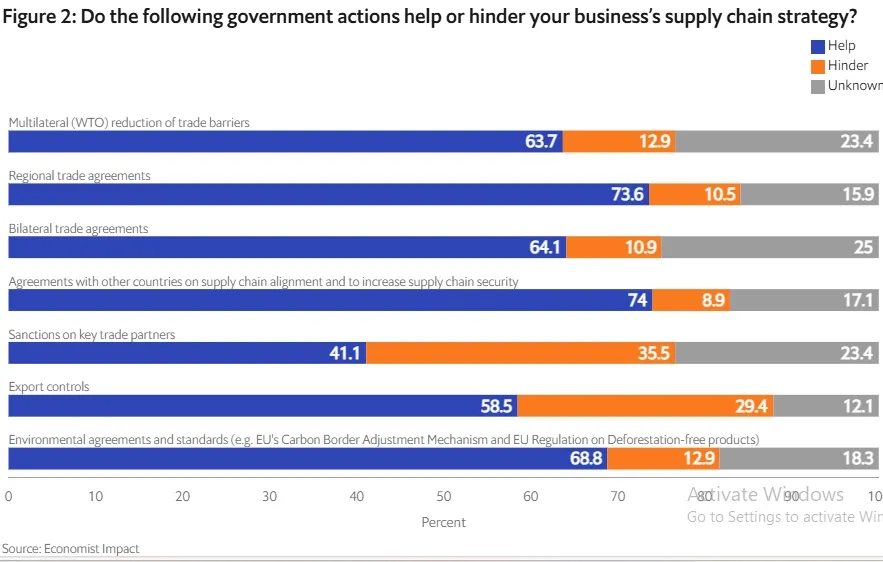
This analysis has brought out some key concerns that needs reflections
First it is clear that Trade agreements do not originate from new thinking.
Instead they reflect attempts to replicate ideas and strategies that have succeeded in the past.
That is why EPAs are eerily similar to the 1885 GA in Berlin.
This requires that we study and consider trade agreements within their broader historical context.
Secondly the persistence of the two major European powers that have great influence over Africa-the EU and UK, was indeed not just about accomplishing their goal of securing raw materials for their own industries, but a strategy to wear out and finally divide the continent. The concept of divide and conquer is alive, and it is becoming clear that attempts are unity-both in trade and politics- will face severe resistance from those that benefit from the divisions.
This calls for African countries to invest more in securing any gains at unity and collective voice. By dividing the EAC, for example, the EU and UK have succeeded in nearly dismantling not just the trade agreements that have been the backbone of the region, but other progress such as those on monetary and political union are now facing a serious threat.
Trade agreements alone are not the instruments of control. The non-tariff barriers deserve our greatest attention just as much as the Trade Agreements. Africa should direct just as much efforts to challenging EUDR as they do to EPAs, because both are instruments that serve to undermine fair trade.
There are also significant opportunities for African farmers to trade with one another.
Africa has 33% of the world’s remaining arable land and 66% of the world’s fresh waters.
These are critical assets that the continent should not just exploit to the full, but ensure are preserved for the benefit of its own society. The pre-occupation with exports of primary goods such as agricultural products will continue to play into the hands of those who would like to see Africa remain poor. A typical bag of Maize in Kenya, for example, costs $21 while the cheapest car from Germany costs $ 30,000. A Maize farmer relying on exports to Europe of maize that is none processed will need 1,428 bags of maize to just buy a single car from Germany.
If a wheat farmer is to buy a Combine Harvester from Italy to prepare his wheat for export, he will need 7500 bags of wheat. Africa must resist the temptation to enter into agreements that give up raw materials in exchange for equipment with which we produce raw materials. The fight to challenge and defeat the EPAs is, for Africa, about its very existence.
There are already several agreements that have not only been signed, but ratified. This does not mean that there are no opportunities to stop them. Many of these Trade Agreements, including the 14 EPAs with the EU and the EPAs with the UK, have provisions for amendment and review. Africa should not consider the current state a lost battle.
Addressing Internal Barriers To Trade
There are three major categories of obstacles to intra-African trade, namely, weak productive capacities and limited economic diversification, which constricts the range of intermediate and final goods that can be traded and potentially inhibits the fuller development of regional value chains; tariff-related trade costs, associated with the slow implementation of the tariff liberalization schedules underpinning free trade agreements; and high non-tariff-related trade costs that hamper the competitiveness of firms and economies in Africa.
However, it is key to note that trade agreements that solely emphasizes the removal of tariff and non-tariff barriers, on its own, cannot deliver on the stated goals of promoting sustainable development for the continent, but should be accompanied by the building of productive capacities, the acceleration of structural transformation and the unleashing of the potential of the private sector. Indeed, developmental trade agreements (a development-based approach to FTAs) in Africa is necessary to ensure sustainability in the continent’s regional integration process, in order for it to culminate in the creation of an African economic community. Africa needs deeper integration that goes beyond preferential tariff liberalization alone. In addition to this, critical requirements will include fostering domestic entrepreneurship, domestic resource mobilization, political stability and peace, and establishing appropriate institutional structures and mechanisms to ensure an equitable distribution of socioeconomic costs and benefits across all 54 countries in Africa in a way that is politically acceptable to all.
On the ACFTA
The AfCFTA offers an ambitious market opening of 90 percent, one of the highest openings globally within the context of a free trade area.
This has its benefits.
But there is also the danger of big players displacing weaker ones because the scope for protecting local producers is limited.
There is also a weak interface of the AfCFTA framework agreement with the other policies and initiatives that already exist and those that need to be put in place to build productive capacities in the domestic economies, and to ensure that domestic producers, traders, workers, farmers, and other operators within Africa’s economies are the main beneficiaries and engines of Africa's transformation under the AfCFTA. Some of those policies and initiatives already in place include continent-wide policies such as the African Mining Vision (AMV), the Comprehensive African Agriculture Development Programme (CAADP), the Accelerated Industrial Development for Africa (AIDA) and the Action Plan to Boosting Inter-African Trade (BIAT) as well other continent wide and regional level policies related to infrastructure such as energy, transport, finance among others.
Africa also has a week infrastructure base for the movement of goods across the continent. There are three pillars of integration namely the productive capacity, the trade infrastructure and the tariffs liberalisation. Programmes for the pillars of production capacity such as Boosting Intra-Africa Trade, the Accelerated Industrial Development (AIDA) and Programme for Infrastructural Development in Africa (PIDA), have seen very little progress.
In addition to the above the internal initiatives are undermined by external agreements such as the EPAs, the US STIP and other MOUs with regions and countries. The AfCFTA unfortunately, has internalised the EPAs against expert advice to put a moratorium on all external agreements until Africa’s internal agreements were concluded. In this sense the EPA, really poses a grave danger; as it undermines everything that a country needs to have a trade agreement that is truly developmental in a number of ways. All the EPAs are seeking the same purpose namely i) market access for Europe’s manufactured products and services among others and ii) seeking a pole position in securing raw materials from Africa for Europe’s manufacturing sector.
Summary Conclusions
- Trade Agreements as Instruments of Control:
Trade agreements between Africa and stronger economies, such as the EU and UK, have historically favored external interests over African development. These agreements often perpetuate Africa's reliance on raw material exports while failing to support value addition or industrialization, leaving the continent economically vulnerable. - Impact on Farmers and Agriculture:
African farmers are disproportionately disadvantaged under agreements like EPAs. Delays in tariff reductions, the exclusion of key agricultural products, and unequal market liberalization create barriers to growth. Subsidized EU imports overwhelm local markets, undermining agricultural sustainability and reducing the competitiveness of African farmers. - Missed Opportunities for Regional Trade:
Intra-African trade agreements, such as ACFTA and regional bloc arrangements, offer better opportunities for growth, including value addition and cross-border agricultural trade. However, these potential gains are undermined by external trade agreements like EPAs, which prioritize liberalization over Africa's industrialization and regional integration. - Persistent Imbalances in Global Trade:
Africa's dependence on extractive industries has been reinforced by trade agreements that fail to foster diversification. This systemic imbalance limits the continent’s economic transformation while exacerbating migration and poverty.
Specific Recommendations on boosting Smallholder farmer’s participation in Trade Agreements
ACFTA and Regional Trading Blocs (RECs)
Address the weak productive capacities: Addressing supply-side constraints and weak productive capacities is a policy imperative in Africa to boost intraregional trade through the development of regional value chains. Such chains can be a critical vehicle for spreading the economic benefits of African trade (e.g. jobs in the formal sector and gains from manufacturing) to a wider set of countries, if they participate in such value chains and gain opportunities to upgrade technologically and move up within the value chains (UNCTAD, 2019). The potential for converting primary commodities in Africa, including agricultural materials, into industrially processed finished products within regional value chains remains largely untapped. This should be addressed by scaling up the implementation of the Action Plan for Boosting Intra-African Trade of the African Union includes a productive capacities cluster with the objective of creating “regional and continental value chains/complementarity, to increase local production/trade in goods produced in Africa”.
Eliminate Tariff-related trade costs: Whereas advances in trade liberalization are being made across all regional economic communities, the liberalization of tariffs within Africa regional communities has been slow, due in part to human and institutional capacity constraints in trade policy implementation, and also to a lack of operationalization of regional economic community agreements. According to the Abuja treaty, all regional economic communities should have established a common external tariff within customs unions and fully functional free trade agreements by end-2017. This has not yet occurred. For example, among all communities, ECCAS has the lowest share of intraregional trade in its total trade in Africa and would need to reduce on average 66 per cent of its tariff lines on intra-ECCAS tariffs to zero. In the other communities, the proportion of tariff lines on intraregional tariffs that have yet to be reduced to zero are 90 per cent in ECOWAS, 85 per cent in SADC, 78 per cent in IGAD, 51 per cent in AMU, 45 per cent in COMESA (UNCTAD, 2019).
Increase production capacities at national level: Zero liberalization of tariffs among regional economic community members or among countries in Africa will not automatically result in increased intra-regional economic community and intra- African trade. Some member countries, as exporters, may not fully utilize the preferential tariff lines under which tariffs have been reduced, because their export supply capacities in these lines are weak.