3.1 Introduction
Trade with Africa for a long time been driven by agreements with external actors.
For over fifteen years following independence, for example, the major markets for Africa were the European Union (EU) and the United States (US), with very little trade within the continent. The exception was trade between the then major East African countries-Kenya, Uganda and Tanzania. These countries were among the first to enter into a trading agreement under the East Africa Community. Kenya dominated this trade, with Uganda rising to become its largest trading partner.
For the rest of Africa, however, trade remained externally focused.
Trade under GATT
Africa’s trade with the European Union was based on the EU agreement with the African Caribbean and Pacific (ACP) Countries that provided unilateral preferential access to the EU market for ACP exporters. This was allowed and provided for under a global framework known as General Agreement on Tariffs and Trade (GATT) of 1947, in 1975. Trade with the US on the other hand was miniscule until the enactment of the African Growth and Opportunity Act of 2001.
From GATT to Africa Continental Trade Agreements
Upon the formation of the World Trade Organization (WTO) in 1995, however, many countries used the flexibility provided by an article in GATT which allows countries to form regional trade agreements like customs unions or free trade areas. They can lower tariffs among themselves, but with the condition that these agreements cannot raise trade barriers against countries outside the bloc. It is this clause that allowed Africa to trade with the EU under a duty-free-quota-free arrangement. But during the transition of from GATT to WTO this clause was challenged under the WTO Dispute Resolution mechanism known as the EC Bananas Case
When The EU went Bananas
"EC Banana Case" refers to a legal dispute at the World Trade Organization (WTO) where several Latin American countries like Ecuador and Colombia accused the European Union (EU) of unfairly protecting banana imports from its former colonies in the Caribbean and Africa, by imposing high tariffs on bananas from other regions, essentially giving preferential treatment to their "banana-producing" colonies, which was seen as discriminatory and against free trade principles.
It is called Banana case because Bananas were a significant export product for many of the countries involved in the dispute, making it a major trade issue.
Outcome of the case
The WTO ruled against the EU, finding that their banana import regime was discriminatory and violated international trade rules. The EU was forced to reform its banana import system to provide fairer access for Latin American banana exporters.
This decision led the EU to begin a process of recalibrating its relationship between ACP countries and itself through the introduction of Economic Partnership Agreements (EPAs)
Africa Response-Regional Trade Agreements
The Bananas case was not the only problem.
Africa quickly realized that there were many other imbalances in the new framework known as WTO.
For example, few developed economies managed to include a clause that allowed them to continue subsidizing their farmers, thus allowing them to dump cheap agricultural produce to other countries.
Upon the realization by African and other developing country governments on the inequitable imbalances of the WTO system, they began to put forward proposals for corrective action, while resisting further new agreements. Almost immediately after its establishment, therefore, the WTO became caught in a fundamental fight for its future! While the advanced industrial countries prevailed in 2001 in launching negotiations that mostly favoured them the WTO was effectively stillborn.
Frustrated by the solidarity and organized resistance of African and other developing country members, the advanced industrial countries, with the EU and US in the lead, adopted regional and bilateral trade and investment agreements as a means for achieving the further deregulation that they had been unable to get in the WTO’s negotiations.
The importance of the African integration even at that time, could not be underestimated.
Promoting trade cooperation among African countries for their mutual benefit of an expanded market that was to increase intra-African trade was another driver of the trade integration agenda. The broader goal that soured the ambition was the optimization and effective utilisation of African resources to accelerate productivity and the social well-being of its people.
Birth of the Africa Continental Free Trade Agreement (ACFTA)
In all these confusions and spurred on by the growing recognition of the marginalization of their developmental concerns within the multilateral and bilateral regimes, African governments saw the necessity of their own development agenda. And so during the 50th Anniversary of the Organization of Africa Unity (OAU) African Heads of States moved to form a Union of their own, launching the Africa Union and later an economic and political blueprint of their own known as Agenda 2063. Among its key goals were the following:
- Transforming Africa’s economies (goal 4) through ensuring collective benefit from Africa’s natural resources, manufacturing, industrialization and value addition, aimed at raising productivity and competitiveness
- Transforming African agriculture (goal 5) to enable the continent to feed itself and be a major player as a net food exporter.
To achieve this a project was initiated to ensure the promotion of deeper regional integration efforts, and in particular trade arrangements among themselves through the African Continental Free Trade Area (ACFTA). ACFTA was aimed at urgently taking forward the continent’s long-standing integration and development agenda and redress the vulnerabilities of Africa’s economies within the global economic order. The ACFTA therefore sought to create a single market for goods and services and to lay the foundations for the establishment of a Continental Customs Union, much like the EU. The Customs Union was seen as a key precondition for the establishment. Of the African Economic Community (AEC). After ten (10) negotiation rounds, the Agreement establishing the ACFTA was adopted by the AU Assembly in 2018, with trading under the regime commencing in 2021. One of the issues that stands out from the process leading to the negotiations and eventual implementation of the ACFTA is the exclusion of stakeholders such as farmers, trade unions, women groups, non-governmental organisation and even regional trading blocs.
The Journey to ACFTA
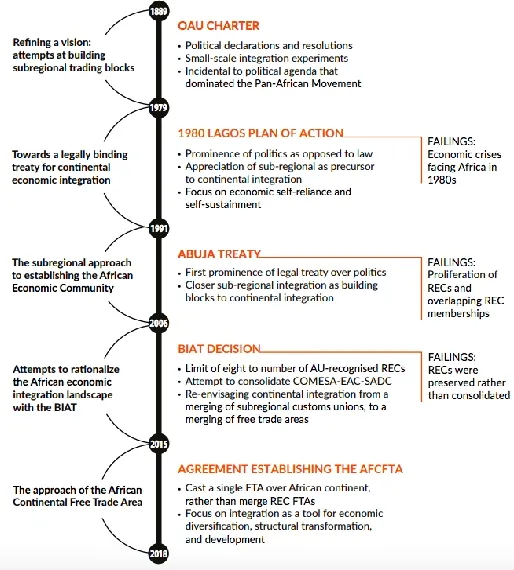
(Source: Assessing Regional Integration in Africa IX,2019 United Nations Economic Commission for Africa, African Union, African Development Bank, and United Nations Conference on Trade and Development. Adapted from Gerout, MacLeod and Desta, 2019)
Negotiating, Key Pillars, Current Structure and Progress of Implementation of the ACFTA
Negotiating Structure
Right from its inception the ACFTA structured very closely those that exist in other advanced Trade Agreements.
Negotiations was led by the Heads of States supported by their respective Ministers of Trade.
A committee was established to support the Ministers in technical areas while the main details of negotiations was led by an ACFTA negotiating Forum. A full negotiating structure is summarized in the figure below
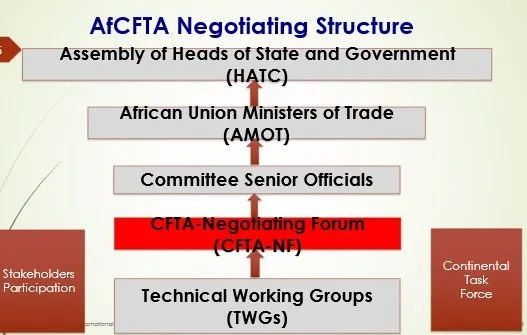
Figure 1. ACFTA Negotiating Structure. Source: ITC, 2022
The Power of Africa Free Continental Trade Area
- ACFTA potentially creates a single market of over 1.3 billion people with a combined GDP of over US$3.4 trillion (ITC, 2022).
- Simulations by ACFTA proponents purport that it has the following potential:
- Boost intra-African trade by 53% (41% in agri-food, 39% in services, and 39% in industry)
- Grow Africa’s manufacturing sector by US$1 trillion (UNECA, 2021)
- Generate income worth $470 billion by 2035
- Create 14 million jobs and
- Remove 50 million Africans out of poverty (UNECA & TMEA, 2020).
- Goods transported by ships would increase from 58 million to 132 million tons annually (UNCTAD, 2021).
- Numbers aside, the ACFTA can provide momentum towards consolidating regional economic communities and result in new markets for African businesses if they benefit from preferential trade margins compared with foreign competitors
Key Pillars
There are key ACFTA pillars, (sometimes known as Protocols) that remain outstanding.
These are Protocols on Trade in Goods, Trade in Services, Dispute Settlement, Investment, Intellectual Property Rights, Competition Policy, Digital Trade and Women and Youth in Trade.
The Protocol on Trade in Goods and the Protocol on Trade in Services are especially important because they have several specific issues (known as Annexes) covering substantive issues. Discussions on areas such as tariff concessions, rules of origin for goods and timetable of specific commitments for services) are still ongoing. The negotiations of the Protocol on Dispute Settlement have been concluded.
Current Structure (Source-South Africa Department of Trade and Competition-DTI).
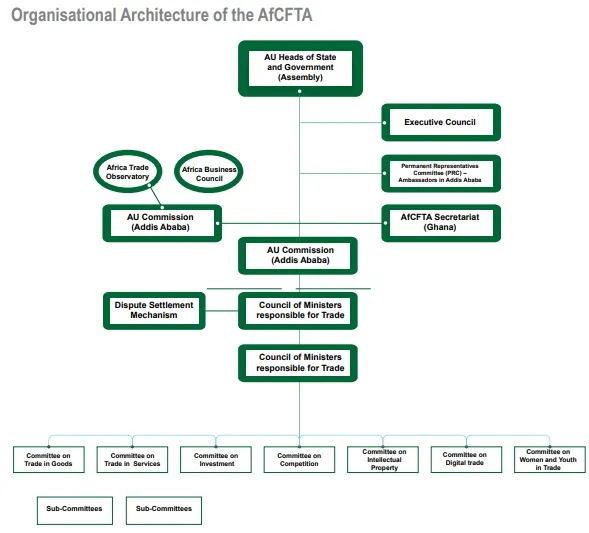
The Value of ACFTA
In his book “How Africa Trades” Professor David Luke of the London School of Economics puts a strong case for the ACFTA.
David outlines five reasons why Africa must fight at whatever cost to defend the ACFTA despite its structural and political challenges.
The first is that ACFTA represents a large and attractive marketplace for the continent
- Most individual African countries are small.
Twenty-two have populations under 10 million and a further 22 have populations under 30 million. The annual GDP of the median African country is just $16 billion, roughly equivalent to the output of a company like Naspers of South Africa and is only double the size of MTN, an African company. As a consolidated market, however, the ACFTA by comparison reflects an annual output of $3 trillion, like India and equivalent to about the seventh or eighth largest economy in the world.
This enormous size, argues, David, is valuable in attracting investors and achieving competitive economies of scale.
- Projected Growth of Africa
David makes the case using a statement by outgoing Africa Union Commissioner Mousa Faki. In his statement at the AU Commission Chairperson Moussa Faki Mahamat reminded heads of state that ‘the growth of the African economy should be twice as fast as that of the developed world’. Over the longer term, the African population is expected to grow to 2.75 billion by 2060, with an increasing middle-class market and a combined annual output of $16 trillion.
- Contribution to Industrialization
The third part of the AfCFTA rationale is its perceived potential to contribute to the long-overdue industrialisation and economic diversification of African countries. Trade outside the continent – dominated by primary products like fuels and metals – has struggled to drive industrialisation. Conversely, the intra-African trade that would be stimulated by the ACFTA is seen as a more conducive vehicle for industrialisation. It comprises a far greater share of manufactures, as well as agricultural goods and embodies a higher technology content (Saygili, Peters and Knebel 2018). While only 20 per cent of Africa’s exports outside the continent are manufactured goods, 45 per cent of trade within the continent, between African countries, comprise manufactured goods.
Attempts to model the expected impact of the ACFTA by the World Bank (2020), IMF (Abrego 2019), UNECA (2021) and UNCTAD (2017) all expect Africa’s manufacturing sector to be a major beneficiary. The World Bank (2020) estimated manufacturing output to rise by $56 billion, compared to a $17 billion increase for the natural resources sector (though less than an anticipated $147 billion increase in services). In 2017 UNCTAD reported that ‘the largest employment growth rates are found in manufacturing industry’. This is a significant finding in view of the demographic pressure for jobs.
- ACFTA as an Attractive Form
The ACFTA extends beyond merely tariff reductions that might amount to a traditional free trade agreement. It includes provisions on trade facilitation, non-tariff barriers, trade in services, and behind-the-border regulatory issues such as competition policy, investment and intellectual property rights. David argues that from this it is not surprising, therefore, that most of the models that estimate the impact of the ACFTA attribute relatively more importance to trade facilitation and addressing non-tariff barriers than to tariff reductions.
- Coherence In Africa Trade Policy
The part of the David’s argument is based on its ability to be a tool for coherence in cohering Africa trade policy. As the economic significance of the African continent has grown, third parties have increasingly looked to formalise their economic engagements with African countries through trade and other arrangements. These include EU and 14 African countries, US and Kenya, China and several African countries and trade agreements among Northern Africans and between Northern African countries and the rest of the world. At the sub-regional level there are also various policies that govern different levels of trade agreements among those countries around Eastern, Southern and Central Africa among others.
David argues that Africa can achieve more if it will ‘speak with one voice and act collectively to promote our common interests and positions in the international arena’. With a single voice, Africa has the economic heft and pooled technical capacities to negotiate trade deals better than individual countries alone can. An example can be drawn from the ASEAN group of 10 Southeast Asian countries. As a group, it found itself more attractive to partners seeking trade agreements, providing the impetus for negotiating various ASEAN+1 agreements (Mikic and Shang 2019). The consolidated economic size of a country grouping in negotiations makes it more attractive to partners, giving it clout with which to press for more preferential negotiated outcomes.
3.6.4 Progress of Implementation of the ACFTA
Whereas legal trading under the ACFTA began on 1st January 2021, there was no actual take-off until 7th October 2022 when the ACFTA Guided Trade Initiative (GTI) was launched (Tralac, 2024), with a primary goal of testing its potential
It has also seen a slow start,although with 54 out of 55 African countries have signed the ACFTA. Forty eight (48) State have embedded it into their laws)as of February 2024 (African Union, 2024).
A successful implementation of the ACFTA depends on the five core pillars.
- Establishing an ACFTA SME Financing Facility to support SMEs, especially those managed by women and young people. The fund will catalyze access to finance for SME business activities (United Nations, 2023). It will also ensure that the market access is not captured by big corporations. The timing for bringing this initiative to fruition is less certain given the involvement of commercial banks who are the main vehicles, and yet they have still not fully accepted the terms given.
- The African Trade Gateway. This is supposed to be a one-stop digital platform with information on rules that apply to thousands of products, customs procedures, market information and trends, and payment transfers (ibid).
- The $10B ACFTA Adjustment Fund which aims to support both the member states and private sector to manage the disruptions that is anticipated from the implementation. This loss of revenue previously collected from tariffs helps especially industrial sectors to adjust to the new trading environment and ensure businesses and supply chains are re-organized
- The Pan-African Payment and Settlement System (PAPSS) which is a centralized Financial Market Infrastructure enabling the efficient and secure flow of money across African borders. PAPSS works in collaboration with central banks in the continent to provide a payment and settlement service to which commercial banks, payment service providers and finch organizations across the continent can connect as participants (United Nations, 2023).
- Compatibility of Africa’s Special Economic Zones (SEZs). Countries that establish SEZs usually subject such zones to special trade laws, such as tax breaks, to attract investments and boost employment.
Status of Negotiation on Annexes (as at January 2025)
Protocol | Ongoing Negotiations on Annexes |
Digital Trade | Rules of Origin; Cross-Border Digital Payments; Cross-Border Data Transfers; Criteria for determining the legitimate reasons for Disclosure of Source Code; Digital Identities; Financial Technology; Emerging and Advanced Technologies; Online Safety and Security |
Investment | Establishment of the Pan-African Trade and Investment Agency; Rules and Procedures governing Dispute Prevention, Management and Resolution; Investor-State Dispute Settlement |
Intellectual Property Rights | Plant Variety Protection; Geographical Indications; Marks; Copyright and Related Rights; Patents; Utility Models; Industrial Designs and Models; Traditional Knowledge, Traditional Cultural Expression and Genetic Resources |
Negotiations covering Investment, Competition Policy and Intellectual Property Rights, Digital Trade, and Women and Youth in Trade have been adopted
Status of Implementation as at 2024
Since 2020 the ACFTA has been undergoing implementation across Africa.
In 2021 the ACFTA secretariat launched the Guided Trade Initiative (GTI) was in response to the slow pace of meaningful commercial trading following the official the launch. The initiative was established based on the 7th Ministerial Directive of the ACFTA Council of Ministers responsible for Trade (KASA, ATPC & UNECA, 2024) and was formally adopted by African Heads of State and Government in February 2022. Its primary goal was to serve as an interim solution to stimulate substantial trade among State Parties that met the minimum requirements for trading under the Agreement, and to test the readiness of the private sector, as well as the operational, institutional, legal, and trade policy frameworks of the ACFTA. Initially, the GTI attracted participation from seven African countries—Cameroon, Egypt, Ghana, Kenya, Mauritius, Rwanda, and Tanzania—which represent all five regions of the continent. Products targeted for trade under the initiative included ceramic tiles, batteries, tea, coffee, processed meat products, corn starch, sugar, pasta, glucose syrup, dried fruits, and sisal fibre. These products formed the initial trade offerings under the ACFTA.
ACFTA at Work-Case studies
(For a detailed analysis of these cases, see Annex)
Kenya Tea Packers Export to Ghana
At the launch of the ACFTA, Ghana volunteered to be a target market for tea from Kenya, tea and coffee from Rwanda, dried fruits and tea from Cameroon, frozen meat from Egypt, and tuna from Mauritius. Here is how two of these ACFTA journey’s turned out
The Tea Packers Association (Ketepa), a subsidiary of the Kenya Tea Development Agency, was picked to export tea to Ghana. KETEPA is the largest umbrella organization of smallholder farmers in the world with over 650,000 members. These farmers own over 60 tea processing factories and produce just over 60% of all Kenyan tea. KETEPA shipped the first consignment of a 20-foot container containing 1700 cartons of tea to Ghana. The tea shipment was flagged out of Kenya on October 5, 2022 but arrived in Ghana in mid-December 2022!
The biggest challenge was finding shipping lines that would deliver the shipment directly to Accra. Due to the low level of intra-African trade, there are not enough shipments destined for the African market, so the shipping line had to pick up other shipments from elsewhere. In this case, the ship went to Singapore before returning to the continent to deliver the product.
A number of players had to be involved to clear the consignment for export. The overall coordination of key trade facilitation agencies in Kenya was done by the Ministry of Trade to clear the tea for export. These agencies included the Kenya Revenue Authority, which issued the ACFTA Certificate of Origin, the Kenya Bureau of Standards for certification, the Kenya Port Authority to expedite port clearances, and the Kenya Tea Development Agency, which mobilized the smallholder tea farmers. Customs officials. The export procedures are automated under the KENTRADE interface single window managed by a government agency under the National Treasury mandated to facilitate cross-border trade and to establish, manage and implement the national electronic single window system (Kenya TradeNet System).
Lessons Learned
Among the key issues identified by Kenya to enable success of trading under the ACFTA included the following:
- Sensitization and capacity building of key actors, in particular trade facilitation agencies and regulators
- Establishment of a forum or link for consultation between counterpart organizations to facilitate interaction and sharing of experiences, ideas and challenges as well as to link businesses
- Development of a database of products and companies identified under to enable matchmaking and networking
- Streamlining certification procedures and processes.
- Identification and engagement of transportation and logistics companies to initially support the process.
- Establishment of a credit line for exporters which should also benefit SMEs and concessions from airlines/cargo flights where feasible
- Enhancement of the participation of women, youth and other vulnerable groups in the ACFTA process through sensitization and awareness raising, provision of special affordable business finance and inclusion of women, youth and other vulnerable groups in national implementation strategies.
Igire Coffee (Rwanda) Exports to Ghana
Igire Coffee was established as part of the next phase in the development of Rwanda’s coffee industry. The company’s stated mission is to develop Rwandan coffee through value addition. The company participated in the GTI to export coffee to Rwanda. In meeting the requirement s to export coffee under the GTI to Ghana, it was required to obtain a number of permits/licenses. To cater for market presence in Ghana, Igire Coffee registered a company in Ghana called B.B. Harrington Ventures to facilitate the distribution of its products and increase domestic sales. The coffee consignment was transported by Rwanda Air at concessionary rates and the transportation time from Rwanda to Ghana was less than seven hours. However, Two weeks after the shipment was released and the coffee had already been sold, Ghana Customs informed the importer that the original valuation had been incorrectly excluded the cost of insurance and requested that the duties be reassessed based on the corrected cost, insurance and freight value. In addition to customs and import duties, its registered agent in Ghana was subject to numerous other domestic charges that included a record 12 levies. These included Import Value Added Tax, ECOWAS Levy, Ghana Shippers Authority fee, Import IRS Tax, Deposit Disinfection Fee, Ministry of Trade and Industry Fee, Special Import Duty, Ghana Export Import (EXIM) Bank Levy, Network Charge Fund Levy, and Ghana Education Trust (CET) Fund import levy. Source: UNECA
Lessons
While these cases did not go as well as planned, they illustrate the areas that require attention, including logistics, infrastructure and multiple layers of taxes, levies and other domestic fees and charges that are payable on importation of products into African countries. They also show the changes needed in relations to customs duties, which together have the effect of increasing the cost of imports and may ultimately contribute to reducing the competitiveness of imported products.
Opportunities and Drawbacks of ACFTA on Farmers
Advantages of the ACFTA to Farmers
- Increased Trade in Agriculture
The most highly cited advantage is the ability to increase intra-African trade in Agricultural goods and services as envisioned under the Comprehensive Africa Agricultural Development (CAADP)
Agriculture is big business in Africa as it is the continent’s largest economic sector, representing 35% of the continent’s total GD. ACFTA has the potential to increase the continent’s agriculture market from $280 billion a year in 2023 to $1 trillion by 2030 (AfDB, 2023). If all barriers are removed the cost of logistics will invariably reduce which will result in an increased flow of agricultural products within Africa. This is critical given the continent’s high levels of food import dependency recorded at $75 billion each year for cereals alone (AfDB, 2023).
- Increased Market Access
In Africa, the causal factor for food insecurity is largely market access rather than production challenges. The ACFTA can turn this around as it commits to progressively liberalize over 97% of product tariff lines, thereby facilitating the movement of agricultural products among ACFTA State Parties.
- Supporting Agro Industrialization
The ACFTA also has the potential to support the agriculture sector in terms of agro industrialization.
Through promoting intra-African investment flows, the ACFTA is projected to result in a $65 billion investment in irrigation and more than $8 billion in investment for storage through local warehouses (WEF, 2024). Countries like Nigeria, South Africa, Kenya and Egypt have relatively well-developed manufacturing sectors and are likely to leverage the ACFTA to invest in agro processing in African countries.
- Domestic Investment
Cumulation rules permit access to cheaper raw materials and intermediate inputs which are critical in agro industrialization. For example, while South Africa produces only 15 tonnes of organic baobab powder, it imports at least 250 tonnes of organic baobab powder annually from Tanzania, Malawi, Mozambique, Zimbabwe, Angola and Namibia. In the breweries sector, Heineken’s CREATE project in Ethiopia is currently sourcing 60% of agricultural raw materials through local sourcing within the continent (WEF, 2024). Therefore, RoO rules under the ACFTA have the potential to further increase cross-border cooperation in industrialization, a critical step in promoting regional value chains in agro-industrialization.
- Trade in Seeds
The current value of the African seed market (although largely concentrated in hybrid seeds) is nearly $4 billion after experiencing about $1 billion (Hussein, 2024). Moreover, many African countries are heavily dependent on seed imports for their Agriculture. For example, in 2020, Uganda imported 1,060 tons of maize seeds from South Africa, Zimbabwe, Kenya, Tanzania, Zambia and Ghana, and 13 tons of Sorghum from Kenya (Longley, et al., 2021). With the ACFTA reducing trade barriers, Ugandan farmers could access a wider variety of seeds from qualified African producers, potentially lowering costs and increasing the quality of their farm output. Furthermore, ACFTA has the potential to scale up ongoing partnerships for improving value and trade in seeds like maize, sorghum and barley among countries like Uganda, Ethiopia, Tanzania, Zambia and Botswana (WEF, 2024).
Challenges and Drawbacks of ACFTA
Internal Challenges
- Logistics
The most visible challenge has been the distribution and logistics infrastructure to enable the movement of products to different markets
- Volumes for Small Farmers and Businesses
Small and medium enterprises, including those owned by youth, women and other vulnerable groups, which export relatively small consignments face high freight and logistics costs and therefore need support to enable them to export competitively. In one case, a shipment intended for Ghana was delayed for two months because the vessel had to first go to Singapore and get more volumes of goods before delivering the consignment to Ghana.
3. Multiplicity of taxes, levies and fees imposed on imports into specific countries increased the cost of importation and may have reduced the competitiveness of imported products.
- Policy Incoherence
The failure of the ACFTA to cater for measures to harmonize agriculture policies of various countries has brought its challenges. Some countries are passionately implementing agroecology while others such as Kenya have embraced genetically engineered seed systems. This presents a big question of whether the ACFTA in its present form can work for smallholder farmers, especially those engaged in agroecology, and whether it could preserve FMSS which is critical in achieving food sovereignty by the continent.
While there is sufficient clarity (even though there is lack of realism) in relation to tariff and other trade-related policy issues, interconnections between this and policy in key sectoral pillar of economic development, including agriculture and manufacturing, remain to be fully elaborated. In the cases where such policies have been formulated with detail, there does not seem to be sufficient attention to the linkages between these and the tariff harmonization agenda of the ACFTA
- Trade Connection with Development Agenda
There is a challenge of cross- cutting issues key to a holistic development policy. These include finance and investment
- Comulation of Seeds
The ACFTA has the potential to undermine the rights and livelihoods of agricultural supply chain actors is the ACFTA. The poor design of rules of origin (RoO) which allows countries to cumulate seeds by purchasing them from third parties[7] is most likely to disrupt the farmer-managed seed systems (FMSS) and ultimately affect market access by supply chain actors. These poor RoO may exacerbate the already high dependence on seeds by African governments.
- Conflicting Trade Agreements with External Governments
The major challenge remains that of harmonization of the ACFTA agreements with existing and new trade agreements that countries have with other governments.
Africa’s governments continue to make commitments in agreements that inevitably undermine their ability to meet the continent’s agenda.
- Compatibility with Regional Trade Agreements
There has been a challenge of harmonizing the agreements with existing trade arrangements at the regional bloc. Regional Blocs are at different levels of integration, with the East Africa Community considered among the most integrated. But this must be seen in the context of countries such as Tanzania that belongs both to EAC and SADC. Several countries also belong to COMESA, which includes North African countries that also have different trading agreements among themselves as part of the Arab bloc.
Challenges to Farmers
- Privatization of Seeds
ACFTA has provisions that promote liberalization and privatization of seeds through either patents or plant breeders’ rights. These rights enable seed companies to demand royalty payments from farmers for each generation of seeds they use, for 20 to 25 years by arguing that without these payments, they will be unable to invest in research (GRAIN & Coulibaly, 2023). Under Article 8 of the ACFTA IP Protocol, countries shall protect new plant varieties through a legal system that includes farmers' rights, plant breeders' rights, and rules on access and benefit sharing as appropriate (African Union, 2024). This is problematic because presented in this way, the provision becomes more of a guideline, with countries left to apply this article in their territories as they see fit (GRAIN & Coulibaly, 2023).
Furthermore, under this dispensation, seed companies may prevent farmers from saving and exchanging protected seeds, leading to a loss of biodiversity and paving the way for the power of the food and agriculture industries to grow (GRAIN & Bilaterals.Org, 2023). The ACFTA risks undermining the smallholder farmer’s right to seed while fuelling trading in corporate-controlled hybrid seeds across the continent.
i) Limited Space for Informal Cross Border Farmers
The lack of a Simplified Trading Regime by the ACFTA while allowing big actors to trade will limit the participation of informal cross-border traders who usually trade in agricultural products. A STR is a special arrangement which aims to simplify and streamline the documentation and procedures for the clearance of low-value consignments of small cross-border traders, at the same time enabling them to benefit from the preferential trading environment (Mudzingwa, 2022; Luke, 2023). It is intended to facilitate small-scale cross-border trade, by way of simplified clearance procedures (such as forgoing the requirement for a certificate of origin) for low-value consignments
j) Intensified Competition
Open markets fostered by trade agreements like the ACFTA can also intensify competition for imported goods. This puts pressure on agroecological farmers who prioritize sustainable practices over immediate yield. Since agroecology often requires initial investments and may have lower initial yields, it struggles to compete on price with these imports. Ultimately, the pressure to compete and create incentives for crop producers to adopt large-scale, industrial farming practices that emphasize high yields and lower costs.
k) Promotion of Industrial Agriculture
Industrial agriculture often relies heavily on mechanization, chemical inputs, and genetically modified crops, potentially leading to the decline of traditional, small-scale farming methods passed down through generations.
l) Unnecessary Standardization
The ACFTA could lead to the standardisation of agricultural products and farming methods which can be valuable in guaranteeing the safety and quality of agricultural goods. However, they could also be incompatible with traditional farming practices, especially those in developing countries (Tiba, 2023). This is because, in a bid to meet these international standards and remain competitive, farmers might need to adopt new farming methods or crop varieties (Tiba, 2023) which can lead to the loss of traditional agricultural knowledge and biodiversity.
m) Trade in Fake Seeds and Herbicides
The ACFTA could exacerbate increased trade in fake seeds and herbicides which could further undermine agroecology and agricultural trade. For example, currently, in Uganda, over 40% of the agricultural seeds and 60% of herbicides and pesticides on the market are fake (New Vision, 2023). Unless the capacity of customs officials is enhanced to track and ban entry of such fake inputs, agriculture in Africa stands to be further affected by the potential of escalating food insecurity, agroecology and biodiversity erosion.
3.8. Criticisms and Advocacy Opportunities for Strengthening the ACFTA
3.8.1 Incompatibility with Existing Regional Trade Agreements
A key weakness of the ACFTA is its lack of integration with RECs and other Policies across Africa.
The ACFTA's framework has limited integration with existing continental policies, such as the African Mining Vision (AMV), the Comprehensive African Agriculture Development Programme (CAADP), and the Accelerated Industrial Development for Africa (AIDA).. The lack of alignment with these key policies and infrastructure programs of the regional RECs risks undermining the ACFTA’s goal of driving economic transformation. The inability to integrate with Regional Trading Blocs and the ACFTA’s quest for full liberalization- is contrary to most of the existing regional trade agreements.
Some studies have shown that far from promoting regional integration of the continent it will disintegrate it strongly in opening wide the doors to multinationals already well implemented in most African countries and which would concentrate their activities in the most competitive countries from which they would export to the others. Simon Mevel and Stephen Karingi of UNECA admitted: "Turning to the country analysis of the results, these are somewhat more ambiguous than at the global level... Even if real income variations are limited, almost half of African countries/regions considered in the study would be worse off in terms of real income after the formation of (ACFTA) free trade areas.”
3.8.2 ACFTA For Multinationals, not African Businesses
Critiques have also observed that the ACFTA appears structured to benefit Multinationals. Multiple analysis by the UN Economic Commission for Africa (UNECA), United Nations on Trade and Development (UNTAD) and the European Union, all admit that there are glaring contradictions in the ACFTA’s under rules that do not address the dominant role played by multinationals
Three main justifications can be advanced. Firstly, while African countries liberalize, governments have to renounce to a non-negligible source of income namely, tariff revenues. Secondly, as African economies open up, competition is increasing on the continental market. As a results trade flows are reoriented such as African imports from partners located either on the continent or outside of the continent are being replaced by imports from African partners benefiting from better market access, thanks to tariff cuts, and potentially leading to terms of trade reductions. Thirdly, as world prices of food products slightly increase with the liberalization reforms, net-food importing countries such as Angola & DRC, Mozambique, Botswana, Rest of North Africa, Nigeria and Central Africa are hurt and their real income reduced... Workers employed in countries strongly specialized in exports of primary products, such as oil exporting countries: Angola, Egypt, Nigeria, Rest of Eastern Africa (inclusive of Kenya), Rest of North Africa; as well as Zambia (69% of Zambia’s exports are mineral and metal products) register a decrease in real wages
The Private Sector referenced in the ACFTA does not designate the hundreds of millions of African smallholder farmers – who could produce much more with guaranteed stable remunerative prices through an efficient import protection – but the tens of multinationals and African private companies that are pushing to abolish tariffs between African countries. There are fears that the real big winners of the ACFTA will be multinational corporations from outside Africa that have settled in big cities and would be provided with easy access to a multitude of markets. Another major problem that has not been dealt with yet, is the potential loss of revenue for governments, as customs duties are a major source of government revenue.
A majority of African economies are dependent on FDI to grow their manufacturing. Yet "Africa accounts for a very low share of global FDI flows (2.8 per cent) and, more importantly, FDI flows to the continent are concentrated in a few countries and largely in the extractive sector. The latter has reinforced Africa’s dependence on commodity exports and the vulnerability of African countries to external demand and speculation-driven commodity price movements. Moreover, to date, there is no evidence to indicate that FDI in Africa is contributing to economic diversification through backward and forward linkages. Under such circumstances, the tendency of FDI to reinforce enclave-type development – with external integration gaining more importance over the internal integration of the local economy – is a real concern. ACFTA is founded on a false premise that Africa will attract FDIs that will automatically generate opportunities for technology transfer, linkages with domestic enterprises and opportunities for diversification into more dynamic activities”
The deficit of cereals was $30 billion way back in 2016 and has since increased. The amount of sub-Saharan Africa in this deficit was $10.4 billion for cereal. Intra-Africa exports of wheat have only risen from $24,572 to $139,900. There is not a single African country which is a net exporter of wheat and the intra-Africa exports of wheat are re-exports to neighbouring countries of extra-Africa imports.
Geopolitics shows that it would be almost impossible to establish common trade rules in Africa with a population with very different political institutions, poor transport infrastructures, and where per capita GNI (gross national income) goes from $260 in Burundi to $14,760 in Seychelles
What is Holding Back the ACFTA-Opportunities for Advocacy
May 2024 the pact’s 5th anniversary and would legally mean that the agreement will be subject to review for possible amendments.
This did not take place.
Moreover, while all its protocols (Investment, IPR, Digital Trade, Competition, Women and Youth in Trade) have been adopted by the AU Summit, there are still pending Annexes in each Protocol which are to be developed. All these present an opportunity for organisations representing smallholder farmers, pastoralists, indigenous peoples; faith-based institutions, and environmentalists from across Africa to mobilise and engage in both the review of the ACFTA and in developing relevant Annexes, especially those pending under the Protocols on Women and Youth in Trade, Digital Trade Protocol, Investment and Competition Policy.
Unlocking regional leadership could offer a solution. In their regional economic communities, economic powers such as Kenya and South Africa Trade and investment flows liberalised more rapidly or fully than their neighbours, emphasising their leadership roles and corresponding responsibilities. For instance, Kenya immediately allowed duty-free imports into its market from its neighbours when the East African Community customs union was established in 2005, while permitting its own exports to be progressively liberalised over a longer five-year period. If Africa’s regional powers could again show greater leadership, creativity and ultimately compromise in realising the start of trade under the ACFTA, it could help to generate the momentum needed to get trade flowing across and transforming the continent.
The ACFTA Secretariat has also made some progress that can be supported.
These include an E-Tariff Book, showing verified tariffs for products under the ACFTA, an ACFTA Business Forum, an ACFTA Private Sector Strategy, an ACFTA Hub Platform, and efforts to support trade specifically on the Lagos–Abidjan corridor.
The Guided Trade Initiative is also a good testing tool and needs support.