Africa’s trade with Europe has long been written on Europe’s terms. This report examines the Economic Partnership Agreements (EPAs) that the European Union and the United Kingdom have signed with African countries, and argues that, far from building regional integration, they keep Africa a supplier of raw materials, undercut regional blocs such as the East African Community and weaken the African Continental Free Trade Area (AfCFTA).
It sets the EPAs beside Africa’s trade arrangements with the United States, China, Japan, South Korea and the UAE, traces the growth of trade within Africa and the smallholder farmers who drive it, and closes with recommendations for advocacy to make the AfCFTA and regional trade work.
A Dream Differed: EPAs as Catalysts of Poverty, Regional Disintegration and Migration
"Under the effect of the example of the European Common Market, many countries of the Third World are lulled by excessive hopes conceived on the European model that is obtained by the gradual opening of markets. In my opinion, this is a false trajectory because the reduction of tariffs helps in the first place the expansion of multinational enterprises established within common markets, more powerful and better prepared to seize new opportunities"-Ignacy Sachs, La découverte du Tiers Monde, Flammarion, 1971
“I see them as an opportunity for the ACP regions to fast-track their way to regional integration.” Peter Mandelson, EU Commissioner For Trade, speaking at the ACP-EU Economic and Social Interest Groups Meeting, 29 June 2005
Introduction
Africa’s trade challenges stem from a complex web of overlapping agreements with external partners, often involving multilateral or unilateral commitments. These agreements, which go by various names, have significantly impacted the development of the African Continental Free Trade Area (AfCFTA) and hindered intra-African trade.
African countries are bound by their commitments to the World Trade Organization (WTO) and have entered into numerous trade deals with global partners. These include agreements with the G7 countries, which often contain clauses that frame them as "building blocks" for the AfCFTA. However, in practice, many of these deals undermine the goals of the AfCFTA and disrupt existing regional trade agreements.
Africa-EU Trade Volume
Despite claims that the EU is Africa’s largest trading partner, the reality is that a disproportionate amount of trade is concentrated in just six African countries—Morocco, South Africa, Algeria, Egypt, Nigeria, and Tunisia—which together account for 72% of Africa’s trade with the EU. These six countries represent only 10% of Africa’s total population and area, while the remaining 49 countries, comprising 90% of the continent, primarily engage in trade with other global players such as China, Russia, India, and the United States. This trade imbalance highlights a significant issue with Africa's reliance on the EU as a trade partner, especially when looking at the broader picture of intra-continental trade and economic development.
Africa’s Exports Africa’s Imports
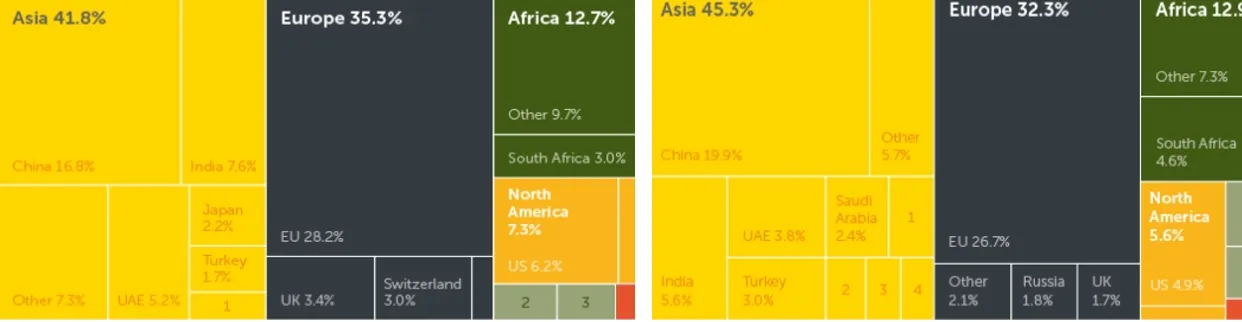
The EU is Not Africa’s Largest Trading Partner
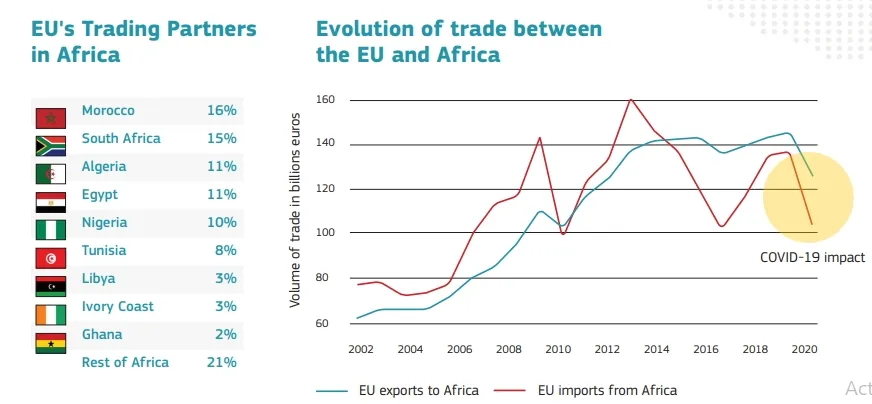 This trade concentration raises questions about the nature of Africa's economic relationship with the EU, particularly when the continent’s overall trade potential with Europe is not fully realized. The trade imbalance indicates that Africa’s broader economic needs and priorities are not adequately addressed within the EU's trade agreements, especially considering the limited scope of the agreements to less-developed and smaller African economies.
4.1 Context of EU and UK Trade with Africa
The European Union (EU) and the United Kingdom (UK) maintain three distinct trade agreements with African countries. These include the Economic Partnership Agreements (EPAs) with 14 countries, Association Agreements with North African countries (4 countries), and a range of unilateral trade agreements under the Generalized Scheme of Preferences (GSP). The GSP comprises the standard GSP arrangement, which includes countries like the Congo and Nigeria; GSP+ for countries such as Cape Verde; and the "Everything But Arms" (EBA) arrangement for Least Developed Countries (LDCs), covering 33 African nations.
The UK, which previously negotiated trade deals under the EU framework, has continued with similar arrangements post-Brexit. The UK’s EPAs mirror the EU’s, covering countries such as Kenya, Ghana, Cameroon, Ivory Coast, and the Southern African Customs Union (SACU), which includes Botswana, Eswatini, Lesotho, Namibia, South Africa, and Mozambique. The similarity between the UK and EU EPAs highlights the lack of substantial change in the trade approach towards Africa post Brexit.
The EU claim that EPAs contribute to the implementation of the Africa-Europe Alliance for Sustainable Investment and Jobs, which is central to the EU’s Comprehensive Strategy with Africa.
The UK references its own Development and Investment strategy, still in draft form, which is largely unrelated to the UK’s EPAs. However, this analysis suggests that the EU and UK’s strategic focus on investment, competition policy, government procurement, and trade facilitation within EPAs may nullify many of the provisions proposed in their respective development strategies.
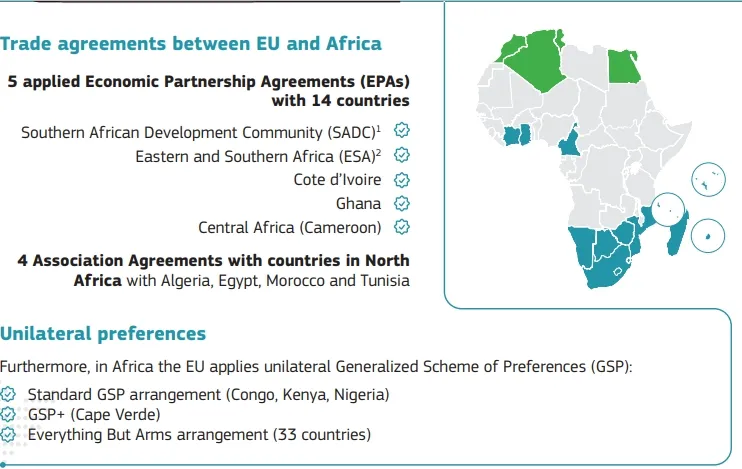
In this analysis, we focus on the Economic Partnership Agreements (EPAs), as they are the most consequential for Africa. EPAs not only encompass a wide range of agreements but also affect all African countries outside of North Africa. These agreements have significant implications for the structure and operation of regional trade agreements. Furthermore, the EPAs have far-reaching consequences for the African Continental Free Trade Area (AfCFTA), as they introduce numerous contradictions and overlaps between regional trade agreements and the AfCFTA framework
4.2 The Road to Losing the Battle on EPAs
“This is a major quadrennial event where all UN Member States negotiate guidance for UNCTAD, a UN institution working on trade and development. For the European Commission, it would have been a propitious place for a signature ceremony in order to project the EPA as a ‘trade and development’ agreement to the benefit of EAC. Yet, the agreement is antithetical to Tanzania’s as well as the region’s trade and development prospects”-Benjamin Mkapa, President of Tanzania, opposing a push by the EU to have Africa Heads of States host an unscheduled meeting to sign the EPA during the 14th Ordinary Session of United nations Conference on Trade and Development (today renamed UNTAD)
“We were not legally obliged to enter into the EPA process but we did so because we thought it could be a step to regional integration. I’m afraid it has worked out in an end game that could contribute to regional disintegration.” Rob Davies South Africa Minister of Trade and Industry, 2009-2019
In 2016, Benjamin Mkapa, the retired President of Tanzania, expressed Africa’s frustration with the EU’s pressure to sign the Economic Partnership Agreements. His open letter highlighted what many African leaders had long been feeling: the EPAs were an imposition rather than a mutually beneficial trade agreement. Two years earlier, the United Nations reported significant tensions between African Heads of State and the EU over the EPAs. At the 2014 African Union (AU) Heads of State Summit, senior EU officials attempted to bypass regional bloc discussions within SADC, EAC, and ECOWAS to secure the signing of the EPAs. However, this approach was met with resistance, with African leaders accusing the EU of attempting to divide the continent into smaller blocs in order to weaken collective bargaining power.
The confrontation escalated into accusations of blackmail and manipulation, with Nigeria and Mauritius threatening to withdraw from the EPA talks.
According to the UN report, an AU official called the EU’s threats and blackmail “an unprecedented power game rarely witnessed at an African heads of nations meeting.” Nigeria and Mauritius, angered by such arm-twisting, announced they might renege on their provisional acceptance of the Free Trade agreement. Nigeria went ahead to do exactly that and has refused to sign the EPAs to date.
Kenya, under significant pressure, was forced to sign the EPA in 2016, following the EU’s threat of imposing heavy taxes on Kenya’s key exports, particularly horticulture. Other East African Community (EAC) countries managed to avoid signing the EPAs, as they were classified as Least Developed Countries (LDCs), qualifying for the more lenient Everything But Arms (EBA) arrangement. However, this situation underscores the coercive nature of the EU’s approach to securing signatories for the EPAs.
The process of signing the EPAs has therefore been marked by a long and contentious struggle. And yet, despite widespread protests across the continent and a decade-long civil society campaign known as “STOP EPAs Campaign”, many African governments gradually acquiesced to EU pressure. Six Southern African Development Community (SADC) countries signed the EPAs in 2016, with Kenya following suit. The EU’s has already announced that two additional countries-Rwanda and Cape Verde-are on their way to signing the agreements. This is despite James Ndahiro, Rwanda’s then representative to the East African Legislative Assembly, expressing Rwanda’s strong objection on grounds that “outstanding issues, if not resolved and if included in the EPA framework, will bind the EAC to poor trading terms,”
Chukwuma Soludo, former governor of the Central Bank of Nigeria said of the STOP EPA Campaign
”Despite…the reported public protests in 20 countries against the (EPA) raw deal, it seems all but certain to be rammed through. In private whisperings, not many Africans or policymakers are happy with the deal but there is a certain sense of helplessness,”
Onkundi Mwencha, then Deputy Chairperson of the African Union (AU) Commission said:
“Our advantage is regional integration. Can EPA help us to integrate our markets? If anything it will stall us. I don’t think EPA is a priority for Africa,”
It is instructive to in 2007 the UK House of Commons Committee on International Development Committee objected to the issues that had been included in the EPAs at that time, and which now form part of the UK EPA.
So what is the contention with EPAs that makes Africa governments so emotional about a trade agreement, and why is the EU so singularly focused on getting it signed that it has spent two decades literally forcing governments to sign on to it?
43 Benefits and Losses of the EPAs
The EU and UK continue to present several benefits of the EPAs to African countries.
1. Compliance with WTO Requirements
One of the primary benefits of the EPAs is their alignment with World Trade Organization (WTO) regulations. Specifically, the agreements ensure that preferential treatment, when granted to one country, does not unfairly disadvantage others. Under WTO rules, such preferential treatment must be offered for a “reasonable” duration, typically up to ten years. This provision allows African countries to maintain their trade privileges while ensuring compliance with global trade standards, which can enhance the credibility of African markets in the international trading system.
2. Duty-Free, Quota-Free Access to the EU Market
The EPAs eliminate quotas and duties on exports from African countries to the EU, providing local producers with enhanced access to one of the world’s largest and most lucrative markets. This duty-free, quota-free access is expected to benefit a wide range of sectors, including agriculture, textiles, and manufacturing, by expanding export opportunities and stimulating local economies. The elimination of trade barriers can also enhance the competitiveness of African goods in Europe, driving economic growth and facilitating deeper integration into the global economy.
3. Boost to the Textile Industry and Other Key Sectors
One of the sectors poised to benefit significantly from the EPAs is the textile industry. With duty-free access to nearly 500 million consumers in the EU, African countries will be able to tap into a vast market, complementing the existing opportunities under the US’s African Growth and Opportunity Act (AGOA). This expanded market access is particularly important for countries that have strong textile industries, as it provides them with an opportunity to diversify and expand their export base.
4. Boost to Horticulture
In addition to textiles, the horticultural industry in countries like Kenya is also expected to gain from the agreement. The ability to access a larger, duty-free, and quota-free market for products such as flowers, fruits, and vegetables can enhance the profitability of local farmers. However, the extent of this benefit is somewhat diminished by the fact that European flower farms dominate the market, limiting the growth potential for African producers in this sector.
5. Support Measures for African Countries
The EU has introduced several support mechanisms aimed at mitigating the potential negative effects of the EPAs on African economies. These include a fund to compensate for the loss of revenue resulting from tariff removals and a “capacity building fund” designed to help countries strengthen their trade capabilities. These initiatives are intended to help African countries adjust to the changes introduced by the EPAs, ensuring that they can fully benefit from the agreements while minimizing the impact of trade liberalization on domestic industries. Among these measures is a commitment to implementing a "Development Matrix" to support African countries in adjusting to the EPAs. The estimated cost of this initiative is $70 billion, though EU contributions to date remain limited, standing at just $3.49 million—equivalent to a mere 0.005% of the required funding. This gap in funding raises concerns about the EU’s commitment to ensuring that the EPAs have a positive and sustainable impact on African economies.
While the EU cites Cameroon as a success story, where cushioning funds have helped mitigate some of the adverse effects of tariff reductions, the limited scale of current contributions calls into question whether the EU’s support mechanisms are sufficient to realize the full potential of the EPAs across the continent.
4.4 Contradictory Issues of Trade, Development and Migration
1. Undermining Regional Trade Agreements
The EPAs disrupt existing regional trade agreements among African countries, creating significant barriers to advancing both current sub regional trade agreements and negotiations under the African Continental Free Trade Area (AfCFTA).This undermines efforts to establish a cohesive and integrated continental market, weakening Africa’s ability to pursue meaningful regional economic cooperation.
Indiscriminate opening of African economies further jeopardize regional integration initiatives as the EU (i) enforces the tendency of narrowing down regional co-operation and integration processes to trade liberation, (ii) forces the scope and pace of that liberalisation, (iii) causes the break-up of regional configurations, and (iv) wants to be part of any region (EPA negotiations as foreseen by the EPA consultations and follow up.
By creating unequal conditions across African countries, EPAs weaken regional trade integration. Selective EPA benefits for LDCs and North African nations foster internal competition rather than unity. This fragmentation undermines Africa’s collective negotiating power and complicates efforts to establish cohesive trade policies.
Cross-border trade, particularly among farmers and small traders, suffers significantly. The lack of a unified approach to external trade relations dilutes Africa’s ability to secure favorable terms with global partners like the EU and China. EPAs require liberalization of 80% of imports from the EU. These duty-free imports would find their way in all SSA countries given the lax rules of origin so that the expectations that the ACFTA would increase intra-African trade would not materialize. Because the products imported duty free from the EU would be more competitive than most African products despite the deeper level of liberalization the CFTA is expected to make. The South Centre for example has shown that only 6% of Nigerian tariff lines are more competitive than EU products. Third World Network concludes ACFTA that comes in being is simply a giant African market place with little of African products to trade in. The ACFTA is simply facilitating the movement of products imported from Europe and other areas across Africa. The ACFTA is a lower level of integration than the customs union already in place in some regions, such as West Africa and EAC, with their common external tariffs
And that is not all.
The AU recognizes 8 Regional trading blocs (RECs)-ECOWAS-comprising 15 States), CEMAC-comprising 6 States, EAC-comprising 5 State, SADC-comprising 15 States, COMESA-comprising 19 States,UMA-comprising 5 States, IGAD-comprising 8 States, and the Community of Sahelo-Saharan States, comprising 28 States. There are already overlaps in membership to these regional grouping that have slowed down the region’s integration agenda. And yet the EU brings more confusion by creating new geopolitical configuration of the regional EPAs. In East Africa, for example, Tanzania belong to the LDC and so is covered by EBA. Kenya, on the other hand belongs to the Lower Middle Income Category and is an EAC EPA signatory. Tanzania is also a member of SADC, where countries such as South Africa are included in the SADC EPA.
2. Exacerbating Job Losses and Increasing Migration into Europe
As way back as 2004, Civil Society ,under the CONCORD Cotonou Working Group (CCWG) had warned that if the EU insisted on pursuing the EPAs based on Free Trade Areas (FTAs) as defined by the WTO, it will automatically imply the elimination (not the reduction) of duties and other restrictive regulations of commerce on essentially all trade. This would have a devastating effect on not just Africa’s agriculture and small businesses that provides employment for over 80% of its population, FTAs, as currently structured and demanded by EPAs signed so far, will flood Africa will cheap European goods and dumped agricultural products, further undermining the very objective of the EU-reducing migration by allowing African countries to create jobs at home.
In addition the EU sticks to a narrow interpretation of this WTO rule insisting that “essentially all” would mean “more than 90%” (this has since been revised to 80%). In other words EPAs as they are currently being implemented require the 14 African countries to almost completely open their markets to EU imports.
Taken together with the recent European policies such as those around Carbon Border Adjustment Mechanism, EU Regulation on Deforestation-free Products and other policies such as the Industrial Green Deal (Formerly Green Deal) and those on fertilizer,
3. Crippling Competition and Innovation
EPAs have exposed the 14 African countries to devastating EU competition, especially in combination with the narrow interpretation the EU has made and which is clear from the texts of the agreements. For example, the texts in rules of origin and Most Favoured Nations as well as the short period (5 years) given before discussions on investment, intellectual property and other broader issues can begin, show that the EU is keen to use EPAs to completely decimate the economies of the signatory countries. The EU has not only closed the door on any flexibility for the African countries, the transition period is too short, the coverage is too broad, the elimination of tariffs too ambitious and there is too little regard for the position of Least Developed Countries, small vulnerable economies and land locked economies.
Here is what article 3 of the EU EPA with Kenya and other EPAs) states
The Parties undertake to conclude the negotiations in the subject matters listed below, within five (5) years from the entry into force of this Agreement: (a) Trade in services; (b) Trade-related issues-Competition policy; Investment and private sector development; Trade, environment and sustainable development; Intellectual property rights; Transparency in public procurement; (c) Any other areas that the Parties may agree upon.
These clause, first brought up in the WTO negotiations, have been rejected by African countries over the years because they go beyond trade agreements and make demands that will kill domestic markets and regulations, opening the door for exploitation of Africa by European multinationals. Most European multinationals benefit from subsidies by their governments when it comes to investments and tenders under the so-called “blended finance” arrangements. Beyond this, with African companies being primarily SMEs and informal, subjecting them to European rules for tendering and procurement will systematically decimate them. Beyond this, the EU has always over the years invoked intellectual property rules to block Africa and killed innovation and industries on the continent. And by the EU including clause (c) (any other areas) in the agreement there is room to include many unrelated issues whose disputes will not be resolved because the WTO dispute resolution mechanism is paralyzed.
African producers -including those from least developed countries and other vulnerable economies- suffer from serious capacity problems and will struggle to compete with import surges of duty-free and often heavily subsidized European goods in areas where they already compete. There is little incentive for Africa producers to diversify into more ‘value-added’ products, or for investors to put money into developing new capacity, given uncertain domestic and regional markets for products competing with EU imports. This is already leading to a ‘glass-ceiling’ being placed on African countries’ development, an increased dependence on the production and export of primary products and possible deindustrialization with associated job losses as already witnessed in Ghana.
4. Going Against Evidence of Do NO Harm
The Sustainability Impact Assessment (SIA) commissioned by the EU warns that for West Africa, EPAs “might accelerate the collapse of the modern West African manufacturing sector”.
This is already beginning to happen in the exact place of the study- West Africa, as seen in the Annex to this Report. African countries that signed onto EPA earlier on are already facing substantial adjustment costs when opening for EU exports.
5. Ignoring Empirical Evidence Against EPA Gains
A detailed scientific forecast of EPA by German Research Organization Deutsches Institut für Entwicklungspolitik, projected into its full years of implementation show that over the long term there is no significant trade benefit of EPAs to Africa. The study, show that while there is likely to be instant export and import increment (since most of the items listed under quota free and duty free already enjoy this benefit) negative effects will be realized quite early, as already seen in Ghana.
When focusing on specific agreements and economic sectors, the forecast study shows that EPAs will lead to increased imports from the EU to some countries. More specifically, the estimation results suggest an increase in the total imports from the EU will be most visible in the SADC EPA partner countries, especially with the Critical Raw Materials from South Africa and gas from Mozambique. In the area of manufactures trade, the study forecasts a dramatic decreases in exports from the ESA and SADC countries to the EU, but increases in imports from the EU into SADC countries. For the EU’s agricultural exports, the forecast find statistically significant increases to SADC and ESA and the Pacific.
6. EPAs overreliance on Liberalization as the only “Carrot” to Grow African Economies
There is little evidence that trade liberalization is correlated with economic growth, poverty reduction, or economic development. Whilst no country has developed successfully by turning its back on international trade, none has developed by simply liberalizing its trade. Analysis of trade, economic growth and poverty reduction needs to go beyond trade liberalization to include inter alia: the relationships between trade and inequality, trade and employment, bargaining power in global production chains and the distribution of gains from trade, the effects of trends in, and variability of terms of trade on poverty, the effects of primary commodity dependence, and the relationship between export and import instability and vulnerability.”
The so-called “enlightened view” proposed by the EU argues that economic growth is dependent primarily upon integration into the global economy. Research however shows that trade and trade policy is central and economic growth is rarely sparked by imported blueprints and opening up the economy is hardly ever critical. Economies grow when policies are targeted to domestic investors and tailored to domestic institutional realities. Ironically this is what the EU has done with its many Non-Tariff Barrier policies, yet it does not want them done by African governments.
EPAs are also inordinately preoccupied with liberalization as a way to better integrate Africa into the world economy, and lead to Job creation. This is an argument pushed by the EU, pointing Africa to its large youth bulge and demand for jobs. The UN Trade Agency UNTAD has done extensive research which show that Trade liberalization of a country’s own market is not a condition for integration into the world economy at the outset
Trade liberalization of a country’s own market is not a necessary condition for integration into the world economy. UNTAD findings show that economic integration, especially of developing countries, including through export-led growth strategies, appears to have had great potential for job creation. Successful integration was part of every development success story of past decades. Evidence shows that in many cases, however, opening a country’s own market may be even counterproductive.
Many early industrializers, argues UNTAD, had high trade barriers during their early development stages. Thus, many jobs newly created in South-East Asia, for example, can be attributed to trade, but not to trade liberalization of their markets.
The WTO argues that the fact that trade liberalization in South-East Asia was associated with great strides in alleviating poverty is not sufficient to show that it caused those strides; too much else was going on. The (mixed) evidence that liberalization has gone with increasing poverty in Latin America shows that most reforms will create some losers (some even in the long run) and exacerbate poverty. On the contrary the policy reforms proposed as part of EPAs implementation (as seen in Ghana) actually creates more hardships to the bulk of small traders and farmers who form the backbone of these economies.
7. EPAs coming Before Institutional Reforms
The OECD, to which the EU is a member, states clearly that institutional reforms and support through clear AID for trade agreements is a much better way than the haphazard promises made by the EU and which are become unpredictable and far in between. They argue that institutional reforms and cushioning of weak economies must precede any push to sign onto Free Trade Agreements. This issue, interestingly, remains outstanding, and with recent proposals to cut Aid budget by the EU and its members such as Netherlands, Belgium and even its non-member UK (who has an EPA with Kenya) it is unclear how this will be achieved. There are also concerns over the unwillingness of the EU to include development matrix as party and parcel of the EPA. The Development Matrix indicates costs priority projects to address the supply side constraints associated with implementing the EPA. They are envisaged adjustment costs and other trade related infrastructure so as to enable the countries to take full advantage of the market access granted by the EU. The EU has declined this proposal and instead proposes different unreliable sources coming from its various donor instruments.
8. Pushing EU Trade with Africa at Expense of Trade within Africa
One of the issues with the EPAs is that by creating conditions that are conducive to some countries (such as LDCs and North African countries) while making it difficult for the rest of the countries to trade with the EU, the EU is effectively creating internal competition on what is a weak trade benefit for Africa. If one notes that of all the current and proposed EPA signatories, only 3 have major exports to the EU, it becomes clear that the idea is to kill among African countries while allowing the EU to either cheaply sell or dump its products in Africa African.
The EPA also raises serious concerns about the future of cross border farmers that form the bulk of the regions trade. By negotiating independently with the EU and UK, African countries have set a dangerous precedent that could lead to further fragmentation of regional trade policies. The lack of a unified approach to external trade relations not only weakens the Africa’s bargaining power but also undermines efforts to establish a comprehensive and cohesive regional market. This will make it increasingly difficult for the Africa to negotiate with other trading partners, including the European Union and China, on favourable terms.
9. Killing Industrialization by Giving Incentives for Export of Raw Materials and Agricultural
The EPAs have provided significant incentives to the export of raw materials, critical minerals and unprocessed agricultural products while blocking exports of value added and industrial goods. Studies above by shows that in the area of manufactures trade, there will in fact be a reduction of exports from the ESA and SADC countries to the EU. The will in fact be increase in imports by African partner countries from the EU due to the EPAs, mainly driven by agricultural imports. On the import side, increased quantities at cheaper prices will generate welfare gains but this will be wiped out by losses of customs revenues due to agreed tariff reductions. Equally importantly, prospects of industrialization need to be carefully evaluated in light of increased competition from foreign markets.
10. Introducing a Complex and Harmful Agreement when there are Existing Options
African governments have been compelled to enter into complex and detrimental agreements under the EPAs, despite the fact that the World Trade Organization (WTO) already offers provisions that would allow African nations to maintain their current trade agreements. The EPAs force countries to adopt a new framework that may not align with their long-term economic interests, undermining their autonomy in shaping trade policies.
11. Unenforceable Concessions: Several concessions within the EPAs are difficult, if not impossible, to enforce due to existing policies, non-tariff barriers within the European Union, and pushing countries to the WTO such as the failed dispute resolution, which is the very reason countries went for FTAs in the first place. These provisions create gaps between the promised benefits and the actual outcomes, limiting the expected economic gains for African countries and leaving them vulnerable to trade imbalances.
11. Overreliance on Liberalization as a Development Strategy
EPAs are heavily reliant on trade liberalization as the sole strategy for African economic growth. However, evidence suggests that liberalization alone does not correlate strongly with poverty reduction, economic development, or industrialization.
Successful economic integration requires policies tailored to domestic realities. Many early industrializers, including those in Southeast Asia, relied on protective trade barriers during their developmental stages. For example, high tariffs in the initial phases of industrialization fostered growth and job creation in these economies. Conversely, EPAs push for market liberalization without addressing the structural and institutional weaknesses of African economies.
Research by UNCTAD shows that liberalizing a country’s market at an early stage often leads to counterproductive outcomes, such as increased poverty and inequality. In Latin America, trade liberalization has exacerbated poverty, while in Ghana, EPA-related reforms have disproportionately burdened small traders and farmers.
Lack of Evidence Supporting EPA Benefits
A detailed forecast by the Deutsches Institut für Entwicklungspolitik highlights the negligible long-term trade benefits of EPAs for Africa. While initial export and import increases are anticipated, the agreements ultimately lead to adverse effects, including declining manufacturing exports and over-reliance on imports from the EU.
The study reveals that SADC countries will experience significant reductions in exports to the EU, particularly in manufactured goods, while facing an influx of EU agricultural imports. This trend undermines Africa’s industrialization efforts and entrenches dependency on raw material and agricultural exports.
Incentivizing Raw Material Exports Over Industrialization
EPAs encourage the export of raw materials and unprocessed agricultural products while discouraging the trade of value-added goods. This incentive structure perpetuates Africa’s dependence on primary exports and hinders industrial growth.
The welfare gains from cheaper imports are offset by the loss of customs revenues and the erosion of local industries. For instance, increased EU agricultural exports to SADC countries intensify competition against local farmers, while African manufacturers struggle to penetrate EU markets
Case In Point- East Africa
A study by the South Centre shows that the EAC is more competitive than the EU on only 10% of tariff lines .As a consequence, this would mean that the majority of products that are currently produced will be put at risk due to tariff elimination in the EPA, and the EU being more competitive, producers will lose market share to EU imports as well in
home markets and other EAC markets. The study further shows that 51.3% of tariff lines/products where there is current local production will be damaged (1,100 tariff lines out of 2,144) as these are lines where liberalisation will take place and the EU is more competitive on these lines than the EAC
Taking into account potential future production (tariff lines where there is no current production), 2,366 tariff lines will be liberalised making the possibility of having future production in these products questionable. In total, 68.8% of all tariff lines or products could be put at risk (current and future production).
Further, a short list of sectors where there is current production which could be jeopardised and tariff lines where there is at present regional trade which could be compromised by the EPA as the EU is more competitive includes: processed oil products; chemical products for agriculture; commodity chemicals; medicines, vaccines and antibiotics; intermediate industrial products; final industrial products; vehicle industry; agricultural products; and books, brochures and other printed material.
African exports to the EU are mainly raw materials especially crude oil raising the question of value addition and regional integration. The major trading partners with the EU from Africa are South Africa, Nigeria, Libya and Algeria. African countries still export raw materials to Europe and provide a ready market for European finished goods thirty years after signing the preferential treatment agreements.
In 1976, just after the first Lomé Convention was introduced, the ACP states accounted for 6.7% of the EU market, while by 2005 it accounted for only 3% (see Borrmann & Busse 2007: 403). ACP’s trade with the rest of the world has also fallen over the same period (Ochieng 2007: 377-8). In addition, about 68% of total ACP exports to the EU consists of agricultural goods and raw materials, with ten products accounting for some 74% of this (Borrmann & Busse 2007: 404). This is, of course, despite the trade preferences that the ACP countries have enjoyed over many decades. Thus, while trade with the EU continues to be important to ACP countries, there is evidence that it is in decline, at least proportionately, and that primary commodities continue to form a substantial part with little apparent progression to added value processed goods
4.5 Specific Concerns with Kenya-UK EPAs
Contravention of EAC Principles
Kenya did not adhere to the required Principles under the EAC Treaty, specifically Article 37 of the EAC Customs Union Protocol that lays out the need to engage collectively using the EAC mechanisms as opposed to a national approach.
While the Kenya-UK EPA consistently makes reference to the EAC and even purports that it is signed on behalf of Kenya and the EAC, it fails when examined against the above requirements of mutual cooperation.
Undermining EAC Trade by Ignoring EAC Common External Tariff
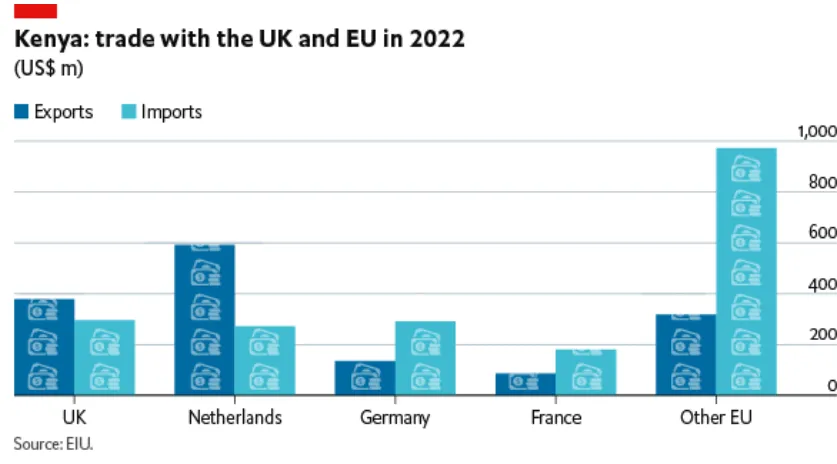
Kenya ignored the role of the EAC Common External Tariff and threw further into confusion the huge gains made towards achieving a Common External Tariff, a milestone in realizing the Customs Union. The result is a genuine concern that goods originating from Kenya into the rest of the EAC are actually imports from the UK that do not obey the EAC’s Rules of Origin.
Under the EAC Customs Union, goods originating from within the EAC are accorded preferential tax treatment when exported to another Partner State within the block while goods originating from outside the block are generally not accorded similar treatment.
Should unscrupulous traders repackage goods imported from the UK into Kenya as ‘made in Kenya’ there is inherent risk that other innocent goods originating from Kenya will be treated with suspicion.
Case In Point
A Late Night Deal that Pushed Kenya Out of the EAC Treaty, and out of ACFTA
On 9th March 2021, deep into the night, Kenya’s National Assembly – one of the two chambers of her national Parliament – approved the ratification of an Economic Partnership Agreement with the United Kingdom of Great Britain and Northern Ireland.
The approval had been preceded by a brief debate focused on form rather than the substance of the agreement. While there had been credible opposition and criticism to the agreement by the civil society, trade organizations, farmers’ forums and other stakeholders, the attitude of the legislators and the bureaucrats involved in the process was that the agreement had to be ratified at all cost.
That Kenya left it until a few hours to the deadline for ratification before rolling out public sensitization exercises was another indicator that the government was keen to limit debate on the agreement pre-ratification.
It even went ahead to bypass established protocols of the EAC.
Kenya’s justification for going it alone – citing the principle of variable geometry in the EAC Treaty – is both illogical and ultimately disingenuous. While variable geometry recognizes that Partner States are at different stages of development and may need to implement certain policies at different speeds, it is not meant to allow one country to unilaterally negotiate external trade agreements on behalf of the entire region. The principle was designed to offer flexibility in implementation, not to sidestep the EAC’s collective decision-making process. Kenya’s nationalistic approach to the EPA with the UK undermines the very purpose of variable geometry, turning what should be a collective regional effort into a series of isolated national actions that contradict the EAC’s core values.
The Kenya-UK EPA represents a significant missed opportunity for the EAC to negotiate collectively with the UK, and by extension, to strengthen the region’s bargaining power on the global stage. By negotiating independently, Kenya has not only jeopardized the integrity of the EAC but also undermined the regional bloc’s future efforts in achieving comprehensive trade agreements with other external partners, including the UK.
4.6 Losses to Farmers with UK and EU EPAs
Delayed Access to International Markets
The UK and EU argues that the EPA will benefit Africa by providing long-term tariff-free access to the UK market, which would theoretically lower production costs and enhance Africa’s agricultural competitiveness. However, the agreement’s provisions on tariff reductions are spread over an extended period, with many products not seeing significant cuts until 2028 or 2032, and complete liberalization unlikely until 2046. For Africa’s farmers these delays could hinder the country’s ability to access vital international markets and improve its economic standing.
Too Many Exclusions of Agricultural Produce
Moreover, the agreement’s exclusion of over 1,400 mainly agricultural product lines, including crucial agricultural goods such as maize, dairy, and vegetables, from tariff reductions severely limits the benefits to Africa’s agricultural sector. The EU and UK’s insistence on this exclusion demonstrates a lack of commitment to supporting Kenya’s primary industries, which remain a cornerstone of its economy. While Africa has the option to apply protective safeguard measures, these measures are not a substitute for meaningful tariff reductions that could enable African businesses to better compete in global markets.
Killing Domestic Agricultural Market
All EPA agreements involve liberalisation (market opening) on average, of eighty percent (80 percent) of all imports of goods into African countries who are party to the agreement from the European Union. That means 80 percent of products from the EU will duty free, quota. This, many experts and institutions, including the Africa Union Commission, objected to for a number of reasons. The EU-Mexico FTA, according to the factual abstract prepared by the WTO Secretariat and available on the WTO’s regional trade agreement (RTA) database,[1] only requires Mexico to liberalise 54.1 percent of imports from the EU by value over 10 years. In the Comprehensive Economic Cooperation Agreement between India and Singapore that entered into force on 1 August 2005, India was to maintain duties on 24.7 percent of trade with Singapore at the end of the implementation period. So, the insistence on the part of the EU for 80 percent was unjustifiable. Eighty (80) percent market opening is problematic. This is in addition to the fact that the EU had not indicated a willingness to abolish its agricultural subsidies. This poses major unfair competition against African producers of products such as milk, poultry, pork, beef, cereals etc. (Karingi, et al., 2005). These subsidies and domestic support are not being removed at the WTO, or in the EPA negotiations. The sectors that are viable for value chain development in Africa are the agricultural value chains and the minerals value chains.
EU Agricultural imports into Africa have been on the increase. The most dramatic example is the EU trade in poultry meat to Nigeria, which is exported via Benin. It is estimated that over 90 percent of EU poultry meat exports to Benin are destined for the Nigerian market. This situation had arisen in response to the strict Nigerian controls on imports of poultry meat via official ports of entry. This practice had seen Benin emerge as a leading destination for EU poultry exports. The sole purpose of this trade was to circumvent Nigerian poultry sector import controls. From 2015 the Nigerian authorities endeavoured to clamp down on cross border smuggling from Benin of poultry meat, rice, and second-hand cars. This had a significant impact on EU poultry meat export volumes to Benin, which fell by 38.2% between 2014 and 2017, with European exports of poultry meat to Benin falling a further 21% in the first 5 months of 2018 compared to the corresponding period in 2017.
Again, use of imported inputs as the primary feedstock for the production of value-added food products, with minimal linkage to the local producers, is most developed in the West African dairy sector, where a range of EU dairy companies have developed trade and investment strategies to capitalise on growing demand for dairy products in West Africa. From 2013, with the abolition of EU milk production quotas that was scheduled for April 2015, a range of EU dairy companies began to acquire local dairy companies or created joint ventures with food distribution companies in Africa to expand the sale of consumer ready dairy products derived from EU sourced milk powders[2]. A notable feature of most (but not all) of these investments was that they were largely unconnected to local milk production.
Case In Point
How One Company Killed The Dairy Sector
In October 2013 Danone- French multinational food-products corporation based in Paris-acquired a majority interest in the West African dairy products company Fan Milk International (FMI), with the aim of building on FMI’s proven system of serving and developing markets for budget conscious consumers and those without access to refrigeration in Ghana, Nigeria, Togo, Burkina Faso, Cote d’Ivoire and Benin.
In the EAC, in July 2014 Danone entered a Joint Venture with Kenya’s leading dairy company Brookside Dairies. This was seen as a gateway to the East African region. In May 2015 this saw Brookside buy the dairy business of Sameer Agricultural and Livestock in Uganda. In May 2017 also Danone took over Brookside Dairy’s shareholding in its Tanzanian business[3] through Danone’s 100 percent-owned Dubai registered Brookside Holdings Limited. Since Danone entered a joint venture with Brookside Dairy, EU exports of milk powder to Kenya, Tanzania and Uganda have increased 235 percent, while exports of butter have increased 102% and exports of cheese have increased almost 67percent[4] .
Farmers Losing to EU/UK Dumping
The safeguards in the EPAs for the protection of small-holder farmers are weak. The Agreement on Agriculture of the WTO, adopted during the Round leading to the establishment of the WTO, provided for an automatic safeguard for agriculture-that is when there is an import surge, it is invoked automatically to safeguard local producers from the imports surge.
However, it was only provided to those countries which converted non-tariff barriers to tariffs in that Round. As such, only 16 developed countries and 22 developing countries can avail of this Special Safeguard Provision (SSG). In Africa, only a small number of countries have access to the SSG - Botswana, Morocco, Namibia, South Africa, Swaziland and Tunisia. The EU also has access to the SSG. In fact, the SSG covers 31 percent of the EU’s agricultural tariff lines (i.e. should prices drop, or a volume surge take place) on the selected 31 percent of products, the EU can slap on much higher tariffs. Since 1995, the EU has used the SSG frequently – up to 61 times in 1996, 60 times in 1997, and 44 times in 2001.
Access to Africa’s Primary Agricultural Produce and Minerals
The EPAs are instruments for gaining privileged access to raw materials. The prohibition of exports taxes in most EPA agreements states that ‘No new duties or taxes on exports or charges with equivalent effect shall be introduced, nor shall those currently applied in trade between the Parties be increased from the date of entry into force of this Agreement.’ It is instructive to state that there is no WTO rule that requires the inclusion of export taxes in an FTA between a developed economy like the EU and developing countries like African countries, with thirty-three of the least developed countries. The rationale for the EU insistence on this in the EPA negotiations has been based on ‘undistorted’ access to raw materials and in this is applicable to the current quest for green mineral resources. In fact, this was one of the rancorous and sticking points in the EPA struggle and the Africa Union once threatened to discontinue the EPA negotiations.
4.7 Conclusion: A Call for Collective Regional Action
The EU/UK EPAs are a stark reminder of the risks associated with unilateral trade negotiations in a region committed to integration. While the EU and UK may argue that the agreement provides benefits for Africa’s economy, the long-term costs of undermining regional cooperation far outweigh any short-term advantages. Africa must redouble its efforts to negotiate collective trade agreements, ensuring that all Partner States benefit from external trade relations and that the region’s economic unity remains intact. Only by working together can the continent secure a prosperous future in the global economy, avoiding the fragmentation and disarray that EPAs signing through independent approach threatens to cause.
Case In Point
Failure To Test
First UK-Kenya EPOA Dispute remains unresolved
Kenya’s Economic Partnership Agreements (EPAs) with the UK are facing a new challenge due to an import-tariff dispute. The UK lodged a formal complaint in January 2024 over Kenya's import duty on alcoholic beverages, such as wine and whisky, which rose from the agreed 25% to 35% in mid-2022 under the East African Community's (EAC) Common External Tariff (CET). The UK EPA, signed prior to the tariff increase, has a fixed 25% duty, while the EU EPA, signed in June 2023 after the adjustment, failed to reflect the higher duty.
This dispute highlights the difficulty Kenya faces in balancing its commitments to both the EAC’s CET and the EPAs, particularly as the CET is adjusted annually. Kenya’s aim in negotiating the EPAs was to ensure compatibility with the CET to prevent market distortions within the EAC. However, the disconnect between the EPAs and the CET is now causing friction, with the UK and EU likely to continue pursuing formal complaints under their respective deals’ dispute resolution procedures.
To address the issue, Kenya plans to establish a technical working committee and engage with relevant agencies, but a clear solution remains uncertain. One potential resolution could involve Kenya persuading the EAC to align the CET with the EPAs, or seeking a special dispensation to revert to the 25% tariff for the disputed products. However, it is unlikely that the UK and EU will accept the higher tariffs without further negotiation.
This tariff dispute presents an opportunity to test the EPAs' dispute-settlement mechanisms, which could be critical for resolving future disagreements and encouraging other EAC members to join the agreements.
Comparing EU and UK EPAs with Other Trade Agreements: How the EU and UK Compare to the US, China, Japan, South Korea and the UAE
This analysis has presented reasons that should to a rethink of the EPAs.
They are going to cause irreparable damage to Africa’s economies and livelihoods.
The questions is whether other Africa Trade Partners are presenting a better offer than the EU and the UK.
In this section we present informal trade arrangements that Africa has with other countries and regions.
The aim is to bring to our attention how other trade partners relate with the continent.
It is also intended to enable the EU and UK to consider what it can borrow from other trade arrangements that are not structured the way the EU and UK has done with the EPAs
6.1 US-Kenya Strategic Trade and Investment Partnership (STIP)-Negotiations Ongoing
The U.S. government also views Kenya as a strategic partner in the region. Kenya is a major beneficiary of U.S. security and foreign assistance, acts as a hub for U.S. security initiatives in the region, and hosts the largest U.S. embassy in sub-Saharan Africa (SSA).
Kenya is a relatively small trading partner for the United States (94th largest in 2023), but the United States is a major trading partner for Kenya (4th largest) and the fifth-largest single export market, accounting for 6% of Kenya’s exports. In contrast, Kenya’s largest overall trading partner, China, accounted for 18% of Kenya’s reported imports ($3.2 billion of $19 billion) and 3% of Kenya’s exports in 2023 ($207 million of Kenya’s reported $7.1 billion total). In 2023, the United States had a goods trade deficit with Kenya; U.S. exports stood at $443 million and imports at $895 million.
When the US begun Trade negotiations with Kenya (known Strategic and Investment Partnership (STIP) it was seeking to use the country as its hub for not just the US corporations working in neighbouring mineral rich countries, it was seeking to create a model that may be replicated with other African countries. the Kenya’s Tariffs.
The U.S. government identified certain nontariff barriers (NTBs) as ongoing concerns for U.S. businesses, including Kenya’s complex import requirements for agricultural products and inefficient customs procedures.
But just as the EU and UK EPAs that sought to include procurement and investment issues as part of the Trade Agreement, the US has also included issues around Data, Technology and Kenya government’s procurement laws that grants preference to Kenyan companies for procurements under roughly $340,000
Motivations for STIP
For the United States, a final STIP agreement could enhance U.S.-Kenya trade relations by addressing NTBs, and
Reducing NTBs could lower costs for U.S. businesses and help U.S. firms maintain their competitiveness in the Kenyan market, especially given Kenya’s new trade agreements with the United Kingdom (UK, effective since 2021) and the European Union (EU, ratified by both parties as of April 2024), both of which lower tariffs
Argued to be the model that will set the floor for USA engagement with Africa in the post-Africa’s Growth and Opportunity Act (AGOA) period, the so-called STIP negotiations began on July 8, 2020, and reached the eighth negotiating round as of September 2024. The STIP purports it will increase investment; promote sustainable and inclusive economic growth; benefit workers, consumers, and businesses (including micro, small, and medium-sized enterprises); and support African regional economic integration.
Emerging Concerns
However, there are already concerns that the STIP has the potential to undermine the rights of small holder farmers and traders. What is also revolutionary about the STIP is that the U.S, a developed and high-income country is proposing entering into a reciprocal free trade agreement with Kenya, a low middle income country.
Just like the EU and UK EPA the following key concerns are beginning to emerge in the STIP negotiations
Cost of Agricultural Trade Liberalization for Kenya and Kenyan Farmers
In a letter to the Principal Secretary of the Ministry of Investments, Trade and Industry for Kenya, Small Scale Farmers were concerned that the STIP may be used to undermine Kenya’s quotas to limit imports of agricultural products from the US which is are critical in stabilizing domestic agricultural prices in Kenya (Econews Africa, 2023). Under current negotiation proposals (most of it in secrecy), U.S. exports of farm products to Kenya would enjoy a huge tariff advantage if the agreement granted the demanded zero tariffs on agricultural products exported to Kenya. This would have serious negative implications for farmers in Kenya and in the EAC as a whole, including undermining food security.
The US is notorious for dumping, a process of offloading excess or heavily subsidized agricultural and other produce onto countries at very low prices or for free
Undermining Farmer Managed Seed Systems in Kenya: Until recently Kenya had maintained a ban on genetically engineered (GE) food and feed imports, blocking both U.S. Government food aid and U.S. agricultural exports derived from agricultural biotechnology (Econews Africa, 2023). The restriction affects U.S. exports of processed and unprocessed foods and feed ingredients, such as soy, corn, and distiller dried grains. The law also applied to trans-shipment.
But it appears that as the negotiations begun, the lifting of this ban was the first demands put on the table. The ban was lifted at almost the same period that negotiations were picking up and the issue is now left to courts to decide.
US agricultural corporations like CropLife and Monsanto have been pushing for the so-called science-based regulations in the STIP equivalent Indo-Pacific Economic Framework (IPEF) negotiations (Econews Africa, 2023). The broad liberalization scope under the agriculture pillar may lead to the flooding of Kenya’s market with genetically modified products like corn and soya bean, and other products like peas, lentils, dairy and beef products among others, hence undermining Kenyan smallholder farmers.
Likely Impact of U.S. Agricultural Subsidies on Kenyan small-scale farmers: For nearly 100 years now, the U.S. government has played a major role in aiding U.S. farms and farmers through subsidies, including direct payments, crop insurance, and loans. Excluding crop insurance payments, in the U.S., federal government payments to farms have steadily risen, from $1.5 billion in 1949 to $32.1 billion in 2000 (Congressional Research Service, 2019). In 2019 alone, U.S. farms received $22.6 billion in government payments and this represented about 20.4 per cent of the $111.1 billion in total net farm income (ibid). It is estimated that 39 percent of the 2.1 million farms in the U.S. receive subsidies (ibid). A significant percentage of U.S. farm subsidies go to crops that are likely to end up in the Kenyan market if agricultural trade under STIP is fully liberalized.
Comparison with EU/UK EPA
IT appears the US is following the EU and UK demands on Kenya, and perhaps later across Africa when it begins to roll out STPs across the continent.
6.2 The China-EAC Framework Agreement on Economy, Trade, Investment and Technical Cooperation
Signed in 2011, the China-EAC FATITC one of the few formal Framework Agreement focusing on the promotion of commodity trade, the exchange of visits by businesspeople from EAC and China, cooperation in investment, infrastructure development and human resource development, and training Sino-EAC investment and trade under the initiative (Aspen Institute, 2011).
The framework also created a Joint Committee on Economy, Trade, Investment, and Technical Cooperation (JCET) as the implementation framework for the Agreement (ibid). This agreement stemmed from the broader Sino-Afro relationship under the Forum on China-Africa Cooperation (FOCAC). At the third FOCAC meeting in 2006 and its successor in 2009, the Chinese government announced measures aimed directly at improving agricultural production including provisions for 10 – extended to a further 10 in 2009 – agricultural demonstration centres across the continent, the dispatching of hundreds of Chinese volunteers to the African rural areas, scholarships and training in various aspects of agriculture for Africans (Alden, 2013). Furthermore, the China Development Bank (CDB) is prioritizing agricultural projects in their disbursements of loans from the US$ 5 billion China Africa Development Fund.
Since 2018, China has committed to the opening of “green lanes” to fast-track the inspection and quarantine process for African agriculture exports to China (Zainab & Tang, 2024). China has also established a “green channel” for the export of African agricultural products to China and provided zero tariff treatment for 97percent of the products exported to China, many agricultural, from 33 developing countries in Africa, (Zhang & Kuangyuan , 2022).
Comparisons with EU/EK EPA
It is difficult to have a full comparison between a formal trade agreement and a cooperation framework.
Africa’s share of China’s agricultural trade is significantly small.
For example, while China’s agricultural imports were at $161 billion in 2020, Africa only accounted for 2.6% of the trade share (Miriri & Bavier, 2022). Furthermore, in 2023, China’s exports to Africa were worth $173 billion while imports from Africa were valued at $109 billion (Zainab & Tang, 2024). This trade deficit implies that there is a lot of unutilised Chinese market potential by African exporters.
An area worth mentioning is the role of Chinese E-Commerce Platforms in Supporting Africa’s Agricultural Trade
As opposed to US Platforms such as Amazon, Chinese E-Commerce platforms are increasingly scaling up two-way China-Africa trade in Agricultural products. Platforms such as Kilimall, Alibaba Group’s Tmall, JD.com, and Kikuu are providing a virtual doorway for African suppliers into the world’s largest E-Commerce market. Kilimall, for instance, is an E-Commerce platform started in Kenya in 2014, but has most of its supply chain in China). It provides e-Commerce transaction, mobile payment, and cross-border logistics services for over 10 million farmers and traders across Africa, mainly from Kenya, Nigeria, and Uganda (Zainab & Tang, 2024).
The Chinese market is national, but its provincial expression and the provincial level opportunities do not yet appear to be fully understood by African policymakers. For example, Zhejiang, a coastal province, which is home to the port of Yiwu, is one of the major distribution hubs for commodities in the world and the second largest port for African goods
Market Access Challenges to China
Stringent Standards Requirements: China has been known to be notorious for stringent agricultural products attempting to access its market. For coffee alone (categorized as roasted or not roasted or decaffeinated; coffee husks and skins; coffee substitutes containing coffee in any proportion) China has over 60 quality standards in the entire coffee value chain that African exporters must meet (Miriri & Bavier, 2022).
A processing history standard requires disclosure of information on all stages of production including recordkeeping, processing methods and/or equipment and materials used (Zainab & Tang, 2024)
This is why while Kenya has an export deal with China for fresh avocado exports, only ten avocado exporters have passed required standards.
China insists on doing its audits and, based on the past experience of some other African fruit producers, it can take up to a decade to get the green light.
China’s reluctant to address its various policies and standards is as considerable inhibitor
Competition with domestic Chinese Agriculture Investors in Africa
China’s foreign direct investments into African agriculture has been rising significantly.
And this involves setting up its own agricultural farms in Africa.
Private Chinese farmers have already set up farms in Uganda, Zambia, and South Africa, while larger agricultural firms are in negotiation stages with African governments to lease tracts of land for production (Alden, 2013).
At the same time, state-led financial incentives have encouraged Chinese provincial firms to get involved in Africa’s agricultural sector. For example, China State Farms Agribusiness Group has established 10 state farms in Africa and the China Aquatic Products Group has been involved in 23 aquaculture and fishery projects in Africa,
Limited Product Diversity
China's demand for African agricultural products is concentrated on a few items like avocados, sesame seeds, and chili peppers (Yike, 2021).
Other Non-Tariff Barriers
Despite China’s zero-tariff policies on many African products, non-tariff barriers such as regulatory requirements, slow clearance and unclear customs procedures hinder access.
Comparison with EU/UK EPA
What comes out from a review of Chinese Trade with Africa is that it is in many ways similar to the approach taken by the EU and UK, only that it is not as well structured and documented. China, just like the EU and UK, appear focused on raw material extraction and agricultural produce.
A key disparity are the extremely prohibitive non-tariff barriers, making it unlikely to be a major market for Africa’s farmers.
However, just like the EU and UK, Chinese Businesses and farmers are also actively involved in large scale farming across Africa. Chinese farms in Africa are engaged in agriculture for both export and servicing the local market. While this may be good news for consumers, due to lower prices for most consumption goods, it also implies greater competition with small-scale farmers in domestic markets who risk being edged out by the well-financed and heavily mechanised Chinese farmers.
Africa’s agricultural trade with China, just like with the EU and UK, is skewed in favour of raw produce rather than value-added goods.
This limits opportunities for smallholders to participate in more lucrative value-added supply chains, reducing their earnings and long-term economic empowerment.
6.3 Japan-Africa Trade relationship under the Tokyo International Conference on African Development (TICAD)
While Japan has no FTA with any African country, the Tokyo International Conference on African Development (TICAD) has been used as a critical node for economic cooperation between the two parties. TICAD has played a crucial role in promoting support and investment from Japan to Africa over its 30-year history. Since its inception in 1993, over US$100 billion has been provided in assistance through a mix of repayable and non-repayable financial aid, including Official Development Assistance (ODA), private investment, and development finance (UNDP, 2023). Through TICAD, Japan has been supporting other initiatives aimed at boosting agriculture production in Africa for export and food security. For example, during the 8th TICAD held in 2022 in Tunis, Japan committed to provide $300 million to support food production and train 200,000 people in the agricultural sector, through joint programmes with the African Development Bank (TICAD, 2022). Japan further pledged to provide capacity building for 150,000 people and double rice production (56 million tons) by 2030 through the Coalition for African Rice Development (CARD). Japan has also supported over 66,000 farmers to move away from subsistence farming to large scale commercial and agriculture through the Smallholder Horticulture Empowerment & Promotion (SHEP) (TICAD8, 2022).
Challenges for African Agricultural Products in Japan's Market and TICAD's Role
Stringent Standards and Regulations
Japan's market imposes high sanitary and phytosanitary (SPS) standards on agricultural imports. These include strict regulations on pesticide residues, food safety, and packaging, (UNDP, 2023).
Comparison with EU/UK EPAs.
Africa’s trade relationship with Japan is still in favour of the Japan, with concerns that TICAD is reproducing Africa’s model with Europe
Nearly all of Africa’s exports to Japan are raw materials and agricultural
TICAD could transform smallholder farming into a competitive sector. However, this is unlikely to happen soon due to the high barriers placed on Africa’s products.
In many ways it is comparable to the EU and UK EPA Rules of Origin other policies
6.4 South-Korea K-Rice Belt Initiative with Cameroon, Gambia, Ghana, Guinea (Bissau), Kenya, Senegal, and Uganda.
On July 10th, 2023, South Korea’s Ministry of Agriculture, Food, and Rural Affairs signed a memorandum of understanding (MOU) known as the “K-Rice Belt Initiative with Cameroon, Gambia, Ghana, Guinea (Bissau), Kenya, Senegal, and Uganda to launch a brand-new project to improve rice yields in those countries (Ursu, 2023). The new initiative is part of Seoul’s official development assistance (ODA) and is designed to help the countries build irrigation systems and provide technical assistance and equipment to improve rice cultivation and distribution (Ursu, 2023). South Korea allocated an initial $80 million for the initiative with the goal of harvesting approximately 2,000 tons of rice varieties in the eight African partner nations in the first year, rising to10,000 tons by the year 2027 (Ursu, 2023). With Kenya and Uganda serving as pilot sites for the Initiative, 2040 tonnes of rice have been produced so far.
Impacts on Smallholder Farmers and Traders
The K-Rice Belt Initiative presents significant opportunities for smallholder farmers in Africa, especially in participating countries. The initiative empowers smallholders to increase rice yields and diversify their farming practices.
The K-Rice Belt Initiative offers a transformed ecosystem for rice trade in Africa. Increased production through the initiative creates opportunities for traders to expand their operations, particularly in domestic and regional markets.
Comparison with the EU/UK EPA
South Africa’s approach to Africa Trade appears very similar to that of the EU and UK
When South Korea held its Africa-Korea summit in 2024, it became clear that the K-rice initiative was an entry point to the critical minerals resources in the continent.
The Hidden Intentions
Kenya and Uganda are rich in resources such as rare earth minerals, cobalt, and lithium, essential for South Korea’s tech and manufacturing industries. Indeed, Nigeria and South Korea have amended the 2006 MoU to enable collaboration on the exploration of large deposits of lithium (Okafor, 2023).
South Korea positions itself as a key partner in the continent’s development, potentially creating pathways for its companies to dominate other sectors, such as technology or energy. While this approach fosters mutual benefits, African governments must remain vigilant to ensure their interests are not overshadowed by external agendas.
6.5 UAE-Kenya Comprehensive Economic Partnership Agreement (CEPA)
In February 2024, the UAE and Kenya signed CEPA, an instrument that seeks to simplify trade procedures, enhance investor confidence, advance digital trade, and strengthen cooperation between the private and public sectors, among other measures. This is the third FTA between an African country with a Middle Eastern country.
The UAE has signed several CEPAs including with former foes Israel and Turkey and with Asian giants India and Indonesia. The Gulf state sealed its first CEPA with African nations in 2023 with the island of Mauritius and the Republic of Congo-Brazzaville.
It is key to note that the UAE is Kenya’s 7th largest export market and 3rd overall trading partner, which makes it a strategic market for Kenya (Ministry of Trade Kenya, 2024). Both sides agreed to undertake further consultations and establish technical working committees.
Fourteen (14) areas have been identified as focus areas under CEPA. They cover trade in goods; market access; rules of origin; food and agriculture (SPS); technical barriers to trade; customs procedures and trade facilitation; digital trade; investment; trade in services; economic and development cooperation; small and medium enterprises; trade remedies; legal and institutional issues; and intellectual property rights (Ministry of Trade Kenya, 2024).
Section 1: A Brief History of Africa Trade Agreements with Europe
Trade agreements are not a new concept for Africa. For centuries, the continent engaged in various trade arrangements, such as those with the Omani Arabs along East Africa’s coast and the powerful kingdoms of Mali, Benin, Oyo, and the Ibo in West Africa. These were reciprocal agreements where the Arabs, for example, exchanged specific products for raw materials from the continent.
Trade agreements with Europe, on the other hand, are not just fairly recent, they had completely new rules.
In their groundbreaking research, African Export-Import Bank reveals how centuries of Euro-African trade, especially the export slave trade that privileged the use of firearms disrupted African production, brought a sense of insecurity, and made the cheaper metals and textiles Europe brought more attractive. Unlike the Arabs who focused on securing raw materials in exchange for raw manufactured products of their own, the Europeans embarked on a one-sided trade agreement where it extracted resources without giving anything in return.
Afrexim Bank research shows how the arrival of the British led to a dismantling of trade arrangements and a dramatic shift to manipulated trade agreements among Africans on the one hand and Arabs and Indians on the other by inserting themselves in the existing trade as middlemen and not as producers. The rise of commission agents in Europe, who for a small commission received the produce of African traders and sold them on the European market, and in return bought European manufactured goods and shipped these to their African clients opened up African trade to systemic one sided agreements where both the consumers and extractors were Europeans. Europe gradually became producers, but this time not of raw materials. Instead Africa’s raw materials became the engine of their production processes.
For a few decades European powers managed their affairs in Africa without significant conflict, as the sheer scale of resources they extracted was enough to maintain peace among them. However, tensions soon emerged over territorial resources, especially in parts of East, Central and West Africa, leading to the first ever trade agreement about Africa, with no African participation. Signed on February 26, 1885 the General Act of the Berlin Conference on West Africa (GA) agreed on key issues relating to a common framework for the recognition of European “effective occupation” of African territory and on the principle that control of territory could not be claimed until said territory was actually occupied.
In particular, Articles1, 2, 3 and 4 of the GA states in part:
In extending the principle of free trade to this eastern zone the Conference Powers only undertake engagements for themselves…Wares, of whatever origin, imported into these regions, under whatsoever flag, by sea or river, or overland, shall be subject to no other taxes than such as may be levied as fair compensation for expenditure in the interests of trade, and which for this reason must be equally borne by the subjects themselves and by foreigners of all nationalities. All differential dues on vessels, as well as on merchandise, are forbidden. Merchandise imported into these regions shall remain free from import and transit dues. The Powers reserve to themselves to determine after the lapse of twenty years whether this freedom of import shall be retained or not
What is worth noting is how closely the 38 Articles of the GA resemblance current Free Trade Agreements between European countries and countries and African countries.
For instance Articles 25 and 26 of the GA echo many of the provisions of the Samoa Agreement and EPAs while the provision for WTO dispute resolution is lifted from Articles 12 and 19 of GA.
These include:
1. Streamlining European Competition for Africa’s Raw Material.
European powers feared that if one nation did not participate in the colonization of Africa, others would benefit, leaving them without access to valuable resources. This competition for African resources shaped numerous clauses in later agreements aimed at safeguarding individual European interests while ensuring collective benefits. These concerns are reflected in several provisions of the Cotonou Agreement, particularly Articles 5, 22, 23, 34-36, 42, and 45. The same principles underpinned Articles 16, 50, and 51 of the 2023 Samoa Agreement and were crucial in the creation of regional EPAs. These principles also extend across the 14 EPAs signed with African nations to date, demonstrating the ongoing influence of colonial-era motivations in modern trade agreements.
Market Expansion
The GA was also seen as a form of market expansion, in which Africa acted as captive markets for exports from Europe. Interestingly this concept of having Africa purely as a market for Europe’s manufactured goods was the reason for the long stalemate in signing of Samoa Agreement by several African countries. Even after nearly two decades the structure of the agreement led to a walk out by 43 countries on the eve of the signing in November 2024. It is also the reason countries such as Tanzania and Nigeria have blocked the signing of the regional EPAs.
EU and UK Trade Agreements with Africa: From General Act of the Berlin Conference to Economic Partnership Agreements
"Under the effect of the example of the European Common Market, many countries of the Third World are lulled by excessive hopes conceived on the European model that is obtained by the gradual opening of markets. In my opinion, this is a false trajectory because the reduction of tariffs helps in the first place the expansion of multinational enterprises established within common markets, more powerful and better prepared to seize new opportunities"-Ignacy Sachs, La découverte du Tiers Monde, Flammarion, 1971
“I see them as an opportunity for the ACP regions to fast-track their way to regional integration.” Peter Mandelson, EU Commissioner For Trade, speaking at the ACP-EU Economic and Social Interest Groups Meeting, 29 June 2005
Introduction
Africa’s trade challenges stem from a complex web of overlapping agreements with external partners, often involving multilateral or unilateral commitments. These agreements, which go by various names, have significantly impacted the development of the African Continental Free Trade Area (AfCFTA) and hindered intra-African trade.
African countries are bound by their commitments to the World Trade Organization (WTO) and have entered into numerous trade deals with global partners. These include agreements with the G7 countries, which often contain clauses that frame them as "building blocks" for the AfCFTA. However, in practice, many of these deals undermine the goals of the AfCFTA and disrupt existing regional trade agreements.
Africa-EU Trade Volume
Despite claims that the EU is Africa’s largest trading partner, the reality is that a disproportionate amount of trade is concentrated in just six African countries—Morocco, South Africa, Algeria, Egypt, Nigeria, and Tunisia—which together account for 72% of Africa’s trade with the EU. These six countries represent only 10% of Africa’s total population and area, while the remaining 49 countries, comprising 90% of the continent, primarily engage in trade with other global players such as China, Russia, India, and the United States. This trade imbalance highlights a significant issue with Africa's reliance on the EU as a trade partner, especially when looking at the broader picture of intra-continental trade and economic development.
Africa’s Exports Africa’s Imports
The EU is Not Africa’s Largest Trading Partner
This trade concentration raises questions about the nature of Africa's economic relationship with the EU, particularly when the continent’s overall trade potential with Europe is not fully realized. The trade imbalance indicates that Africa’s broader economic needs and priorities are not adequately addressed within the EU's trade agreements, especially considering the limited scope of the agreements to less-developed and smaller African economies.
4.1Context of EU and UK Trade with Africa
The European Union (EU) and the United Kingdom (UK) maintain three distinct trade agreements with African countries. These include the Economic Partnership Agreements (EPAs) with 14 countries, Association Agreements with North African countries (4 countries), and a range of unilateral trade agreements under the Generalized Scheme of Preferences (GSP). The GSP comprises the standard GSP arrangement, which includes countries like the Congo and Nigeria; GSP+ for countries such as Cape Verde; and the "Everything But Arms" (EBA) arrangement for Least Developed Countries (LDCs), covering 33 African nations.
The UK, which previously negotiated trade deals under the EU framework, has continued with similar arrangements post-Brexit. The UK’s EPAs mirror the EU’s, covering countries such as Kenya, Ghana, Cameroon, Ivory Coast, and the Southern African Customs Union (SACU), which includes Botswana, Eswatini, Lesotho, Namibia, South Africa, and Mozambique. The similarity between the UK and EU EPAs highlights the lack of substantial change in the trade approach towards Africa post Brexit.
The EU claim that EPAs contribute to the implementation of the Africa-Europe Alliance for Sustainable Investment and Jobs, which is central to the EU’s Comprehensive Strategy with Africa.
The UK references its own Development and Investment strategy, still in draft form, which is largely unrelated to the UK’s EPAs. However, this analysis suggests that the EU and UK’s strategic focus on investment, competition policy, government procurement, and trade facilitation within EPAs may nullify many of the provisions proposed in their respective development strategies.
In this analysis, we focus on the Economic Partnership Agreements (EPAs), as they are the most consequential for Africa. EPAs not only encompass a wide range of agreements but also affect all African countries outside of North Africa. These agreements have significant implications for the structure and operation of regional trade agreements. Furthermore, the EPAs have far-reaching consequences for the African Continental Free Trade Area (AfCFTA), as they introduce numerous contradictions and overlaps between regional trade agreements and the AfCFTA framework
4.2The Road to Losing the Battle on EPAs
“This is a major quadrennial event where all UN Member States negotiate guidance for UNCTAD, a UN institution working on trade and development. For the European Commission, it would have been a propitious place for a signature ceremony in order to project the EPA as a ‘trade and development’ agreement to the benefit of EAC. Yet, the agreement is antithetical to Tanzania’s as well as the region’s trade and development prospects”-Benjamin Mkapa, President of Tanzania, opposing a push by the EU to have Africa Heads of States host an unscheduled meeting to sign the EPA during the 14th Ordinary Session of United nations Conference on Trade and Development (today renamed UNTAD)
“We were not legally obliged to enter into the EPA process but we did so because we thought it could be a step to regional integration. I’m afraid it has worked out in an end game that could contribute to regional disintegration.” Rob Davies South Africa Minister of Trade and Industry, 2009-2019
In 2016, Benjamin Mkapa, the retired President of Tanzania, expressed Africa’s frustration with the EU’s pressure to sign the Economic Partnership Agreements. His open letter highlighted what many African leaders had long been feeling: the EPAs were an imposition rather than a mutually beneficial trade agreement. Two years earlier, the United Nations reported significant tensions between African Heads of State and the EU over the EPAs. At the 2014 African Union (AU) Heads of State Summit, senior EU officials attempted to bypass regional bloc discussions within SADC, EAC, and ECOWAS to secure the signing of the EPAs. However, this approach was met with resistance, with African leaders accusing the EU of attempting to divide the continent into smaller blocs in order to weaken collective bargaining power.
The confrontation escalated into accusations of blackmail and manipulation, with Nigeria and Mauritius threatening to withdraw from the EPA talks.
According to the UN report, an AU official called the EU’s threats and blackmail “an unprecedented power game rarely witnessed at an African heads of nations meeting.” Nigeria and Mauritius, angered by such arm-twisting, announced they might renege on their provisional acceptance of the Free Trade agreement. Nigeria went ahead to do exactly that and has refused to sign the EPAs to date.
Kenya, under significant pressure, was forced to sign the EPA in 2016, following the EU’s threat of imposing heavy taxes on Kenya’s key exports, particularly horticulture. Other East African Community (EAC) countries managed to avoid signing the EPAs, as they were classified as Least Developed Countries (LDCs), qualifying for the more lenient Everything But Arms (EBA) arrangement. However, this situation underscores the coercive nature of the EU’s approach to securing signatories for the EPAs.
The process of signing the EPAs has therefore been marked by a long and contentious struggle. And yet, despite widespread protests across the continent and a decade-long civil society campaign known as “STOP EPAs Campaign”, many African governments gradually acquiesced to EU pressure. Six Southern African Development Community (SADC) countries signed the EPAs in 2016, with Kenya following suit. The EU’s has already announced that two additional countries-Rwanda and Cape Verde-are on their way to signing the agreements. This is despite James Ndahiro, Rwanda’s then representative to the East African Legislative Assembly, expressing Rwanda’s strong objection on grounds that “outstanding issues, if not resolved and if included in the EPA framework, will bind the EAC to poor trading terms,”
Chukwuma Soludo, former governor of the Central Bank of Nigeria said of the STOP EPA Campaign
”Despite…the reported public protests in 20 countries against the (EPA) raw deal, it seems all but certain to be rammed through. In private whisperings, not many Africans or policymakers are happy with the deal but there is a certain sense of helplessness,”
Onkundi Mwencha, then Deputy Chairperson of the African Union (AU) Commission said:
“Our advantage is regional integration. Can EPA help us to integrate our markets? If anything it will stall us. I don’t think EPA is a priority for Africa,”
It is instructive to in 2007 the UK House of Commons Committee on International Development Committee objected to the issues that had been included in the EPAs at that time, and which now form part of the UK EPA.
So what is the contention with EPAs that makes Africa governments so emotional about a trade agreement, and why is the EU so singularly focused on getting it signed that it has spent two decades literally forcing governments to sign on to it?
Beyond WTO: Free Trade Agreements (FTAs)
The WTO was proposed as a fairer and more structured space for global economies than its predecessor, the General Agreement on Tariffs and Trade (GATT). But right at its formation in what became known as the Doha Rounds, the advanced economies connived to grant themselves exemptions that allowed them to not only provide subsidies to their farmers at the expense of fair completion, they also opened room for their economies to dump excess agricultural and other products to weaker economies, the consequences that have seen the total collapse of maize sector in Haiti and the textile industry in East Africa.
The collapse of negotiations within the WTO, particularly after the failure of its dispute resolution system, led to trade crisis for the weaker economies, which exacerbated systemic protectionism and triggered trade wars. This turmoil became a key driver for the rise of Free Trade Agreements (FTAs). Between 2000 and 2022, over 360 FTAs came into force globally. In recent years, numerous African countries, including Kenya, Rwanda, Cape Verde, and 14 others, have either signed or are about to sign FTAs with countries in Europe, America, and East Asia. North African nations, curved out of Africa when it comes to trade agreements, also maintain multiple trade agreements with these regions.
While these trade agreements offer opportunities, they come with significant challenges where a region and country’s economy is not sufficiently diversified.
Between 1990 and 2024, for example, most of the world’s advanced economies , and those affiliated with them, took advantage of their control of raw materials trade, or closeness to countries that had this control, and diversified their industrial and export bases.
Africa, whose trade with the world continues to be structured around extractivism largely remained reliant on revenues from extractive industries. Only a few nations, such as Rwanda, Senegal, and Sudan, made strides toward export diversification. As a result, Africa’s export profile remained concentrated in a limited number of commodities. This lack of diversification continues to hold back broader economic development, as exports from Central and Northern Africa became increasingly dependent on just a few sectors. In contrast, East Asian economies rapidly diversified their exports and moved toward more industrialized economies, with countries like China and Korea achieving remarkable growth. The failure to diversify Africa’s economy during this period underscores the limitations of current trade agreements, which often reinforce Africa’s role as a supplier of raw materials rather than fostering value-added industries that could propel long-term economic transformation.
1.3
5.1 Benefits of EPAs
The EPA, signed between the EU and UK on the one hand, and 14 African countries on the other, has a few benefits
- Compliance with WTO Requirements
One of the primary benefits of the EPAs is their alignment with World Trade Organization (WTO) regulations. Specifically, the agreements ensure that preferential treatment, when granted to one country, does not unfairly disadvantage others. Under WTO rules, such preferential treatment must be offered for a “reasonable” duration, typically up to ten years. This provision allows African countries to maintain their trade privileges while ensuring compliance with global trade standards, which can enhance the credibility of African markets in the international trading system.
- 2. Duty-Free, Quota-Free Access to the EU Market
The EPAs eliminate quotas and duties on exports from African countries to the EU, providing local producers with enhanced access to one of the world’s largest and most lucrative markets. This duty-free, quota-free access is expected to benefit a wide range of sectors, including agriculture, textiles, and manufacturing, by expanding export opportunities and stimulating local economies. The elimination of trade barriers can also enhance the competitiveness of African goods in Europe, driving economic growth and facilitating deeper integration into the global economy.
- 3. Boost to the Textile Industry and Other Key Sectors
One of the sectors poised to benefit significantly from the EPAs is the textile industry. With duty-free access to nearly 500 million consumers in the EU, African countries will be able to tap into a vast market, complementing the existing opportunities under the US’s African Growth and Opportunity Act (AGOA). This expanded market access is particularly important for countries that have strong textile industries, as it provides them with an opportunity to diversify and expand their export base.
- 4. Boost to Horticulture
In addition to textiles, the horticultural industry in countries like Kenya is also expected to gain from the agreement. The ability to access a larger, duty-free, and quota-free market for products such as flowers, fruits, and vegetables can enhance the profitability of local farmers. However, the extent of this benefit is somewhat diminished by the fact that European flower farms dominate the market, limiting the growth potential for African producers in this sector.
- 5. Support Measures for African Countries
The EU has introduced several support mechanisms aimed at mitigating the potential negative effects of the EPAs on African economies. These include a fund to compensate for the loss of revenue resulting from tariff removals and a “capacity building fund” designed to help countries strengthen their trade capabilities. These initiatives are intended to help African countries adjust to the changes introduced by the EPAs, ensuring that they can fully benefit from the agreements while minimizing the impact of trade liberalization on domestic industries. Among these measures is a commitment to implementing a "Development Matrix" to support African countries in adjusting to the EPAs. The estimated cost of this initiative is $70 billion, though EU contributions to date remain limited, standing at just $3.49 million—equivalent to a mere 0.005% of the required funding. This gap in funding raises concerns about the EU’s commitment to ensuring that the EPAs have a positive and sustainable impact on African economies.
While the EU cites Cameroon as a success story, where cushioning funds have helped mitigate some of the adverse effects of tariff reductions, the limited scale of current contributions calls into question whether the EU’s support mechanisms are sufficient to realize the full potential of the EPAs across the continent.
- 5.2 How EPAs have weakened the ACFTA and Regional Trade Agreements
1. Undermining Regional Trade Agreements
The EPAs disrupt existing regional trade agreements among African countries, creating significant barriers to advancing both current sub regional trade agreements and negotiations under the African Continental Free Trade Area (ACFTA).This undermines efforts to establish a cohesive and integrated continental market, weakening Africa’s ability to pursue meaningful regional economic cooperation.
Indiscriminate opening of African economies further jeopardize regional integration initiatives as the EU (I) enforces the tendency of narrowing down regional co-operation and integration processes to trade liberation, (ii) forces the scope and pace of that liberalisation, (iii) causes the break-up of regional configurations, and (iv) wants to be part of any region (EPA negotiations as foreseen by the EPA consultations and follow up.
By creating unequal conditions across African countries, EPAs weaken regional trade integration. Selective EPA benefits for LDCs and North African nations foster internal competition rather than unity. This fragmentation undermines Africa’s collective negotiating power and complicates efforts to establish cohesive trade policies.
Cross-border trade, particularly among farmers and small traders, suffers significantly. The lack of a unified approach to external trade relations dilutes Africa’s ability to secure favorable terms with global partners like the EU and China. EPAs require liberalization of 80% of imports from the EU. These duty-free imports would find their way in all SSA countries given the lax rules of origin so that the expectations that the ACFTA would increase intra-African trade would not materialize. Because the products imported duty free from the EU would be more competitive than most African products despite the deeper level of liberalization the CFTA is expected to make. The South Centre for example has shown that only 6% of Nigerian tariff lines are more competitive than EU products. Third World Network concludes ACFTA that comes in being is simply a giant African marketplace with little of African products to trade in. The ACFTA is simply facilitating the movement of products imported from Europe and other areas across Africa. The ACFTA is a lower level of integration than the customs union already in place in some regions, such as West Africa and EAC, with their common external tariffs
And that is not all.
The AU recognizes 8 Regional trading communities and trading blocs. There are already overlaps in membership to these regional grouping that have slowed down the region’s integration agenda. And yet the EU brings more confusion by creating new geopolitical configuration of the regional EPAs. Kenya was sued, first by a citizen and later by the government of Tanzania by a trade lobby group because of the confusion brought to its EAC partners by signing an EPA. In Tanzania belong to the LDC and so is covered by EBA. Kenya, on the other hand belongs to the Lower Middle Income Category and is an EAC EPA signatory. Tanzania is also a member of SADC, where countries such as South Africa are included in the SADC EPA.
- 2. Crippling Competition and Innovation
EPAs have exposed the 14 African countries to devastating EU competition, especially in combination with the narrow interpretation the EU has made and which is clear from the texts of the agreements. For example, the texts in rules of origin and Most Favoured Nations as well as the short period (5 years) given before discussions on investment, intellectual property and other broader issues can begin, show that the EU is keen to use EPAs to completely decimate the economies of the signatory countries. The EU has not only closed the door on any flexibility for the African countries, the transition period is too short, the coverage is too broad, the elimination of tariffs too ambitious and there is too little regard for the position of Least Developed Countries, small vulnerable economies and land locked economies.
Here is what article 3 of the EU EPA with Kenya and other EPAs) states
The Parties undertake to conclude the negotiations in the subject matters listed below, within five (5) years from the entry into force of this Agreement: (a) Trade in services; (b) Trade-related issues-Competition policy; Investment and private sector development; Trade, environment and sustainable development; Intellectual property rights; Transparency in public procurement; (c) Any other areas that the Parties may agree upon.
- 3. Pushing EU Trade with Africa at Expense of Trade within Africa
One of the issues with the EPAs is that by creating conditions that are conducive to some countries (such as LDCs and North African countries) while making it difficult for the rest of the countries to trade with the EU, the EU is effectively creating internal competition on what is a weak trade benefit for Africa. If one notes that of all the current and proposed EPA signatories, only 3 have major exports to the EU, it becomes clear that the idea is to kill among African countries while allowing the EU to either cheaply sell or dump its products in Africa African.
The EPA also raises serious concerns about the future of cross border farmers that form the bulk of the regions trade. By negotiating independently with the EU and UK, African countries have set a dangerous precedent that could lead to further fragmentation of regional trade policies. The lack of a unified approach to external trade relations not only weakens the Africa’s bargaining power but also undermines efforts to establish a comprehensive and cohesive regional market. This will make it increasingly difficult for the Africa to negotiate with other trading partners, including the European Union and China, on favourable terms.
- 4. Killing Industrialization by Giving Incentives for Export of Raw Materials and Agricultural
The EPAs have provided significant incentives to the export of raw materials, critical minerals and unprocessed agricultural products while blocking exports of value added and industrial goods. Studies above by shows that in the area of manufactures trade, there will in fact be a reduction of exports from the ESA and SADC countries to the EU. The will in fact be increase in imports by African partner countries from the EU due to the EPAs, mainly driven by agricultural imports. On the import side, increased quantities at cheaper prices will generate welfare gains but this will be wiped out by losses of customs revenues due to agreed tariff reductions. Equally importantly, prospects of industrialization need to be carefully evaluated in light of increased competition from foreign markets.
Case In Point
East Africa does not need the EU Market
A study by the South Centre shows that the EAC is more competitive than the EU on only 10% of tariff lines .As a consequence, this would mean that the majority of products that are currently produced will be put at risk due to tariff elimination in the EPA, and the EU being more competitive, producers will lose market share to EU imports as well in
home markets and other EAC markets. The study further shows that 51.3% of tariff lines/products where there is current local production will be damaged (1,100 tariff lines out of 2,144) as these are lines where liberalisation will take place and the EU is more competitive on these lines than the EAC
Taking into account potential future production (tariff lines where there is no current production), 2,366 tariff lines will be liberalised making the possibility of having future production in these products questionable. In total, 68.8% of all tariff lines or products could be put at risk (current and future production).
Further, a short list of sectors where there is current production which could be jeopardised and tariff lines where there is at present regional trade which could be compromised by the EPA as the EU is more competitive includes: processed oil products; chemical products for agriculture; commodity chemicals; medicines, vaccines and antibiotics; intermediate industrial products; final industrial products; vehicle industry; agricultural products; and books, brochures and other printed material.
African exports to the EU are mainly raw materials especially crude oil raising the question of value addition and regional integration. The major trading partners with the EU from Africa are South Africa, Nigeria, Libya and Algeria. African countries still export raw materials to Europe and provide a ready market for European finished goods thirty years after signing the preferential treatment agreements.
In 1976, just after the first Lomé Convention was introduced, the ACP states accounted for 6.7% of the EU market, while by 2005 it accounted for only 3% (see Borrmann & Busse 2007: 403). ACP’s trade with the rest of the world has also fallen over the same period (Ochieng 2007: 377-8). In addition, about 68% of total ACP exports to the EU consists of agricultural goods and raw materials, with ten products accounting for some 74% of this (Borrmann & Busse 2007: 404). This is, of course, despite the trade preferences that the ACP countries have enjoyed over many decades. Thus, while trade with the EU continues to be important to ACP countries, there is evidence that it is in decline, at least proportionately, and that primary commodities continue to form a substantial part with little apparent progression to added value processed goods
EU EPA Contravening EAC Principles
Kenya did not adhere to the required Principles under the EAC Treaty, specifically Article 37 of the EAC Customs Union Protocol that lays out the need to engage collectively using the EAC mechanisms as opposed to a national approach.
While the Kenya-UK EPA consistently makes reference to the EAC and even purports that it is signed on behalf of Kenya and the EAC, it fails when examined against the above requirements of mutual cooperation.
Undermining EAC Trade by Ignoring EAC Common External Tariff
Kenya ignored the role of the EAC Common External Tariff and threw further into confusion the huge gains made towards achieving a Common External Tariff, a milestone in realizing the Customs Union. The result is a genuine concern that goods originating from Kenya into the rest of the EAC are actually imports from the UK that do not obey the EAC’s Rules of Origin.
Under the EAC Customs Union, goods originating from within the EAC are accorded preferential tax treatment when exported to another Partner State within the block while goods originating from outside the block are generally not accorded similar treatment.
Should unscrupulous traders repackage goods imported from the UK into Kenya as ‘made in Kenya’ there is inherent risk that other innocent goods originating from Kenya will be treated with suspicion.
Other Losses from EPA
1. Delayed Access to International Markets
The UK and EU argues that the EPA will benefit Africa by providing long-term tariff-free access to the UK market, which would theoretically lower production costs and enhance Africa’s agricultural competitiveness. However, the agreement’s provisions on tariff reductions are spread over an extended period, with many products not seeing significant cuts until 2028 or 2032, and complete liberalization unlikely until 2046. For Africa’s farmers these delays could hinder the country’s ability to access vital international markets and improve its economic standing.
Too Many Exclusions of Agricultural Produce
Moreover, the agreement’s exclusion of over 1,400 mainly agricultural product lines, including crucial agricultural goods such as maize, dairy, and vegetables, from tariff reductions severely limits the benefits to Africa’s agricultural sector. The EU and UK’s insistence on this exclusion demonstrates a lack of commitment to supporting Kenya’s primary industries, which remain a cornerstone of its economy. While Africa has the option to apply protective safeguard measures, these measures are not a substitute for meaningful tariff reductions that could enable African businesses to better compete in global markets.
Killing Domestic Agricultural Market
All EPA agreements involve liberalisation (market opening) on average, of eighty percent (80 percent) of all imports of goods into African countries who are party to the agreement from the European Union. That means 80 percent of products from the EU will duty free, quota. This, many experts and institutions, including the Africa Union Commission, objected to for a number of reasons. The EU-Mexico FTA, according to the factual abstract prepared by the WTO Secretariat and available on the WTO’s regional trade agreement (RTA) database,[5] only requires Mexico to liberalise 54.1 percent of imports from the EU by value over 10 years. In the Comprehensive Economic Cooperation Agreement between India and Singapore that entered into force on 1 August 2005, India was to maintain duties on 24.7 percent of trade with Singapore at the end of the implementation period. So, the insistence on the part of the EU for 80 percent was unjustifiable. Eighty (80) percent market opening is problematic. This is in addition to the fact that the EU had not indicated a willingness to abolish its agricultural subsidies. This poses major unfair competition against African producers of products such as milk, poultry, pork, beef, cereals etc. (Karingi, et al., 2005). These subsidies and domestic support are not being removed at the WTO, or in the EPA negotiations. The sectors that are viable for value chain development in Africa are the agricultural value chains and the minerals value chains.
EU Agricultural imports into Africa have been on the increase. The most dramatic example is the EU trade in poultry meat to Nigeria, which is exported via Benin. It is estimated that over 90 percent of EU poultry meat exports to Benin are destined for the Nigerian market. This situation had arisen in response to the strict Nigerian controls on imports of poultry meat via official ports of entry. This practice had seen Benin emerge as a leading destination for EU poultry exports. The sole purpose of this trade was to circumvent Nigerian poultry sector import controls. From 2015 the Nigerian authorities endeavoured to clamp down on cross border smuggling from Benin of poultry meat, rice, and second-hand cars. This had a significant impact on EU poultry meat export volumes to Benin, which fell by 38.2% between 2014 and 2017, with European exports of poultry meat to Benin falling a further 21% in the first 5 months of 2018 compared to the corresponding period in 2017.
Again, use of imported inputs as the primary feedstock for the production of value-added food products, with minimal linkage to the local producers, is most developed in the West African dairy sector, where a range of EU dairy companies have developed trade and investment strategies to capitalise on growing demand for dairy products in West Africa. From 2013, with the abolition of EU milk production quotas that was scheduled for April 2015, a range of EU dairy companies began to acquire local dairy companies or created joint ventures with food distribution companies in Africa to expand the sale of consumer ready dairy products derived from EU sourced milk powders[6]. A notable feature of most (but not all) of these investments was that they were largely unconnected to local milk production.
Farmers Losing to EU/UK Dumping
The safeguards in the EPAs for the protection of small-holder farmers are weak. The Agreement on Agriculture of the WTO, adopted during the Round leading to the establishment of the WTO, provided for an automatic safeguard for agriculture-that is when there is an import surge, it is invoked automatically to safeguard local producers from the imports surge.
However, it was only provided to those countries which converted non-tariff barriers to tariffs in that Round. As such, only 16 developed countries and 22 developing countries can avail of this Special Safeguard Provision (SSG). In Africa, only a small number of countries have access to the SSG - Botswana, Morocco, Namibia, South Africa, Swaziland and Tunisia. The EU also has access to the SSG. In fact, the SSG covers 31 percent of the EU’s agricultural tariff lines (i.e. should prices drop, or a volume surge take place) on the selected 31 percent of products, the EU can slap on much higher tariffs. Since 1995, the EU has used the SSG frequently – up to 61 times in 1996, 60 times in 1997, and 44 times in 2001.
Section 2: Intra-Africa Trade
Rise of Intra-Africa Trade
While much attention has been paid to Africa’s trade with external actors, Intra-African trade, driven primarily by agriculture and small traders, has existed for centuries, and flourished in the past 50 years. But it was not until independence that African countries moved to cement trade relationship with their neighbours, first as an act of solidarity, but later as a central focus of economic advancement.
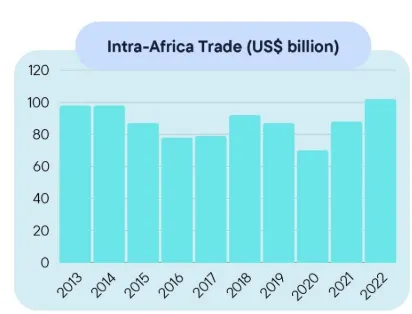 -
Over the decades Intra-Africa Trade, especially in agricultural produce has undergone rapid transformation, presenting significant opportunities for the continent’s economic growth and industrialization. A detailed analysis of Africa’s export statistics highlights a notable shift in the importance of regional markets compared to traditional export destinations like the European Union (EU).
Agricultural exports within Africa are growing at a much faster rate. For certain sub-regions, such as the East African Community (EAC), and countries like Zambia, Senegal, and Kenya, intra-African trade has already surpassed exports to the EU in importance (South Centre, 2010).
This trade continues to be fueled by agriculture, which remains Africa’s economic backbone.
While the top 3 traded goods (accounting for 50% of Africa’s exports outside the continent) are non agricultural products, almost all of Inter-Africa trade exports is from manufactured and processed agricultural produce.
In fact, Africa is a much larger market for SSA’s manufactured agricultural exports than Europe. This trend underscores a critical opportunity for SSA countries aiming to move up the industrial value chain and diversify their trade. Unlike the EU market, where SSA exports primarily consist of raw materials and energy products—90% of SSA’s exports to Europe from 2004 to 2008 fell into this category, excluding South African exports—the intra-African market demands more manufactured goods, providing a platform for industrialization.
Smallholder family farmers dominate this trade. They representing 80% of all farms and produce up to 90% of food in some countries. Over 33 million smallholder farmers provide more than 70% of the food consumed across the continent, contributing to two-thirds of Africa’s workforce and approximately 35% of the region’s Gross Domestic Product (GDP) (AFSA, 2022; AfDB, 2023)
Africa’s Large Traders by Size (2024)
Agricultural exports are central to many African economies, contributing significantly to GDP and serving as a major source of employment. The sector accounts for 20–50% of GDP in sub-Saharan Africa and dominates exports in many countries. Key export crops include cotton, tobacco, coffee, cocoa, tea, and horticultural products like fruits and flowers. Pulses from East and Southern Africa are also critical for export, particularly to the Indian subcontinent.
For some countries, agriculture is the backbone of the economy. Ethiopia, for instance, derives over 70% of its export revenue from agriculture. However, the emphasis on exports often comes at the expense of domestic food security, as governments prioritize cash crops over staple food production. The relative importance of agriculture for export varies depending on the country's revenues from oil, metals and minerals.
In Ethiopia, for example, agriculture accounts for more than 70% of exports.2 If export targets are not met in terms of the contribution to African countries tend to focus on exports rather than food security.
The proportion of GDP earned from agriculture, forestry and fishing plotted against employment in agriculture for countries of sub-Saharan Africa ( (Data sources: Y-axis – World Bank Data, World Bank national accounts data, and OECD National Accounts data files, /; X-axis – ILOSTATS, Labor Force Survey and other country specific sources)
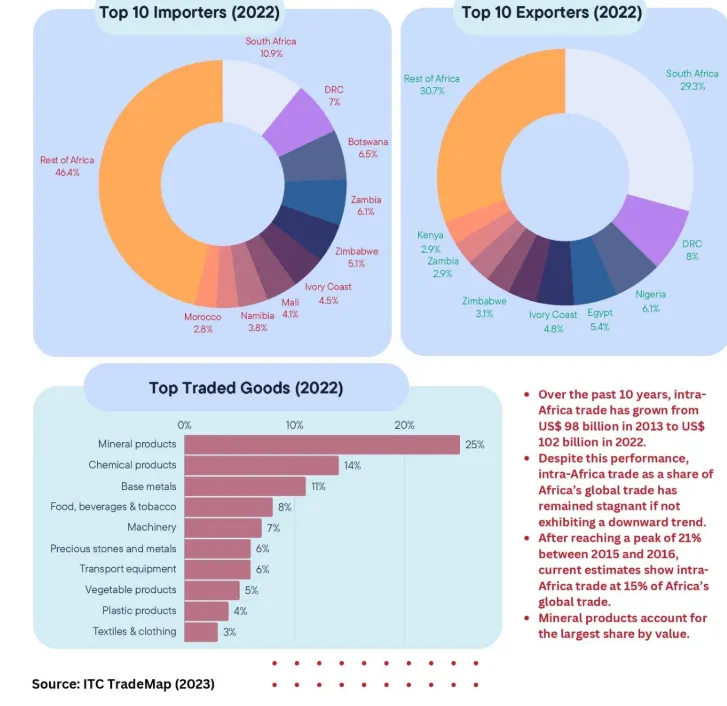
It is therefore surprising that Africa’s agricultural productivity growth has largely stemmed from land expansion rather than increased productivity Although agricultural production has increased substantially in sub-Saharan Africa over the past decades, this has largely been due to cultivation of more land rather than increases in land productivity (Sanchez, 2002).. A notable exception is Ethiopia, where productivity has surged since the adoption of its Agricultural Growth Plan, though some critics question the reliability of these statistics
Small holder Agriculture: The Backbone of Intra-Africa Trade
Smallholder family farmers dominate this trade. They represent 80% of all farms and produce up to 90% of food in some countries. Over 33 million smallholder farmers provide more than 70% of the food consumed across the continent, contributing to two-thirds of Africa’s workforce and approximately 35% of the region’s Gross Domestic Product (GDP) (AFSA, 2022; AfDB, 2023).
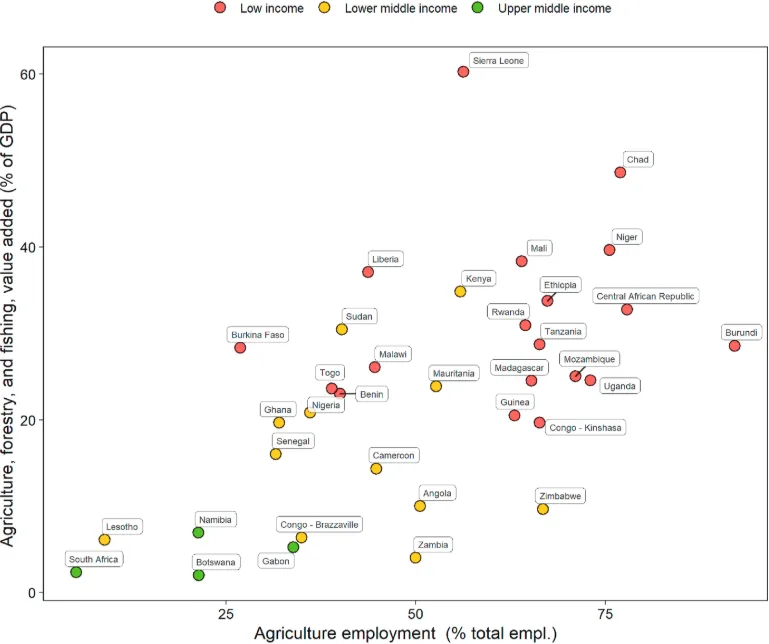
The proportion of GDP earned from agriculture, forestry and fishing plotted against employment in agriculture for countries of sub-Saharan Africa ( (Data sources: Y-axis – World Bank Data, World Bank national accounts data, and OECD National Accounts data files, /; X-axis – ILOSTATS, Labor Force Survey and other country specific sources).
It is therefore surprising that Africa’s agricultural productivity growth has largely stemmed from land expansion rather than increased productivity Although agricultural production has increased substantially in sub-Saharan Africa over the past decades, this has largely been due to cultivation of more land rather than increases in land productivity (Sanchez, 2002).. A notable exception is Ethiopia, where productivity has surged since the adoption of its Agricultural Growth Plan, though some critics question the reliability of these statistics.
Barriers to Intra-African Agricultural Trade
Intra-African trade in agricultural produce remains underdeveloped due to trade barriers like tariffs and non-tariff barriers (NTBs). For instance, in 2021, Senegal’s food exports to other African countries grew by 9%, but high tariffs limited further expansion. Similarly, while Tanzania exported nearly $1 billion worth of maize in 2022, NTBs imposed by neighboring countries such as Kenya and Zambia hindered market access. These barriers prevent smallholder farmers from fully benefiting from regional trade opportunities.
1. The Rise of Industrial Agriculture
One notable shift seen in African agriculture is the shift towards industrial models, marked by the monopolization of land, markets, and inputs by large corporations. Initiatives like the Memorandum of Understanding (MoU) between the Alliance for a Green Revolution in Africa (AGRA) and the African Continental Free Trade Area (ACFTA) Secretariat prioritize large-scale, industrialized farming at the expense of smallholder farmers.
Under this model, only farmers capable of scaling their operations are integrated into corporate value chains, leaving the majority excluded. This transition not only marginalizes smallholders but also undermines Africa’s agricultural sustainability. Industrial farming practices—such as monocultures, excessive chemical use, and short-term yield-focused strategies—degrade the environment and weaken ecosystem services.
2. Policy Misalignments and Environmental Risks
Agricultural policies aimed at combating hunger and malnutrition often replicate industrialized farming models without considering Africa’s unique environmental and socio-economic contexts (Leakey, Mabhaudhi, and Gurib-Fakim, 2021). This misalignment has stagnated productivity, leaving African nations increasingly reliant on food imports. If current trends continue, the projected growth of Africa’s agricultural market from $280 billion in 2023 to $1 trillion by 2030 (AfDB, 2023) will disproportionately benefit corporate entities while sidelining smallholder farmers.
It is impossible to engage in Trade in Africa without engaging with the African farmer. Agriculture, especially small-scale farming, is the backbone and lifeblood for a continent that has 33% of the world’s remaining arable land and 60% of its fresh water. It is therefore not surprising that agriculture and farming remain the centre of all trade agreements with Africa. Its other land wealth-oil, minerals and human resource, are the other central features in these agreements.
While much attention has been paid to Africa’s trade with external actors, Intra-African trade, driven primarily by agriculture and small traders, has undergone rapid transformation, presenting significant opportunities for the continent’s economic growth and industrialization. A detailed analysis of Africa’s export statistics highlights a notable shift in the importance of regional markets compared to traditional export destinations like the European Union (EU).
Agricultural exports within Africa are growing at a much faster rate. For certain sub-regions, such as the East African Community (EAC), and countries like Zambia, Senegal, and Kenya, intra-African trade has already surpassed exports to the EU in importance (South Centre, 2010).
Almost all of Inter-Africa trade exports is from manufactured and processed agricultural produce. In fact, Africa is a much larger market for SSA’s manufactured agricultural exports than Europe. This trend underscores a critical opportunity for SSA countries aiming to move up the industrial value chain and diversify their trade. Unlike the EU market, where SSA exports primarily consist of raw materials and energy products—90% of SSA’s exports to Europe from 2004 to 2024 fall into this category. Smallholder family farmers dominate this trade. They represent 80% of all farms and produce up to 90% of food in some countries. Over 33 million smallholder farmers provide more than 70% of the food consumed across the continent, contributing to two-thirds of Africa’s workforce and approximately 35% of the region’s Gross Domestic Product (GDP).
For some countries such as Ethiopia, agriculture is the backbone of the economy, driving over 70% of its export revenue. Africa’s agricultural productivity growth should come from increased productivity, not land expansion. Attempts at an African Green Revolution has failed in all ways except creating markets for large corporations the spectacular failure of AGRA. While African governments focus on expanding export markets, smallholder farmers face significant barriers to participation in global and regional trade. Intra-African trade in agricultural produce also remains underdeveloped due to trade barriers like tariffs and non-tariff barriers (NTBs).
One notable shift seen in African agriculture is the rise of industrial models, marked by the monopolization of land, seeds, markets, and inputs by large corporations. Under this model, only farmers capable of scaling their operations are integrated into corporate value chains, leaving the majority excluded. This transition undermines Africa’s agricultural sustainability. It is exacerbated by policies aimed at ending malnutrition that replicate industrialized farming models without considering Africa’s unique environmental and socio-economic contexts.
This misalignment has stagnated productivity, leaving African nations increasingly reliant on food imports. If current trends continue, the projected growth of Africa’s agricultural market from $280 billion in 2023 to $1 trillion by 2030, will disproportionately benefit corporate entities while sidelining smallholder farmers.
Section 3: Supporting Intra-Africa Trade
3.1 Introduction
Trade with Africa for a long time been driven by agreements with external actors.
For over fifteen years following independence, for example, the major markets for Africa were the European Union (EU) and the United States (US), with very little trade within the continent. The exception was trade between the then major East African countries-Kenya, Uganda and Tanzania. These countries were among the first to enter into a trading agreement under the East Africa Community. Kenya dominated this trade, with Uganda rising to become its largest trading partner.
For the rest of Africa, however, trade remained externally focused.
Trade under GATT
Africa’s trade with the European Union was based on the EU agreement with the African Caribbean and Pacific (ACP) Countries that provided unilateral preferential access to the EU market for ACP exporters. This was allowed and provided for under a global framework known as General Agreement on Tariffs and Trade (GATT) of 1947, in 1975. Trade with the US on the other hand was miniscule until the enactment of the African Growth and Opportunity Act of 2001.
From GATT to Africa Continental Trade Agreements
Upon the formation of the World Trade Organization (WTO) in 1995, however, many countries used the flexibility provided by an article in GATT which allows countries to form regional trade agreements like customs unions or free trade areas. They can lower tariffs among themselves, but with the condition that these agreements cannot raise trade barriers against countries outside the bloc. It is this clause that allowed Africa to trade with the EU under a duty-free-quota-free arrangement. But during the transition of from GATT to WTO this clause was challenged under the WTO Dispute Resolution mechanism known as the EC Bananas Case
When The EU went Bananas
"EC Banana Case" refers to a legal dispute at the World Trade Organization (WTO) where several Latin American countries like Ecuador and Colombia accused the European Union (EU) of unfairly protecting banana imports from its former colonies in the Caribbean and Africa, by imposing high tariffs on bananas from other regions, essentially giving preferential treatment to their "banana-producing" colonies, which was seen as discriminatory and against free trade principles.
It is called Banana case because Bananas were a significant export product for many of the countries involved in the dispute, making it a major trade issue.
Outcome of the case
The WTO ruled against the EU, finding that their banana import regime was discriminatory and violated international trade rules. The EU was forced to reform its banana import system to provide fairer access for Latin American banana exporters.
This decision led the EU to begin a process of recalibrating its relationship between ACP countries and itself through the introduction of Economic Partnership Agreements (EPAs)
Africa Response-Regional Trade Agreements
The Bananas case was not the only problem.
Africa quickly realized that there were many other imbalances in the new framework known as WTO.
For example, few developed economies managed to include a clause that allowed them to continue subsidizing their farmers, thus allowing them to dump cheap agricultural produce to other countries.
Upon the realization by African and other developing country governments on the inequitable imbalances of the WTO system, they began to put forward proposals for corrective action, while resisting further new agreements. Almost immediately after its establishment, therefore, the WTO became caught in a fundamental fight for its future! While the advanced industrial countries prevailed in 2001 in launching negotiations that mostly favoured them the WTO was effectively stillborn.
Frustrated by the solidarity and organized resistance of African and other developing country members, the advanced industrial countries, with the EU and US in the lead, adopted regional and bilateral trade and investment agreements as a means for achieving the further deregulation that they had been unable to get in the WTO’s negotiations.
The importance of the African integration even at that time, could not be underestimated.
Promoting trade cooperation among African countries for their mutual benefit of an expanded market that was to increase intra-African trade was another driver of the trade integration agenda. The broader goal that soured the ambition was the optimization and effective utilisation of African resources to accelerate productivity and the social well-being of its people.
Birth of the Africa Continental Free Trade Agreement (ACFTA)
In all these confusions and spurred on by the growing recognition of the marginalization of their developmental concerns within the multilateral and bilateral regimes, African governments saw the necessity of their own development agenda. And so during the 50th Anniversary of the Organization of Africa Unity (OAU) African Heads of States moved to form a Union of their own, launching the Africa Union and later an economic and political blueprint of their own known as Agenda 2063. Among its key goals were the following:
- Transforming Africa’s economies (goal 4) through ensuring collective benefit from Africa’s natural resources, manufacturing, industrialization and value addition, aimed at raising productivity and competitiveness
- Transforming African agriculture (goal 5) to enable the continent to feed itself and be a major player as a net food exporter.
To achieve this a project was initiated to ensure the promotion of deeper regional integration efforts, and in particular trade arrangements among themselves through the African Continental Free Trade Area (ACFTA). ACFTA was aimed at urgently taking forward the continent’s long-standing integration and development agenda and redress the vulnerabilities of Africa’s economies within the global economic order. The ACFTA therefore sought to create a single market for goods and services and to lay the foundations for the establishment of a Continental Customs Union, much like the EU. The Customs Union was seen as a key precondition for the establishment. Of the African Economic Community (AEC). After ten (10) negotiation rounds, the Agreement establishing the ACFTA was adopted by the AU Assembly in 2018, with trading under the regime commencing in 2021. One of the issues that stands out from the process leading to the negotiations and eventual implementation of the ACFTA is the exclusion of stakeholders such as farmers, trade unions, women groups, non-governmental organisation and even regional trading blocs.
The Journey to ACFTA
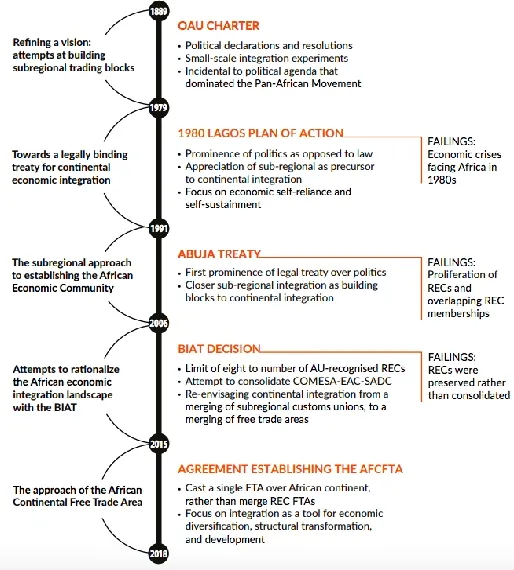
(Source: Assessing Regional Integration in Africa IX,2019 United Nations Economic Commission for Africa, African Union, African Development Bank, and United Nations Conference on Trade and Development. Adapted from Gerout, MacLeod and Desta, 2019)
Negotiating, Key Pillars, Current Structure and Progress of Implementation of the ACFTA
Negotiating Structure
Right from its inception the ACFTA structured very closely those that exist in other advanced Trade Agreements.
Negotiations was led by the Heads of States supported by their respective Ministers of Trade.
A committee was established to support the Ministers in technical areas while the main details of negotiations was led by an ACFTA negotiating Forum. A full negotiating structure is summarized in the figure below
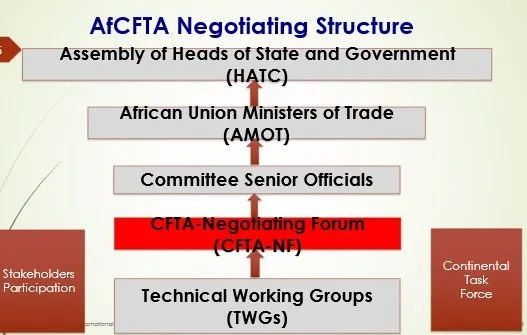
Figure 1. ACFTA Negotiating Structure. Source: ITC, 2022
The Power of Africa Free Continental Trade Area
- ACFTA potentially creates a single market of over 1.3 billion people with a combined GDP of over US$3.4 trillion (ITC, 2022).
- Simulations by ACFTA proponents purport that it has the following potential:
- Boost intra-African trade by 53% (41% in agri-food, 39% in services, and 39% in industry)
- Grow Africa’s manufacturing sector by US$1 trillion (UNECA, 2021)
- Generate income worth $470 billion by 2035
- Create 14 million jobs and
- Remove 50 million Africans out of poverty (UNECA & TMEA, 2020).
- Goods transported by ships would increase from 58 million to 132 million tons annually (UNCTAD, 2021).
- Numbers aside, the ACFTA can provide momentum towards consolidating regional economic communities and result in new markets for African businesses if they benefit from preferential trade margins compared with foreign competitors
Key Pillars
There are key ACFTA pillars, (sometimes known as Protocols) that remain outstanding.
These are Protocols on Trade in Goods, Trade in Services, Dispute Settlement, Investment, Intellectual Property Rights, Competition Policy, Digital Trade and Women and Youth in Trade.
The Protocol on Trade in Goods and the Protocol on Trade in Services are especially important because they have several specific issues (known as Annexes) covering substantive issues. Discussions on areas such as tariff concessions, rules of origin for goods and timetable of specific commitments for services) are still ongoing. The negotiations of the Protocol on Dispute Settlement have been concluded.
Current Structure (Source-South Africa Department of Trade and Competition-DTI).
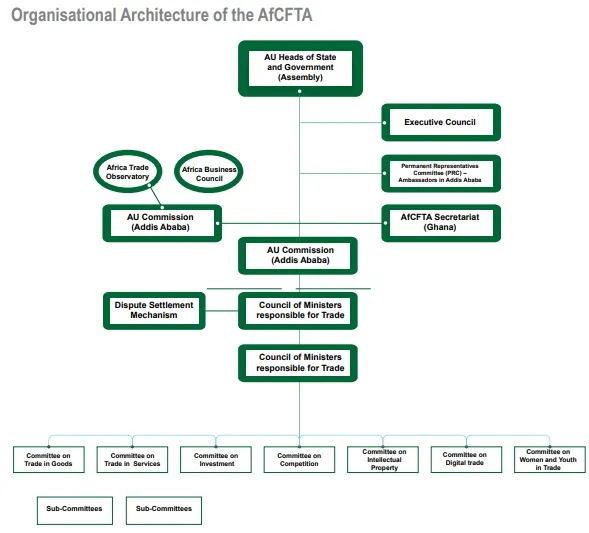
The Value of ACFTA
In his book “How Africa Trades” Professor David Luke of the London School of Economics puts a strong case for the ACFTA.
David outlines five reasons why Africa must fight at whatever cost to defend the ACFTA despite its structural and political challenges.
The first is that ACFTA represents a large and attractive marketplace for the continent
- Most individual African countries are small.
Twenty-two have populations under 10 million and a further 22 have populations under 30 million. The annual GDP of the median African country is just $16 billion, roughly equivalent to the output of a company like Naspers of South Africa and is only double the size of MTN, an African company. As a consolidated market, however, the ACFTA by comparison reflects an annual output of $3 trillion, like India and equivalent to about the seventh or eighth largest economy in the world.
This enormous size, argues, David, is valuable in attracting investors and achieving competitive economies of scale.
- Projected Growth of Africa
David makes the case using a statement by outgoing Africa Union Commissioner Mousa Faki. In his statement at the AU Commission Chairperson Moussa Faki Mahamat reminded heads of state that ‘the growth of the African economy should be twice as fast as that of the developed world’. Over the longer term, the African population is expected to grow to 2.75 billion by 2060, with an increasing middle-class market and a combined annual output of $16 trillion.
- Contribution to Industrialization
The third part of the AfCFTA rationale is its perceived potential to contribute to the long-overdue industrialisation and economic diversification of African countries. Trade outside the continent – dominated by primary products like fuels and metals – has struggled to drive industrialisation. Conversely, the intra-African trade that would be stimulated by the ACFTA is seen as a more conducive vehicle for industrialisation. It comprises a far greater share of manufactures, as well as agricultural goods and embodies a higher technology content (Saygili, Peters and Knebel 2018). While only 20 per cent of Africa’s exports outside the continent are manufactured goods, 45 per cent of trade within the continent, between African countries, comprise manufactured goods.
Attempts to model the expected impact of the ACFTA by the World Bank (2020), IMF (Abrego 2019), UNECA (2021) and UNCTAD (2017) all expect Africa’s manufacturing sector to be a major beneficiary. The World Bank (2020) estimated manufacturing output to rise by $56 billion, compared to a $17 billion increase for the natural resources sector (though less than an anticipated $147 billion increase in services). In 2017 UNCTAD reported that ‘the largest employment growth rates are found in manufacturing industry’. This is a significant finding in view of the demographic pressure for jobs.
- ACFTA as an Attractive Form
The ACFTA extends beyond merely tariff reductions that might amount to a traditional free trade agreement. It includes provisions on trade facilitation, non-tariff barriers, trade in services, and behind-the-border regulatory issues such as competition policy, investment and intellectual property rights. David argues that from this it is not surprising, therefore, that most of the models that estimate the impact of the ACFTA attribute relatively more importance to trade facilitation and addressing non-tariff barriers than to tariff reductions.
- Coherence In Africa Trade Policy
The part of the David’s argument is based on its ability to be a tool for coherence in cohering Africa trade policy. As the economic significance of the African continent has grown, third parties have increasingly looked to formalise their economic engagements with African countries through trade and other arrangements. These include EU and 14 African countries, US and Kenya, China and several African countries and trade agreements among Northern Africans and between Northern African countries and the rest of the world. At the sub-regional level there are also various policies that govern different levels of trade agreements among those countries around Eastern, Southern and Central Africa among others.
David argues that Africa can achieve more if it will ‘speak with one voice and act collectively to promote our common interests and positions in the international arena’. With a single voice, Africa has the economic heft and pooled technical capacities to negotiate trade deals better than individual countries alone can. An example can be drawn from the ASEAN group of 10 Southeast Asian countries. As a group, it found itself more attractive to partners seeking trade agreements, providing the impetus for negotiating various ASEAN+1 agreements (Mikic and Shang 2019). The consolidated economic size of a country grouping in negotiations makes it more attractive to partners, giving it clout with which to press for more preferential negotiated outcomes.
3.6.4 Progress of Implementation of the ACFTA
Whereas legal trading under the ACFTA began on 1st January 2021, there was no actual take-off until 7th October 2022 when the ACFTA Guided Trade Initiative (GTI) was launched (Tralac, 2024), with a primary goal of testing its potential
It has also seen a slow start,although with 54 out of 55 African countries have signed the ACFTA. Forty eight (48) State have embedded it into their laws)as of February 2024 (African Union, 2024).
A successful implementation of the ACFTA depends on the five core pillars.
- Establishing an ACFTA SME Financing Facility to support SMEs, especially those managed by women and young people. The fund will catalyze access to finance for SME business activities (United Nations, 2023). It will also ensure that the market access is not captured by big corporations. The timing for bringing this initiative to fruition is less certain given the involvement of commercial banks who are the main vehicles, and yet they have still not fully accepted the terms given.
- The African Trade Gateway. This is supposed to be a one-stop digital platform with information on rules that apply to thousands of products, customs procedures, market information and trends, and payment transfers (ibid).
- The $10B ACFTA Adjustment Fund which aims to support both the member states and private sector to manage the disruptions that is anticipated from the implementation. This loss of revenue previously collected from tariffs helps especially industrial sectors to adjust to the new trading environment and ensure businesses and supply chains are re-organized
- The Pan-African Payment and Settlement System (PAPSS) which is a centralized Financial Market Infrastructure enabling the efficient and secure flow of money across African borders. PAPSS works in collaboration with central banks in the continent to provide a payment and settlement service to which commercial banks, payment service providers and finch organizations across the continent can connect as participants (United Nations, 2023).
- Compatibility of Africa’s Special Economic Zones (SEZs). Countries that establish SEZs usually subject such zones to special trade laws, such as tax breaks, to attract investments and boost employment.
Status of Negotiation on Annexes (as at January 2025)
Protocol | Ongoing Negotiations on Annexes |
Digital Trade | Rules of Origin; Cross-Border Digital Payments; Cross-Border Data Transfers; Criteria for determining the legitimate reasons for Disclosure of Source Code; Digital Identities; Financial Technology; Emerging and Advanced Technologies; Online Safety and Security |
Investment | Establishment of the Pan-African Trade and Investment Agency; Rules and Procedures governing Dispute Prevention, Management and Resolution; Investor-State Dispute Settlement |
Intellectual Property Rights | Plant Variety Protection; Geographical Indications; Marks; Copyright and Related Rights; Patents; Utility Models; Industrial Designs and Models; Traditional Knowledge, Traditional Cultural Expression and Genetic Resources |
Negotiations covering Investment, Competition Policy and Intellectual Property Rights, Digital Trade, and Women and Youth in Trade have been adopted
Status of Implementation as at 2024
Since 2020 the ACFTA has been undergoing implementation across Africa.
In 2021 the ACFTA secretariat launched the Guided Trade Initiative (GTI) was in response to the slow pace of meaningful commercial trading following the official the launch. The initiative was established based on the 7th Ministerial Directive of the ACFTA Council of Ministers responsible for Trade (KASA, ATPC & UNECA, 2024) and was formally adopted by African Heads of State and Government in February 2022. Its primary goal was to serve as an interim solution to stimulate substantial trade among State Parties that met the minimum requirements for trading under the Agreement, and to test the readiness of the private sector, as well as the operational, institutional, legal, and trade policy frameworks of the ACFTA. Initially, the GTI attracted participation from seven African countries—Cameroon, Egypt, Ghana, Kenya, Mauritius, Rwanda, and Tanzania—which represent all five regions of the continent. Products targeted for trade under the initiative included ceramic tiles, batteries, tea, coffee, processed meat products, corn starch, sugar, pasta, glucose syrup, dried fruits, and sisal fibre. These products formed the initial trade offerings under the ACFTA.
ACFTA at Work-Case studies
(For a detailed analysis of these cases, see Annex)
Kenya Tea Packers Export to Ghana
At the launch of the ACFTA, Ghana volunteered to be a target market for tea from Kenya, tea and coffee from Rwanda, dried fruits and tea from Cameroon, frozen meat from Egypt, and tuna from Mauritius. Here is how two of these ACFTA journey’s turned out
The Tea Packers Association (Ketepa), a subsidiary of the Kenya Tea Development Agency, was picked to export tea to Ghana. KETEPA is the largest umbrella organization of smallholder farmers in the world with over 650,000 members. These farmers own over 60 tea processing factories and produce just over 60% of all Kenyan tea. KETEPA shipped the first consignment of a 20-foot container containing 1700 cartons of tea to Ghana. The tea shipment was flagged out of Kenya on October 5, 2022 but arrived in Ghana in mid-December 2022!
The biggest challenge was finding shipping lines that would deliver the shipment directly to Accra. Due to the low level of intra-African trade, there are not enough shipments destined for the African market, so the shipping line had to pick up other shipments from elsewhere. In this case, the ship went to Singapore before returning to the continent to deliver the product.
A number of players had to be involved to clear the consignment for export. The overall coordination of key trade facilitation agencies in Kenya was done by the Ministry of Trade to clear the tea for export. These agencies included the Kenya Revenue Authority, which issued the ACFTA Certificate of Origin, the Kenya Bureau of Standards for certification, the Kenya Port Authority to expedite port clearances, and the Kenya Tea Development Agency, which mobilized the smallholder tea farmers. Customs officials. The export procedures are automated under the KENTRADE interface single window managed by a government agency under the National Treasury mandated to facilitate cross-border trade and to establish, manage and implement the national electronic single window system (Kenya TradeNet System).
Lessons Learned
Among the key issues identified by Kenya to enable success of trading under the ACFTA included the following:
- Sensitization and capacity building of key actors, in particular trade facilitation agencies and regulators
- Establishment of a forum or link for consultation between counterpart organizations to facilitate interaction and sharing of experiences, ideas and challenges as well as to link businesses
- Development of a database of products and companies identified under to enable matchmaking and networking
- Streamlining certification procedures and processes.
- Identification and engagement of transportation and logistics companies to initially support the process.
- Establishment of a credit line for exporters which should also benefit SMEs and concessions from airlines/cargo flights where feasible
- Enhancement of the participation of women, youth and other vulnerable groups in the ACFTA process through sensitization and awareness raising, provision of special affordable business finance and inclusion of women, youth and other vulnerable groups in national implementation strategies.
Igire Coffee (Rwanda) Exports to Ghana
Igire Coffee was established as part of the next phase in the development of Rwanda’s coffee industry. The company’s stated mission is to develop Rwandan coffee through value addition. The company participated in the GTI to export coffee to Rwanda. In meeting the requirement s to export coffee under the GTI to Ghana, it was required to obtain a number of permits/licenses. To cater for market presence in Ghana, Igire Coffee registered a company in Ghana called B.B. Harrington Ventures to facilitate the distribution of its products and increase domestic sales. The coffee consignment was transported by Rwanda Air at concessionary rates and the transportation time from Rwanda to Ghana was less than seven hours. However, Two weeks after the shipment was released and the coffee had already been sold, Ghana Customs informed the importer that the original valuation had been incorrectly excluded the cost of insurance and requested that the duties be reassessed based on the corrected cost, insurance and freight value. In addition to customs and import duties, its registered agent in Ghana was subject to numerous other domestic charges that included a record 12 levies. These included Import Value Added Tax, ECOWAS Levy, Ghana Shippers Authority fee, Import IRS Tax, Deposit Disinfection Fee, Ministry of Trade and Industry Fee, Special Import Duty, Ghana Export Import (EXIM) Bank Levy, Network Charge Fund Levy, and Ghana Education Trust (CET) Fund import levy. Source: UNECA
Lessons
While these cases did not go as well as planned, they illustrate the areas that require attention, including logistics, infrastructure and multiple layers of taxes, levies and other domestic fees and charges that are payable on importation of products into African countries. They also show the changes needed in relations to customs duties, which together have the effect of increasing the cost of imports and may ultimately contribute to reducing the competitiveness of imported products.
Opportunities and Drawbacks of ACFTA on Farmers
Advantages of the ACFTA to Farmers
- Increased Trade in Agriculture
The most highly cited advantage is the ability to increase intra-African trade in Agricultural goods and services as envisioned under the Comprehensive Africa Agricultural Development (CAADP)
Agriculture is big business in Africa as it is the continent’s largest economic sector, representing 35% of the continent’s total GD. ACFTA has the potential to increase the continent’s agriculture market from $280 billion a year in 2023 to $1 trillion by 2030 (AfDB, 2023). If all barriers are removed the cost of logistics will invariably reduce which will result in an increased flow of agricultural products within Africa. This is critical given the continent’s high levels of food import dependency recorded at $75 billion each year for cereals alone (AfDB, 2023).
- Increased Market Access
In Africa, the causal factor for food insecurity is largely market access rather than production challenges. The ACFTA can turn this around as it commits to progressively liberalize over 97% of product tariff lines, thereby facilitating the movement of agricultural products among ACFTA State Parties.
- Supporting Agro Industrialization
The ACFTA also has the potential to support the agriculture sector in terms of agro industrialization.
Through promoting intra-African investment flows, the ACFTA is projected to result in a $65 billion investment in irrigation and more than $8 billion in investment for storage through local warehouses (WEF, 2024). Countries like Nigeria, South Africa, Kenya and Egypt have relatively well-developed manufacturing sectors and are likely to leverage the ACFTA to invest in agro processing in African countries.
- Domestic Investment
Cumulation rules permit access to cheaper raw materials and intermediate inputs which are critical in agro industrialization. For example, while South Africa produces only 15 tonnes of organic baobab powder, it imports at least 250 tonnes of organic baobab powder annually from Tanzania, Malawi, Mozambique, Zimbabwe, Angola and Namibia. In the breweries sector, Heineken’s CREATE project in Ethiopia is currently sourcing 60% of agricultural raw materials through local sourcing within the continent (WEF, 2024). Therefore, RoO rules under the ACFTA have the potential to further increase cross-border cooperation in industrialization, a critical step in promoting regional value chains in agro-industrialization.
- Trade in Seeds
The current value of the African seed market (although largely concentrated in hybrid seeds) is nearly $4 billion after experiencing about $1 billion (Hussein, 2024). Moreover, many African countries are heavily dependent on seed imports for their Agriculture. For example, in 2020, Uganda imported 1,060 tons of maize seeds from South Africa, Zimbabwe, Kenya, Tanzania, Zambia and Ghana, and 13 tons of Sorghum from Kenya (Longley, et al., 2021). With the ACFTA reducing trade barriers, Ugandan farmers could access a wider variety of seeds from qualified African producers, potentially lowering costs and increasing the quality of their farm output. Furthermore, ACFTA has the potential to scale up ongoing partnerships for improving value and trade in seeds like maize, sorghum and barley among countries like Uganda, Ethiopia, Tanzania, Zambia and Botswana (WEF, 2024).
Challenges and Drawbacks of ACFTA
Internal Challenges
- Logistics
The most visible challenge has been the distribution and logistics infrastructure to enable the movement of products to different markets
- Volumes for Small Farmers and Businesses
Small and medium enterprises, including those owned by youth, women and other vulnerable groups, which export relatively small consignments face high freight and logistics costs and therefore need support to enable them to export competitively. In one case, a shipment intended for Ghana was delayed for two months because the vessel had to first go to Singapore and get more volumes of goods before delivering the consignment to Ghana.
3. Multiplicity of taxes, levies and fees imposed on imports into specific countries increased the cost of importation and may have reduced the competitiveness of imported products.
- Policy Incoherence
The failure of the ACFTA to cater for measures to harmonize agriculture policies of various countries has brought its challenges. Some countries are passionately implementing agroecology while others such as Kenya have embraced genetically engineered seed systems. This presents a big question of whether the ACFTA in its present form can work for smallholder farmers, especially those engaged in agroecology, and whether it could preserve FMSS which is critical in achieving food sovereignty by the continent.
While there is sufficient clarity (even though there is lack of realism) in relation to tariff and other trade-related policy issues, interconnections between this and policy in key sectoral pillar of economic development, including agriculture and manufacturing, remain to be fully elaborated. In the cases where such policies have been formulated with detail, there does not seem to be sufficient attention to the linkages between these and the tariff harmonization agenda of the ACFTA
- Trade Connection with Development Agenda
There is a challenge of cross- cutting issues key to a holistic development policy. These include finance and investment
- Comulation of Seeds
The ACFTA has the potential to undermine the rights and livelihoods of agricultural supply chain actors is the ACFTA. The poor design of rules of origin (RoO) which allows countries to cumulate seeds by purchasing them from third parties[7] is most likely to disrupt the farmer-managed seed systems (FMSS) and ultimately affect market access by supply chain actors. These poor RoO may exacerbate the already high dependence on seeds by African governments.
- Conflicting Trade Agreements with External Governments
The major challenge remains that of harmonization of the ACFTA agreements with existing and new trade agreements that countries have with other governments.
Africa’s governments continue to make commitments in agreements that inevitably undermine their ability to meet the continent’s agenda.
- Compatibility with Regional Trade Agreements
There has been a challenge of harmonizing the agreements with existing trade arrangements at the regional bloc. Regional Blocs are at different levels of integration, with the East Africa Community considered among the most integrated. But this must be seen in the context of countries such as Tanzania that belongs both to EAC and SADC. Several countries also belong to COMESA, which includes North African countries that also have different trading agreements among themselves as part of the Arab bloc.
Challenges to Farmers
- Privatization of Seeds
ACFTA has provisions that promote liberalization and privatization of seeds through either patents or plant breeders’ rights. These rights enable seed companies to demand royalty payments from farmers for each generation of seeds they use, for 20 to 25 years by arguing that without these payments, they will be unable to invest in research (GRAIN & Coulibaly, 2023). Under Article 8 of the ACFTA IP Protocol, countries shall protect new plant varieties through a legal system that includes farmers' rights, plant breeders' rights, and rules on access and benefit sharing as appropriate (African Union, 2024). This is problematic because presented in this way, the provision becomes more of a guideline, with countries left to apply this article in their territories as they see fit (GRAIN & Coulibaly, 2023).
Furthermore, under this dispensation, seed companies may prevent farmers from saving and exchanging protected seeds, leading to a loss of biodiversity and paving the way for the power of the food and agriculture industries to grow (GRAIN & Bilaterals.Org, 2023). The ACFTA risks undermining the smallholder farmer’s right to seed while fuelling trading in corporate-controlled hybrid seeds across the continent.
i) Limited Space for Informal Cross Border Farmers
The lack of a Simplified Trading Regime by the ACFTA while allowing big actors to trade will limit the participation of informal cross-border traders who usually trade in agricultural products. A STR is a special arrangement which aims to simplify and streamline the documentation and procedures for the clearance of low-value consignments of small cross-border traders, at the same time enabling them to benefit from the preferential trading environment (Mudzingwa, 2022; Luke, 2023). It is intended to facilitate small-scale cross-border trade, by way of simplified clearance procedures (such as forgoing the requirement for a certificate of origin) for low-value consignments
j) Intensified Competition
Open markets fostered by trade agreements like the ACFTA can also intensify competition for imported goods. This puts pressure on agroecological farmers who prioritize sustainable practices over immediate yield. Since agroecology often requires initial investments and may have lower initial yields, it struggles to compete on price with these imports. Ultimately, the pressure to compete and create incentives for crop producers to adopt large-scale, industrial farming practices that emphasize high yields and lower costs.
k) Promotion of Industrial Agriculture
Industrial agriculture often relies heavily on mechanization, chemical inputs, and genetically modified crops, potentially leading to the decline of traditional, small-scale farming methods passed down through generations.
l) Unnecessary Standardization
The ACFTA could lead to the standardisation of agricultural products and farming methods which can be valuable in guaranteeing the safety and quality of agricultural goods. However, they could also be incompatible with traditional farming practices, especially those in developing countries (Tiba, 2023). This is because, in a bid to meet these international standards and remain competitive, farmers might need to adopt new farming methods or crop varieties (Tiba, 2023) which can lead to the loss of traditional agricultural knowledge and biodiversity.
m) Trade in Fake Seeds and Herbicides
The ACFTA could exacerbate increased trade in fake seeds and herbicides which could further undermine agroecology and agricultural trade. For example, currently, in Uganda, over 40% of the agricultural seeds and 60% of herbicides and pesticides on the market are fake (New Vision, 2023). Unless the capacity of customs officials is enhanced to track and ban entry of such fake inputs, agriculture in Africa stands to be further affected by the potential of escalating food insecurity, agroecology and biodiversity erosion.
3.8. Criticisms and Advocacy Opportunities for Strengthening the ACFTA
3.8.1 Incompatibility with Existing Regional Trade Agreements
A key weakness of the ACFTA is its lack of integration with RECs and other Policies across Africa.
The ACFTA's framework has limited integration with existing continental policies, such as the African Mining Vision (AMV), the Comprehensive African Agriculture Development Programme (CAADP), and the Accelerated Industrial Development for Africa (AIDA).. The lack of alignment with these key policies and infrastructure programs of the regional RECs risks undermining the ACFTA’s goal of driving economic transformation. The inability to integrate with Regional Trading Blocs and the ACFTA’s quest for full liberalization- is contrary to most of the existing regional trade agreements.
Some studies have shown that far from promoting regional integration of the continent it will disintegrate it strongly in opening wide the doors to multinationals already well implemented in most African countries and which would concentrate their activities in the most competitive countries from which they would export to the others. Simon Mevel and Stephen Karingi of UNECA admitted: "Turning to the country analysis of the results, these are somewhat more ambiguous than at the global level... Even if real income variations are limited, almost half of African countries/regions considered in the study would be worse off in terms of real income after the formation of (ACFTA) free trade areas.”
3.8.2 ACFTA For Multinationals, not African Businesses
Critiques have also observed that the ACFTA appears structured to benefit Multinationals. Multiple analysis by the UN Economic Commission for Africa (UNECA), United Nations on Trade and Development (UNTAD) and the European Union, all admit that there are glaring contradictions in the ACFTA’s under rules that do not address the dominant role played by multinationals
Three main justifications can be advanced. Firstly, while African countries liberalize, governments have to renounce to a non-negligible source of income namely, tariff revenues. Secondly, as African economies open up, competition is increasing on the continental market. As a results trade flows are reoriented such as African imports from partners located either on the continent or outside of the continent are being replaced by imports from African partners benefiting from better market access, thanks to tariff cuts, and potentially leading to terms of trade reductions. Thirdly, as world prices of food products slightly increase with the liberalization reforms, net-food importing countries such as Angola & DRC, Mozambique, Botswana, Rest of North Africa, Nigeria and Central Africa are hurt and their real income reduced... Workers employed in countries strongly specialized in exports of primary products, such as oil exporting countries: Angola, Egypt, Nigeria, Rest of Eastern Africa (inclusive of Kenya), Rest of North Africa; as well as Zambia (69% of Zambia’s exports are mineral and metal products) register a decrease in real wages
The Private Sector referenced in the ACFTA does not designate the hundreds of millions of African smallholder farmers – who could produce much more with guaranteed stable remunerative prices through an efficient import protection – but the tens of multinationals and African private companies that are pushing to abolish tariffs between African countries. There are fears that the real big winners of the ACFTA will be multinational corporations from outside Africa that have settled in big cities and would be provided with easy access to a multitude of markets. Another major problem that has not been dealt with yet, is the potential loss of revenue for governments, as customs duties are a major source of government revenue.
A majority of African economies are dependent on FDI to grow their manufacturing. Yet "Africa accounts for a very low share of global FDI flows (2.8 per cent) and, more importantly, FDI flows to the continent are concentrated in a few countries and largely in the extractive sector. The latter has reinforced Africa’s dependence on commodity exports and the vulnerability of African countries to external demand and speculation-driven commodity price movements. Moreover, to date, there is no evidence to indicate that FDI in Africa is contributing to economic diversification through backward and forward linkages. Under such circumstances, the tendency of FDI to reinforce enclave-type development – with external integration gaining more importance over the internal integration of the local economy – is a real concern. ACFTA is founded on a false premise that Africa will attract FDIs that will automatically generate opportunities for technology transfer, linkages with domestic enterprises and opportunities for diversification into more dynamic activities”
The deficit of cereals was $30 billion way back in 2016 and has since increased. The amount of sub-Saharan Africa in this deficit was $10.4 billion for cereal. Intra-Africa exports of wheat have only risen from $24,572 to $139,900. There is not a single African country which is a net exporter of wheat and the intra-Africa exports of wheat are re-exports to neighbouring countries of extra-Africa imports.
Geopolitics shows that it would be almost impossible to establish common trade rules in Africa with a population with very different political institutions, poor transport infrastructures, and where per capita GNI (gross national income) goes from $260 in Burundi to $14,760 in Seychelles
What is Holding Back the ACFTA-Opportunities for Advocacy
May 2024 the pact’s 5th anniversary and would legally mean that the agreement will be subject to review for possible amendments.
This did not take place.
Moreover, while all its protocols (Investment, IPR, Digital Trade, Competition, Women and Youth in Trade) have been adopted by the AU Summit, there are still pending Annexes in each Protocol which are to be developed. All these present an opportunity for organisations representing smallholder farmers, pastoralists, indigenous peoples; faith-based institutions, and environmentalists from across Africa to mobilise and engage in both the review of the ACFTA and in developing relevant Annexes, especially those pending under the Protocols on Women and Youth in Trade, Digital Trade Protocol, Investment and Competition Policy.
Unlocking regional leadership could offer a solution. In their regional economic communities, economic powers such as Kenya and South Africa Trade and investment flows liberalised more rapidly or fully than their neighbours, emphasising their leadership roles and corresponding responsibilities. For instance, Kenya immediately allowed duty-free imports into its market from its neighbours when the East African Community customs union was established in 2005, while permitting its own exports to be progressively liberalised over a longer five-year period. If Africa’s regional powers could again show greater leadership, creativity and ultimately compromise in realising the start of trade under the ACFTA, it could help to generate the momentum needed to get trade flowing across and transforming the continent.
The ACFTA Secretariat has also made some progress that can be supported.
These include an E-Tariff Book, showing verified tariffs for products under the ACFTA, an ACFTA Business Forum, an ACFTA Private Sector Strategy, an ACFTA Hub Platform, and efforts to support trade specifically on the Lagos–Abidjan corridor.
The Guided Trade Initiative is also a good testing tool and needs support.
Section 4: Beyond ACFTA: Opportunities for Africa’s Farming and Agricultural Potential under Other Regional Trade Agreements
Introduction
A lot of attention has been paid to the opportunities available to African farmers in the international markets such as the EU, UK, United State and China. This is misleading because in fact Africa’s agricultural trade, especially across borders, is significantly higher than trade outside the continent. The main reason why this kind of trade rarely makes it to our radar is because it is informal, carried out by small traders and does not feature in the big data of organizations such as the WTO and UNTAD.
Over 83% of Africans obtain their livelihood from these forms of trade. It is therefore important that we look at opportunities for trade within Africa before seeking to find out what exists beyond. The first opportunity is cross border trade, primarily carried out under rules and trade agreements of the various regional economic blocs.
Opportunities under the Regional Trade Agreements
There are over 20 regional trade agreements among African countries, although the AU only recognizes the ones under the Southern African Development Community (SADC), Economic Community of Central Africa States, Arab Maghreb Union, the Common Market for Eastern and Southern Africa (COMESA), the Economic Community of Central African States (ECCAS), the Economic Community of the Great Lakes Countries (ECGLC), East African Community, and the Community of Sahel-Saharan States (CEN-SAD).
COMESA-EAC-SADC Tripartite Free Trade Area (TFTA)
The COMESA-EAC-SADC Tripartite Free Trade Area (TFTA), established in 2015, encompasses 29 countries, representing 53% of the African Union membership, more than 60% of the continent's GDP (estimated at $1.88 trillion), and a population of 800 million people (Onyango, 2023). On July 25, 2024, the TFTA officially came into force following the ratification by 14 out of the 29 member states. This agreement serves as a cornerstone for Africa’s broader continental integration efforts, facilitating deeper economic ties between countries.
One of the key objectives of the TFTA is to enhance regional and continental integration, promoting smoother trade flows and cooperation among African nations. While the ratification process has been slower than expected, significant progress has been made in establishing the rules, structures, and negotiation modalities. In fact, the African Continental Free Trade Area (ACFTA) has drawn valuable lessons from the tripartite frameworks to guide its negotiations, especially in areas like trade in goods, principles, and tariff schedules.
The TFTA presents a more ambitious tariff liberalization schedule compared to the ACFTA. While the ACFTA aims for 90% tariff liberalization for non-sensitive products, with 7% for sensitive products and 3% on the exclusion list, the TFTA’s goal is 100% tariff liberalization (with some security exemptions). Under this agreement, 60% to 85% of tariff lines will be liberalized immediately upon implementation, with the remaining 15% to 40% of tariff lines to be negotiated over 5-8 years (Onyango, 2023).
One of the core sectors of interest under the TFTA is food security, with the agreement aiming to liberalize staple foods like maize, beans, and pulses. By facilitating the free movement of these products across the region, the TFTA aims to allow countries with surplus production to assist those facing food shortages, thereby boosting food security within the bloc (COMESA, 2024). This also creates market opportunities for businesses, particularly for those in the East African Community (EAC). For example, South Africa stands out as the top destination for EAC exports within the TFTA, accounting for 35.3% of the region’s exports. Other significant markets include Egypt (27%), Zambia (16.5%), Ethiopia (7.7%), and Sudan (4.7%) (EAC, USAID & TMA, 2023).
However, the TFTA also protects certain sensitive products such as dairy, sugar, and tobacco, which are shielded from immediate tariff liberalization. Countries heavily dependent on these industries, like Kenya’s dairy sector and Zambia’s sugar production, often lobby for these products to remain protected to avoid disruption from more competitive imports. This tariff protection provides critical support for local economies that rely on such sectors.
The agreement has also seen tariff offers exchanged between Customs Unions, particularly the Southern Africa Customs Union (SACU) and the EAC, which have agreed to liberalize about 90% of their tariff books immediately upon the commencement of the TFTA (Onyango, 2023). Other member states, such as Madagascar, Mauritius, Malawi, Seychelles, Zimbabwe, and Zambia, have based their tariff offers on the level of liberalization they have already achieved within their respective Regional Economic Communities (RECs), such as COMESA and SADC. These countries are expected to continue their high levels of tariff liberalization within the tripartite framework.
Ultimately, the TFTA holds considerable promise for fostering greater trade integration, providing businesses with access to new markets, and enhancing food security within the region, while carefully balancing the needs of sensitive sectors
Opportunities for Small-Scale Farmers
- Expanding Regional Market Access for Diverse Crops: The TFTA opens opportunities for smallholders to trade a broader range of agricultural products across twenty-seven member states, supporting farmers with unique or high-demand crops. In Kenya, for instance, smallholder tea farmers can reach markets in Southern African countries like South Africa or Zambia, which have a growing demand for tea (Onyango, 2023). The broader market access provided by the TFTA helps diversify income sources and stabilize prices for farmers who might otherwise face price dips in oversaturated local markets (ibid). This large market scope is particularly valuable for smallholders producing high-value crops, as it encourages investment in quality improvements. However, logistical challenges, such as high transport costs across long distances, can reduce the profitability of this expanded access, making infrastructure development a crucial priority.
- Sensitive Product Protections and Competition Challenges: Under the TFTA, certain sensitive products, such as dairy, sugar, and poultry, retain protective tariffs, which shield smallholder farmers from competition with larger producers in the bloc. In Malawi, smallholder sugarcane farmers benefit from protected prices, ensuring a stable income despite fluctuations in international sugar markets (WEF, 2024). However, larger producers within the TFTA, such as those in South Africa, still have the advantage of economies of scale, which can overshadow small-scale production. For instance, South African poultry producers can still outcompete smaller farmers in less developed TFTA member states despite regional protections, as they have access to better inputs and processing facilities (European Commission, 2022). This dynamic creates market pressure on smallholders, highlighting the need for support policies that address both protective tariffs and the unequal resource access among TFTA countries.
EAC’s Export potential in TFTA (for top 10 partner countries)
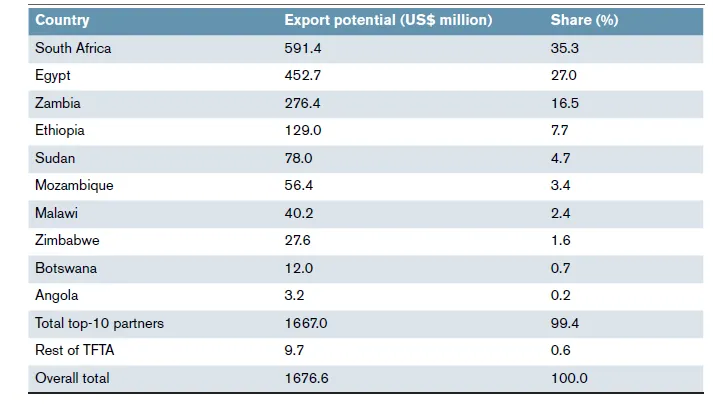
Table 1. Source: EAC, USAID & TMA, 2023
The East Africa Community (EAC)
The EAC aims to enhance trade within East African countries (Kenya, Uganda, Tanzania, Rwanda, Burundi, DRC and South Sudan) through reduced tariffs. Liberalized agricultural products often include staple foods such as maize, beans, millet, and other cereals that are essential for food security across member states (Anyanzwa, 2023). The EAC's Common External Tariff (CET) exempts most of these essential goods from high tariffs, making them affordable and accessible within the region. However, certain products, like sugar, dairy, and poultry, are protected to safeguard domestic producers from cheaper imports (Tondel, 2017). These products face higher tariffs under the CET to limit competition from outside the EAC. For instance, the EAC imposes a 60percent tariff on sugar imports from non-member countries, as the sugar sector is vital to economies like Kenya’s (Anyanzwa, 2023).
Implications for small-scale farmers
- Facilitating Trade for Staple Foods and Reducing Price Volatility
Within the EAC, tariff liberalization for staple foods supports smallholder farmers by reducing price volatility across the region, allowing countries to trade essentials such as maize and beans during shortages. For instance, during periods of drought in Kenya, farmers in Uganda or Tanzania can export their surplus maize and beans tariff-free, addressing food insecurity while ensuring farmers benefit from regional demand (FEWS NET, 2022). This helps stabilize prices for smallholders, who can plan their production and sales with greater predictability. For EAC smallholders, this free movement of staple crops offers an essential buffer against price crashes during bumper harvests, as cross-border trade can alleviate oversupply. However, this benefit largely hinges on regional political cooperation and effective enforcement of tariff agreements, as occasional non-tariff barriers or border closures disrupt this arrangement.
- 2. Protection of Sensitive Sectors and Income Stability
The EAC’s protection of sensitive agricultural sectors, such as sugar, dairy, and poultry, offers income stability for smallholder farmers in these industries. For example, Kenyan smallholder dairy farmers benefit from high tariffs on dairy imports from non-EAC countries, which protect them from competition with large-scale global producers (Gérout & Larvor, 2024). This allows local farmers to sell milk and dairy products at competitive prices within the EAC, where demand is strong. While protectionism maintains their income stability, it may also limit growth opportunities by restricting their access to competitive input prices and innovations in the global market. Still, for subsistence-based dairy farmers in Kenya, these protective measures create a necessary shield against income instability, ensuring they can compete domestically and within the EAC.
- 3. Limited Access to Cheaper Inputs from Global Markets
Protective tariffs in the EAC can also limit smallholder farmers’ access to affordable agricultural inputs from outside the region, impacting productivity and growth potential. For instance, tariffs on imported fertilizers and seeds are high to protect regional industries, yet they increase costs for smallholders with limited capital (Longley, et al., 2021). Farmers in Uganda, for example, face higher prices for essential inputs, limiting crop yields and reducing their ability to compete in the EAC’s expanded market (ibid). While local input industries may benefit, small-scale farmers encounter a trade-off between price stability for their products and the ability to enhance productivity through cost-effective inputs. This challenge highlights a need for policy adjustments that balance local industry support with affordable access to global inputs, promoting both farmer stability and growth.
- 4.5 Common Market for Eastern and Southern Africa (COMESA)
The (COMESA) is a broader trade bloc that includes twenty-one member states and aims to reduce intra-regional tariffs, creating a large, unified market for agricultural and other products. COMESA’s FTA liberalizes staple foods and primary products, such as grains, pulses, and certain vegetables, which small-scale farmers typically produce. By removing tariffs on these goods, COMESA aims to reduce food prices and enhance market access for small-scale farmers, especially in high-demand countries within the bloc (Tondel, 2017). However, sensitive products like wheat, sugar, and poultry are subject to restrictions to shield domestic producers (Tondel, 2017). For instance, countries with substantial sugar industries (like Zambia and Malawi) lobby for protective measures against cheaper sugar imports. Additionally, countries producing wheat restrict imports to stabilize local prices (ibid).
- Boosting Regional Market Access and Income Opportunities
COMESA’s tariff liberalization for staple crops has notably expanded market access for smallholder farmers in the region, enabling them to trade surplus produce across borders with minimal tariffs. For example, Ugandan maize farmers easily sell to markets in Kenya or Sudan, benefiting from demand in countries experiencing maize shortages (FAO, 2020). Reduced tariffs make it possible for small-scale farmers to bypass local market saturation and avoid price drops due to oversupply. This expanded regional market, coupled with fewer restrictions, can enhance income by ensuring farmers reach new buyers. However, a lack of infrastructure for transportation and storage limits their ability to capitalize fully on this liberalization, especially in more remote rural areas (FAO, 2020). Despite these challenges, for farmers in crop-abundant regions like western Uganda, COMESA’s liberalized policies provide vital income avenues that may not exist locally.
- Challenges with Input Costs Due to Tariff Protections
While COMESA’s tariff-free policies on certain crops benefit farmers, protective tariffs on specific agricultural inputs, like fertilizers or pesticides, pose challenges for smallholders. For instance, the protected fertilizer industry in Zambia means imported fertilizers from non-COMESA countries are expensive, putting a strain on local small-scale producers who rely on these inputs for crop yields (Onyango, 2023). Although tariff protection aims to promote local manufacturing, it raises costs for smallholders unable to access domestically produced fertilizers affordably. High input prices mean that smallholder farmers in countries like Zambia often cannot achieve the yields necessary to capitalize on expanded regional trade opportunities (Onyango, 2023). Consequently, this limits their competitiveness against better-resourced commercial farms within COMESA, as high production costs make it difficult for them to price crops competitively in regional markets.
- Protective Tariffs and Competition from Large Producers
COMESA’s protective tariffs on products like sugar and poultry have a dual effect on smallholder farmers. In countries like Kenya and Malawi, small-scale sugarcane and poultry farmers benefit from the protection against cheaper imports, as it stabilizes domestic prices and sustains their incomes. For instance, Kenyan poultry farmers are shielded from competition with low-cost poultry imports, particularly from South Africa and other larger producers within Africa (FAO, 2020). However, in some cases, these protections benefit large-scale producers more than smallholders, as larger firms have the resources to take full advantage of domestic market stability. This creates an uneven playing field within COMESA, where smallholders are often overshadowed by large-scale producers who can more readily meet the demand in protected sectors, limiting smallholders’ potential market share and growth prospects despite the tariff protections.
Across the EAC, COMESA, and TFTA, small-scale farmers generally benefit from liberalized trade in staple products, enabling them to access broader markets and improve their incomes. The protective tariffs help shield them from low-cost competition in sensitive sectors, though this also limits their access to more affordable input. Consequently, while liberalization opens doors to larger markets, tariff protection remains critical for sectors where domestic producers, particularly smallholders, face intense competition from large-scale regional or global producers. Understanding these dynamics helps policymakers balance support for small-scale farmers’ market access with the need for protective tariffs in strategic sectors.
- 4.6 ECOWAS Trade Liberalisation Scheme (ETLS)
The ECOWAS Trade Liberalisation Scheme (ETLS) was adopted by the Community as a means of promoting market integration and the development of the ECOWAS sub-region as an economic space, improve the intra-regional trade and move away from dependence on raw materials. It also seeks to contribute to the progress and development of the African Continent. The ECOWAS Treaty, signed in 1975 and revised in 1993, set out the broad ambit under which the terms of trade scheme were formalized through protocols and regulations to govern the Community trade specifically the free movement of goods, persons and services. Now most agricultural products have been put into the fourth or fifth band of 35 percent (maximum) under the Common External Tariffs (CET) of the Economic Community of West African States. This means that countries in the ECOWAS region can only raise its agricultural tariffs to this maximum afforded by the CET and the constraints of other regional and bilateral agreements.
In accordance with the provisions of article 38 of the ECOWAS Revised Treaty, the following are regarded as originating from the community: products wholly obtained in one or several Member States under, products obtained in one or several Member States and containing non- originating raw materials, provided that these raw materials have undergone sufficient processing or transformation in the Community under, originating products made of materials wholly obtained or sufficiently transformed in two or many Member States are regarded as products originating from the Member State where the last processing or transformation took place as long as the processing or transformation carried out goes beyond those covered.
Section 5: Moving Forward-Action, Conclusions and Recommendations for Advocacy
6.1 Action Areas on ACFTA and Regional Trading Blocs (RECs)
The following areas provide immediate action to strengthen the challenges and take advantage of opportunities within the ACFTA and Regional Trade Agreements. These areas form areas that can be the target of advocacy with the countries, secretariat and other partners of the ACFTA and regional trading bodies
Address the weak productive capacities
Addressing supply-side constraints and weak productive capacities is a policy imperative in Africa to boost intraregional trade through the development of regional value chains. Such chains can be a critical vehicle for spreading the economic benefits of African trade (e.g. jobs in the formal sector and gains from manufacturing) to a wider set of countries, if they participate in such value chains and gain opportunities to upgrade technologically and move up within the value chains (UNCTAD, 2019). The potential for converting primary commodities in Africa, including agricultural materials, into industrially processed finished products within regional value chains remains largely untapped. This should be addressed by scaling up the implementation of the Action Plan for Boosting Intra-African Trade of the African Union includes a productive capacities cluster with the objective of creating “regional and continental value chains/complementarity, to increase local production/trade in goods produced in Africa”.
Eliminate Tariff-related trade costs
Whereas advances in trade liberalization are being made across all regional economic communities, the liberalization of tariffs within Africa regional communities has been slow, due in part to human and institutional capacity constraints in trade policy implementation, and also to a lack of operationalization of regional economic community agreements. According to the Abuja treaty, all regional economic communities should have established a common external tariff within customs unions and fully functional free trade agreements by end-2017. This has not yet occurred. For example, among all communities, ECCAS has the lowest share of intraregional trade in its total trade in Africa and would need to reduce on average 66 per cent of its tariff lines on intra-ECCAS tariffs to zero. In the other communities, the proportion of tariff lines on intraregional tariffs that have yet to be reduced to zero are 90 per cent in ECOWAS, 85 per cent in SADC, 78 per cent in IGAD, 51 per cent in AMU, 45 per cent in COMESA (UNCTAD, 2019).
Increase production capacities at national level
Zero liberalization of tariffs among regional economic community members or among countries in Africa will not automatically result in increased intra-regional economic community and intra- African trade. Some member countries, as exporters, may not fully utilize the preferential tariff lines under which tariffs have been reduced, because their export supply capacities in these lines are weak.
Conclusions and Recommendations for Action and Advocacy
On Africa Trade
There is immense trade within Africa and the ACFTA as well as the Regional Trading Blocs have demonstrated the immense potential for Trade within Africa to be the engine that transforms the continent. External trade, dominated by raw materials and natural resources, has proved to be not only retrogressive, but an exploitation of the agricultural and natural resource potential of the continent. There is simply no other option rather than to make Intra-Africa trade work.
On the Place of the African Farmer
Small scale farmers are at the heart of intra-Africa trade.
But they will not succeed is Africa remains focused on exporting unprocessed agricultural produce. The returns are too low and it only succeeds in short-changing the continent. For intra-Africa trade to work strengthening farming, especially small-scale farming, will need to be the centre of policy. Attempts at “Greening” Africa have been tried by many actors, such as the well-known AGRA initiative. But It’s on evaluation report showed that any support to farming must be motivated by the need to grow and strengthen small scale farming, not to merely create a market for big corporations.
ON ACFTA
The ACFTA, with all its failures and drawbacks, deserves the full support of the continent. It has the potential to enable the continent leapfrog to industrialization in ways never witnessed. It is no wonder that governments such as the EU are rushing to try and weaken or dismantle it an infancy.
On Regional Trade Agreements
Regional Trade Agreements have demonstrated over a longer period of time that they can be the building blocks of a regional integration. They provide lessons to the ACFTA while remaining a unifying factors for a fragmented continent. But on their own they have also transformed economies and led to industrialization, providing a glimpse into the capacity and capability of the ACFTA
On EPAs and Regional Trade
This report has demonstrated that far from being a tool of strengthening integration, the EPAs are a foreign strategy to keep Africa as a supplier of raw materials to the EU. Even when looked through its advantaged and value addition, the EPAs are an unnecessary distraction and should not be entertained by any African government.
Recommendations for Advocacy for the Benefit of the Africa’s Farmers
A strategy to reclaim Africa trade under the ACFTA and RECs should focus on the following areas
Strengthening the Negotiating Power and Capacity of key actors
This includes, but is not limited to the following
- Organising to influence-creating, staffing, funding, and directing institutions in ways that influence the trade negotiation process.
- Selecting the forum: identifying the most promising forum in which to pursue farmer objectives and then ensuring that negotiation take place there.
- Shaping the agenda: adding or removing issues from the agenda, dividing the larger agenda into modules for parallel negotiations, and establishing some high-level principles to govern the process.
- Building coalitions: identifying potential winning and blocking coalitions and then devising plans for building supportive coalitions and breaking or forestalling opposing ones.
- Leveraging linkages: linking and de-linking issues or sets of negotiations to create and claim value.
- Playing the frame game: crafting and promulgating a favourable framing of ‘the problem’ and ‘the options’.
- Creating momentum: channelling the flow of the negotiation process in promising directions by establishing appropriate stages to demarcate the process, as well as by instigating or taking advantage of action-forcing events.
Action Strategies Beyond Negotiations
Strengthening the negotiating power of Africa stakeholders should be aimed at achieving the following areas of change.
- 1. Ensuring Reviews are carried out as outlined in the ACFTA Agreement
The ACFTA agreement envisages reviews every five years. These are excellent opportunities for those actors seeking to make changes to strengthen the Trade agreement and move it forward.
- Bringing Farmer-strengthening policies to the centre
Farmers and agriculture in general is at the heart of success of the ACFTA.
Strategies for advocacy should be aimed at working with farmers to identify the pathways and then carrying over this work to governments to address some of the logistical challenges and non-tariff barrier policies.
There are three scenarios that are likely to play out over the next coming years for Africa.
Areas of Immediate Intervention by Civic Actors
An advocacy agenda should immediately be aimed at the following areas:
- Help to unclog the regional trade opportunities and take advantage of untapped potential.
- There are already immense opportunities provided by the Africa sub regional trade agreements, as well as ACFTA. These provide great opportunities for farmers. I didn't know there is so much allowance given for intra Africa trade at the sub-regional level.
- Focus on amending invest in getting specific sections of the EPA outlined in this report.
- Ensure competition beyond EPAs by opening up opportunities with other trade partners including UAE, China, South Korea, other Asian countries and Middle East.
Annexes
Annex 1
Concessions Among the Regional Economic Communities/Member states: Opportunities and Risks for Small Scale Farmers
Some of the Agricultural products Liberalized and Excluded under ACFTA RECs | Category A (90percent )-non-sensitive products | Category B (7percent )-sensitive Products | Category C (3percent )- Exclusion list |
EAC[8] | Live cattle, Live sheep and goats, live poultry, pork, mutton, goat meat, Natural honey, Bulbs, tubers, tuberous roots, potatoes (including seed), tomatoes, Onions, shallots, garlic, Cabbages, cauliflowers, Carrots and turnips, peas, beans, mushrooms, Sweet corn, chicken peas, cowpeas, kidney beans, Manioc (cassava), sweet potatoes, yam, nuts (hazel, coconut, cashew, cola, chestnut), Bananas, including plantains, Dates, figs, pineapples, avocados, guavas, mangoes (fresh or dried), papaws, apples, coffee, tea, Starch (maize, cassava, wheat, potato), ground nuts, palm nut & kernels, cocoa beans, Couscous, Food supplements, baobab (dry and powder) | Still under negotiation | Still under negotiation |
CEMAC[9] | Beef, pork, lamb, goat meat, fresh chicken meat, malt extract, pasta, tapioca & prepared, foods containing, cereals, preserved sardines & anchovies, cereal flours, sugar, tea, coffee, garlic, butter, processed cheese, gouda & cheddar, skimmed & full-fat milk & cream | Still being negotiated | Still being negotiated |
ECOWAS[10] | Live cattle, Live sheep and goats, live poultry, Beef, pork, chicken, mutton, goat meat, fish (live & frozen, excluding fish fillets), Buttermilk, Powder milk, Grated or powdered cheese, Peas, Mushrooms, Sweet corn, Manioc (Cassava), Sweet Potatoes, Yams, Fresh and dried bananas and plantains, Dates, Avocadoes, Coffee (roasted or not, or decaffeinated), Tea, Pepper (dried or crushed), Ginger, Wheat, Barley, Maize (corn) of seed or flour, Rice (of grain or flour), Sorghum (of seed or flour), Millet (of seed or flour), Soya beans, Sunflower seeds, and Ground nuts among others. | Still being negotiated | Still being negotiated |
Table 2. Source: Author's compilation
Annex 2: References
AfDB. (2023, January 18). Second international summit on food production in Africa to open in Dakar. Retrieved from African Development Bank (AfDB): https://www.afdb.org/en/news-and-events/press-releases/second-international-summit-food-production-africa-open-dakar-58210
AFSA. (2022, February 20). Agroecology for Social Justice. Retrieved from Alliance for Food Sovereignty in Africa (AFSA): https://afsafrica.org/on-world-social-justice-day-afsa-calls-for-a-speedy-transition-to-agroecology/
AUDA-NEPAD. (2022, January 10). African Union High Level Panel on Emerging Technologies (APET). Retrieved from AUDA-NEPAD: https://www.nepad.org/microsite/african-union-high-level-panel-emerging-technologies-apet
Burri , M. (2023). Digital Trade Rulemaking in Free Trade Agreements. In D. Collins, & M. Geist , Handbook on Digital Trade (pp. 1-21). Cheltenham: SSRN.
Choruma, D. J., Dirwai, T. L., Mutenje, M. J., Mustafa, M., Chimonyo, V. G., Jacobs-Mata, I., & Mabhaudhi, T. (2024). Digitalisation in agriculture: A scoping review of technologies in practice, challenges, and opportunities for smallholder farmers in sub-saharan africa. Journal of Agriculture and Food Research 18 (2024) 101286, 1-10. doi:https://doi.org/10.1016/j.jafr.2024.101286
Christopher, J. (2023, March 19). Tanzania among top food exporters in Africa, says BOT. Retrieved from The CITIZEN: https://www.thecitizen.co.tz/tanzania/news/national/tanzania-among-top-food-exporters-in-africa-says-bot-4163674
DEVEX. (2024, May 3). Individual Consultant: Technical Assistance to the (AfCFTA) Secretariat Supporting the Implementation of Agri-Food Trade under the AfCFTA. Retrieved from DEVEX: https://www.devex.com/jobs/individual-consultant-technical-assistance-to-the-afcfta-secretariat-supporting-the-implementation-of-agri-food-trade-under-the-afcfta-1235316
FAO. (2020). Intra-Africa Trade in Food and Agriculture: Issues, Challenges and Prospects in the Context of the African Continental Free Trade Area (AfCFTA). Rome: FAO. Retrieved from https://openknowledge.fao.org/server/api/core/bitstreams/56c8b951-5624-4f37-9c8c-c04c8685a4a3/content
Fitzpatrick , I. (2015, March 10). Agroecology can feed Africa - not Agribusiness. Retrieved from The Ecologist: https://theecologist.org/2015/mar/10/agroecology-can-feed-africa-not-agribusiness
Rodrik, D. (2013). Structural change, fundamentals, and growth: An overview. Princeton: Institute for Advanced Study.
Shand, H., Wetter, K. J., & Chowdhry, K. (2022). Food Barons 2022: Crisis Profiteering, Digitalization and Shifting Power. Montréal: ETC Group. Retrieved from https://www.etcgroup.org/files/files/food-barons-2022-full_sectors-final_16_sept.pdf
Songwe, V. (2019, January 11). Intra-African trade: A path to economic diversification and inclusion. Retrieved from The Brookings Institution: https://www.brookings.edu/articles/intra-african-trade-a-path-to-economic-diversification-and-inclusion/
South Centre. (2010, November 1). SUB-SAHARAN AFRICA’S EXPORT TRENDS AND THE EPAS. Retrieved from South Centre: https://www.southcentre.int/wp-content/uploads/2013/08/AN_EPA28_Sub-Sahran-Africas-Export-Trends-and-EPAs_EN.pdf
Tralac. (2021). Senegal Trade & Tariff Update. Cape Town: Trade Law Centre (Tralac). Retrieved from https://www.tralac.org/documents/publications/trade-data-analysis/4570-senegal-trade-update-infographic-2021/file.html
UNCTAD. (2011). Commodities and Development Report. Geneva: UNCTAD.
UNECA. (2023). Economic Report on Africa 2023: Building Africa’s Resilience to Global Economic Shocks. Addis Ababa: UNECA.
AfDB. (2023, January 18). Second international summit on food production in Africa to open in Dakar. Retrieved from African Development Bank (AfDB): https://www.afdb.org/en/news-and-events/press-releases/second-international-summit-food-production-africa-open-dakar-58210
African Union. (2018). Agreement Establishing the African Continental Free Trade Area. Addis Ababa: African Union Commission. Retrieved from https://au.int/sites/default/files/treaties/36437-treaty-consolidated_text_on_cfta_-_en.pdf
Anyanzwa, J. (2023, December 25). EAC external trade grows as member states imposes more barriers. Retrieved from The East African: https://www.theeastafrican.co.ke/tea/business/eac-external-trade-grows-as-partners-erect-more-barriers-4472870
AUC & OECD. (2023). Africa's Development Dynamics 2023: Investing in Sustainable Development. Paris: OECD Publishing. doi:https://doi.org/10.1787/3269532b-en
COMESA. (2024). Tripartite Free Trade Area Officially Starts . Lusaka: COMESA.
EAC, USAID & TMA. (2023). EXPORT TRADE POTENTIAL OF THE EAST AFRICAN COMMUNITY UNDER THE AFRICA CONTINENTAL FREE TRADE AREA (AFCFTA). Arusha: EAC.
European Commission. (2022, August 3). Panel rules in favour of EU on Southern African Customs Union’s safeguard on EU poultry cuts. Retrieved from European Commission: https://policy.trade.ec.europa.eu/news/panel-rules-favour-eu-southern-african-customs-unions-safeguard-eu-poultry-cuts-2022-08-03_en
FAO. (2020). Intra-Africa Trade in Food and Agriculture: Issues, Challenges and Prospects in the Context of the African Continental Free Trade Area (AfCFTA). Rome: FAO. Retrieved from https://openknowledge.fao.org/server/api/core/bitstreams/56c8b951-5624-4f37-9c8c-c04c8685a4a3/content
FAO. (2022). West and Central Africa: Markets situation for 2022 first quarter (May—2022). Rome: FAO. Retrieved from https://reliefweb.int/report/chad/west-and-central-africa-markets-situation-2022-first-quarter-may-2022
FAO. (2023). Mapping territorial markets in the United Republic of Tanzania. Rome: Food and Agriculture Organization (FAO). Retrieved from https://doi.org/10.4060/cb9435en
FEWS NET. (2022). East Africa: Maize Regional Supply and Market Outlook. Washington D.C: Famine Early Warning Systems Network (FEWS NET). Retrieved from https://fews.net/sites/default/files/documents/reports/EA_RSMO_2022.pdf
Gérout, G., & Larvor, A. C. (2024). Tariffs and Human Rights: A Pilot Analysis of the AfCFTA Tariff Schedules. Geneva: Friedrich-Ebert-Stiftung (FES). Retrieved from https://library.fes.de/pdf-files/international/20965.pdf
Hussein, F. (2024, March 05). Africa's seed market value surges to $4 billion on investments in plant breeding. Retrieved from The Eastleigh Voice: https://eastleighvoice.co.ke/africa/22882/africas-seed-market-value-surges-to-4-billion-on-investments-in-plant-breeding
ITA. (2023, June 06). Nigeria - Country Commercial Guide: Prohibited and Restricted Imports. Retrieved from International Trade Administration (ITA): https://www.trade.gov/country-commercial-guides/nigeria-prohibited-and-restricted-imports
ITC. (2022, November 20). Discover African Continental Free Trade Area (AfCFTA). Retrieved from International Trade Centre: Market Access Map: https://www.macmap.org/en/learn/afcfta
Kareem, O. I., & Wieck, C. (2021). Mapping agricultural trade within the ECOWAS: structure and flow of agricultural products, barriers to trade, financing gaps and policy options. Stuttgart: Institute of Agricultural Policy and Markets Universität Hohenheim. Retrieved from http://opus.uni-hohenheim.de/volltexte/2022/1987/pdf/HHA32_eng.pdf
KASA, ATPC & UNECA. (2024). The guided trade initiative: documenting and assessing the early experiences of trading under the AFCFTA. Addis Ababa: Konrad-Adenauer-Stiftung-KASA. Retrieved from https://repository.uneca.org/bitstream/handle/10855/50169/THE%20GUIDED%20TRADE%20INITIATIVE_FINAL.pdf?sequence=1&isAllowed=y
Kassa, W., & Zeufack, A. (2020, January 23). Nigeria’s border closure: a road block or a speed bump on the road to a successful AfCFTA? Retrieved from World Bank: https://blogs.worldbank.org/en/africacan/nigerias-border-closure-road-block-or-speed-bump-road-successful-afcfta
Longley, C., Ferris, S., O’Connor, A., Maina, M., Rubyogo, J. C., & Templer, N. (2021). Uganda seed sector profile. A Feed the Future Global Supporting Seed Systems for Development activity (S34D) Report. Baltimore, Maryland: Catholic Relief Services. Retrieved from https://pdf.usaid.gov/pdf_docs/PA00Z8M6.pdf
Luke, D. (2023). How Africa Trades. London: LSE Press. doi:10.31389/lsepress.hat
Momoh, M. (2024, March 09). Tomato Processing Factory, Largest In West Africa Commissioned In Nigeria. Retrieved from African Perceptions: https://africanperceptions.org/en/2024/03/tomato-processing-factory-largest-in-west-africa-commissioned-in-nigeria/
Onyango, C. (2023). Why the COMESA-EAC-SADC Tripartite Free Trade Area is Ideal for Strengthening African Continental Integration. Lusaka: COMESA.
Tondel, F. (2017). Understanding the political economy of the EAC in the agricultural sector : Private sector ambitions facing political headwinds. Maastricht: ECDPM.
UNDP. (2024). The Simplified Guide for Small and Medium Enterprise (SMEs) in Tanzania. Arusha: UNDP.
United Nations. (2020, May 10). The African Continental Free Trade Area Agreement - what is expected of LDCs in terms of trade liberalisation? Retrieved from United Nations: LDC Portal - International Support Measures for Least Developed Countries: https://www.un.org/ldcportal/content/african-continental-free-trade-area-agreement-what-expected-ldcs-terms-trade-liberalisation#:~:text=It%20means%20that%20all%20member,LDCs%20for%20the%20tariff%20negotiations.
United Nations. (2023, February 17). AU Summit 2023: Powering trade through AfCFTA. Retrieved from United Nations-Africa Renweal: https://www.un.org/africarenewal/magazine/february-2023/au-summit-2023-powering-trade-through-afcfta
WEF. (2024). An Action Plan to Accelerate Global Business and Investment in Africa. Geneva: World Economic Forum (WEF). Retrieved from https://www3.weforum.org/docs/WEF_An_Action_Plan_to_Accelerate_Global_Business_and_Investment_in_Africa_2024.pdf
World Bank. (2018). Breaking Down the Barriers to Regional Agricultural Trade in Central Africa. Washington DC: World Bank . Retrieved from https://documents1.worldbank.org/curated/en/233071535650013216/pdf/127883-REPORT-CEMAC-Agriculture.pdf
Notes
http://rtais.wto.org/UI/PublicMaintainRTAHome.aspx ↑
See annex III ‘Recent Technical Innovations and EU Corporate Investment in African Dairy Sector Development’ for the details of investments made by individual EU dairy companies. ↑
Formerly the state-owned Tanzania Dairies ↑
TWN-Africa Study on The African Continental Free Trade Area, Brexit and EPA Implementation: Opportunities and Challenges Arising from the Brexit Process For Revising Economic Partnership Agreements with the EU in the Agro-Food Sector ↑
http://rtais.wto.org/UI/PublicMaintainRTAHome.aspx ↑
See annex III ‘Recent Technical Innovations and EU Corporate Investment in African Dairy Sector Development’ for the details of investments made by individual EU dairy companies. ↑
Under the ACFTA RoO Manual, for example, Maize harvested in an ACFTA State Party e.g., Kenya is regarded as wholly obtained even if the maize seed planted was originally imported from, say, Argentina. ↑
EAC. (2022). EAC PROVISIONAL SCHEDULE OF TARIFF CONCESSIONS FOR THE AFRICAN CONTINENTAL FREE TRADE AREA (ACFTA): CATEGORY A PRODUCTS; https://www.kra.go.ke/images/publications/EAC-PROVISIONAL-SCHEDULE-OF-TARIFF-CONCESSIONS-FOR-THE-AFRICAN-CONTINENTAL-FREE-TRADE-AREA-ACFTA-CATEGORY-A-PRODUCTS.pdf ↑
ZLECAf - Calendrier de Libéralisation du Tarif des Marchandises ↑
https://amchamghana.org/download/ecowas-ACFTA-tariff-concession-schedule/ ↑